
All three surviving Traitors in the flame-lit final episodes of the BBC’s Celebrity Traitors pronounced the word ‘traitor’ as ‘trai’or’. They’d been ‘recrui’ed’, for better or for worse, and had ‘had the hea’ pu’ on them’ at various times throughout the series. ‘This is the final murder and it’s really impor’an,’ said Maya Jama at midnight in the turret. ‘I’m not goin’ down wivou’ a figh’. I’m ge’in’ shivers,’ said Kenny.
The habitual dropping of the ‘t’-sound is an affectation, even if a subconscious one
To me, the lack of a ‘t’-consonant really lets these celebrities down. Of course, they can and sometimes do pronounce the letter ‘t’: they always say it at the beginning of any ‘t’-word. But among a large swathe of this country’s celebrities (‘celebri’ies’), the glottal stop now comes as standard mid-word or at the end of a word. And it’s not pretty. Maya looks serenely beautiful, and I expected an elegant voice to come out of her, worthy of her regal appearance. But, over the final breakfast, she said, ‘We go’a for-ge’ our friendship for a momen’. It’s an open ba’lefield.’
Long after the show is over, the ‘t’-less words will be ringing in my ears. I’ll hear Leigh-Anne saying, ‘I had a feelin’ the boys were going to vo’ me ou’.’ I’ll hear Romesh Ranganathan saying, ‘You’ve go’a look at the posi’ive.’ I’ll hear Rob Rausch, on being banished, saying, ‘Liber’y, innit?’
Enunciation is a tricky subject. You can be branded as snooty for even mentioning it. But is it snobbish to mourn the demise of the ‘t’-sound, purely for aesthetic reasons? It’s certainly snobbish to mock British regional accents, and I do not. I cherish them. It’s right and proper not to enunciate your mid-word ‘t’-sounds if that really is an essential element of the regional accent you happen to speak in. And posh pronunciation can be just as ugly as non-posh – a phenomenon Craig Brown nailed in his list of words the upper classes pronounce in extreme accents, such as ‘ears’ for ‘yes’, ‘nair’ for ‘no’, and ‘barn-glare’ for the single-storey house the lower classes live in. ‘Ears’ and ‘nair’ are arguably just as jarring on the ear as ‘ner’ (which is how Tom from Halifax in the current series of The Great British Bake-Off pronounces the word ‘no’).
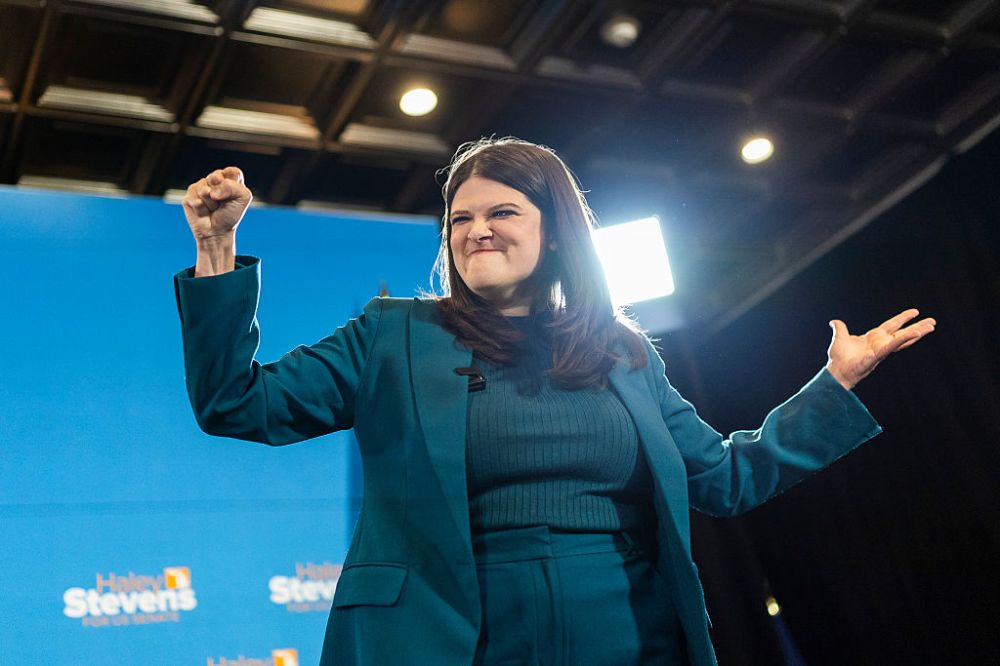
But I think that, in the case of too many celebrities, the habitual dropping of the ‘t’-sound is an affectation, even if a subconscious one. They’re desperate not to sound too wealthy or middle-class, and ‘t’-dropping is an easy way of being seen to be down wiv da kidz. (Maya Jama’s former boyfriend was the rapper Stormzy, and it may well be that his ‘t’-less rapper habit was infectious.)
The habit is spreading to BBC Radio 4. ‘Welcome to Deser’ Island Discs,’ says Lauren Laverne, especially if her castaway is non-posh and she wants to strike up an instant rapport. Pip Archer, daughter of the leading family in The Archers, who married her girlfriend Stella in a recent episode, said at the wedding ceremony, ‘You keep me on the straigh’ and narrow, even though you’re not straigh’ – and it turns ou’, neither am I.’ And it’s spreading across the middle classes under the age of thirty, who tell you they’re ‘watching Soccer Sa’ urday’ and have ‘go’ a no’ification’ on their phone.
To me, ‘t’-dropping is just one aspect of the general uglification of the British voice and timbre. Again, is it permissible to say, objectively, that someone’s timbre is ugly? It was certainly permissible in 1952, when the film Singin’ in the Rain came out and the world laughed at the obsolescent silent-film actress Lina Lamont at the dawn of the talkies, having elocution lessons but being unable to pronounce ‘I can’t stand him’ as anything other than ‘I kee-ant stee-and ’im’ in a high-pitched, squeaky voice. But since then we’ve become kinder, and we try not to discriminate against anyone for their voices or timbres. The result is that we’ve allowed ourselves to descend into some terrible speaking habits.
Voices don’t become ugly in a vacuum. Ugly expressions lead to and enable ugly voices. There are a great many ugly expressions in common usage – so ugly that it’s impossible to say them in anything other than an ugly voice. ‘It’s doin’ my head in’ is a typical one – again, heard on Celebrity Traitors. That’s an ugly expression, evoking an ugly image, spoken in an ugly voice. Same with ‘I can’t be arsed’: ugly expression, ugly image (couch potato who can’t be bovvered to get off his bottom), ugly voice.
Thanks to all the inane, self-centred, rambling texting and voice-noting we now do, more and more of the written and spoken British language is ‘without form and void’, matching the formlessness of those celebrities slouching about in the Scottish castle in their tracksuit bottoms and eating lunch off their laps. The demise of hymn-singing and modern-language teaching is depriving children of any kind of early training in careful enunciation.
If you ask, while watching the celebrities at work, ‘Would that person’s speaking voice be suitable for reading a poem out loud?’ too often the answer is a resounding ‘no’. (Or ‘nair’. Or ‘ner’.) I fear for the language of Shakespeare and Jane Austen – and I fear for the future of celebrity readings at carol services.





Comments