
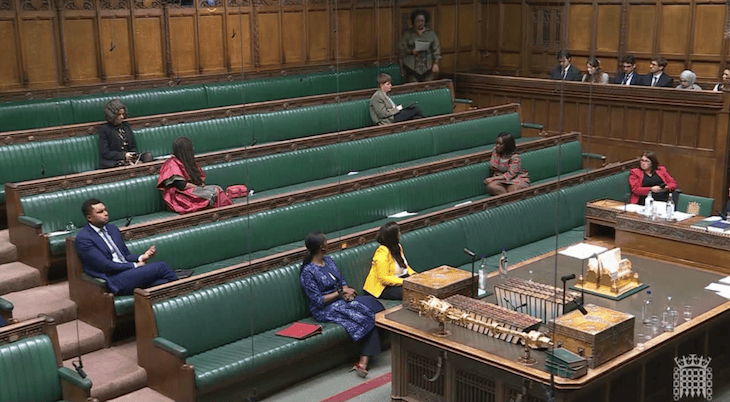
Do MPs really care about parliament? Last week, the Speaker Lindsay Hoyle erupted in fury over Energy Secretary Miatta Fahnbulleh’s failure to announce the government’s decision on Jackdaw to the House first – an explosion the Speaker has been building up to for a while. Hoyle was frustrated by the way the Keir Starmer government often did this, and seems not to have reset his fury for Andy Burnham. Presumably he will be happier this week that the Budget has not already been live-blogged by ministers prior to John Healey standing up. What might be harder to shift, though, is the attitude that many MPs have developed towards the Chamber.
MPs are always going to work hard. But at the moment, they’re not working particularly smart
Ministers have long preferred to incur the wrath of the Speaker by announcing something major to the media before they go to the commons: all the better if they can send a junior minister instead to take that wrath, as Fahnbulleh did with poor Michael Shanks last week. But MPs are increasingly taking the same attitude. Even if they do turn up to a statement, their focus is much more about saying something that they can then clip for social media afterwards, meaning that the main action for both executive and legislature is outside the Chamber.
Often, when they are producing their social media clips, these MPs are calling for measures that push parliament further into the background, such as independent commissions, public inquiries, or the latest trend in politics: commissioners. Commissioners on maternity safety, patient safety, victims and domestic abuse have all become mainstays of problems that governments want to show they are taking seriously, but they are not elected or accountable to parliament, and often seem to do very similar work to the (much cheaper) existing select committee system. MPs clearly think that these roles are valuable, without wondering if they could be doing the same job themselves within the parliamentary system.

Perhaps they are too busy with their constituency work: two of the other complaints that came out of Fahnbulleh’s snub of parliament last week were from elected representatives for Aberdeen.
Tory Douglas Lumsden was annoyed the Secretary of State hadn’t told her she would be in his constituency. After the statement, the SNP MSP for Aberdeen Central Jack Middleton wrote to the Speaker to demand he apologise for his ‘disgraceful’ comment that ‘I’m sorry that Aberdeen is more important than the MPs that are elected.’
The former is obviously a more valid complaint than the latter: ministers are supposed to notify members when they are visiting their constituencies. The SNP did, at one point, take the Commons Chamber very seriously, but perhaps its MSPs don’t think that forums for scrutiny are that important (which is why Holyrood isn’t in great shape at the moment, either).
Middleton’s letter implied that telling MPs about something that affects Aberdeen makes the city somehow less important, when Parliament is the place that the good people of Aberdeen have elected and paid someone to attend in order to find out about and scrutinise government policy that affects them.
His attitude is a particularly daft one, but it’s not a million miles away from the way that many of the newer MPs are becoming completely subsumed by constituency work to the detriment of their parliamentary responsibilities. They frequently lobby IPSA, which funds MPs’ offices and sets their pay, for more constituency staff, citing the rising demand for constituency work. But there is never going to be a finite demand for this kind of work: the more you suggest to your constituents that you can do for them, the more they’ll come to you, and often on issues that local councillors – or MSPs – would be better suited to address.
Older MPs still complain that their colleagues are willingly becoming ‘glorified social workers’, but the younger generation spend a lot of time posting on social media about ‘casework wins’ and an improbable number of cases dealt with per week.
This is not an argument for MPs spending all their time sitting in the Commons, like those irritating screenshots that circulate on social media showing that only five people attended a certain debate. Often MPs are still busy within parliament, sitting on select committees and so on. But they are much less consumed by their scrutiny responsibilities than they should be. And, of course, that failure to scrutinise properly then in time inflates their constituency work further, as the human manifestations of poorly-drafted legislation that they once voted on come through the doors. MPs are always going to work hard. But at the moment, they’re not working particularly smart.




Comments