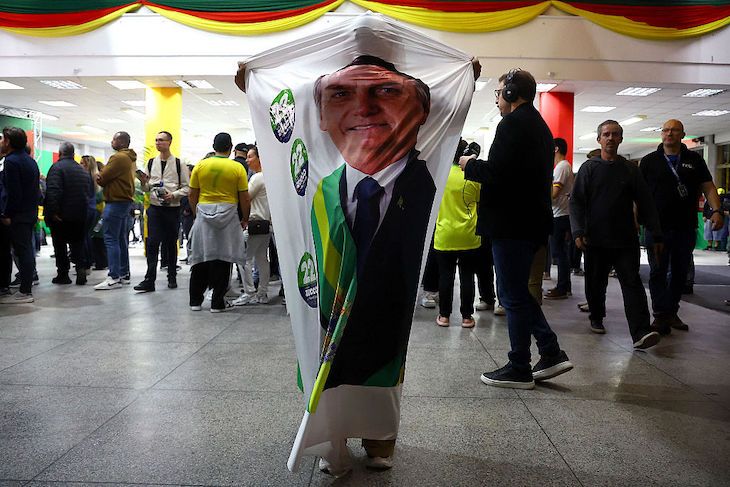
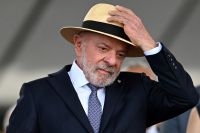
Brazilian politics is a soap opera that never runs out of plot twists: bitter rivalries, corruption scandals and colorful characters who keep rewriting the script. But Lula da Silva’s comeback was remarkable even by Brazilian standards. It brought an end to a dramatic cliffhanger, where the veteran left-winger won a fourth term as Brazil’s president.
Just three weeks ago, Luis Inacio Lula da Silva looked vulnerable. His rival Flávio Bolsonaro had beaten him in the first round, raising the prospect of a right-wing turn in South America’s largest country. Brazil looked set for a shift towards tougher security measures, tax cuts and closer ties with Donald Trump’s administration.
The challenge echoes Jair Bolsonaro’s response to defeat in 2022, when he also questioned the result after losing to Lula
In the three weeks between rounds, Lula’s campaign sought to to turn the result around, mobilizing supporters at rallies and on social media. But even with the ramped up campaigning, the result was extraordinary. He won 51.79 per cent of the vote against 48.21 per cent for Bolsonaro – a margin of more than 4.4 million votes.
It is the first time since Brazil returned to democracy in 1989 that a candidate who finished second in the first round has gone on to win the runoff. For Lula, who turns 81 this week, it is quite some birthday present.
Aside from a result that defied predictions, election night itself brought its own share of drama. A last-minute decision to extend voting by two hours caused confusion, with some polling stations having already closed. The extension – requested by both campaigns – followed reports of transport problems and severe weather.
Despite this, Flávio Bolsonaro has refused to accept the outcome. “It is impossible to acknowledge the result,” he said, accusing the Supreme Court of having “changed the rules of the game mid-game”.
He has called for the election to be annulled. The decision to extend voting hours was made by Supreme Court justice Cristiano Zanin, a former lawyer for Lula. The result was confirmed by Kassio Nunes Marques, president of Brazil’s Superior Electoral Court, who was appointed to the Supreme Court by Jair Bolsonaro, Flávio’s father.
The challenge echoes Jair Bolsonaro’s response to defeat in 2022, when he also questioned the result after losing to Lula.
Lula has long been a thorn in the Bolsonaro family’s side. His 2022 victory denied Jair Bolsonaro a second term, and his latest win has thwarted the family’s attempt to regain power through Flávio.
Jair Bolsonaro, who was president from 2019 to 2022, is serving a 27-year sentence under house arrest after being convicted of plotting a coup to overturn his election defeat.
But allegations and convictions have dogged both sides. Lula was imprisoned in 2018 after being convicted in corruption cases, but Brazil’s Supreme Court annulled these in 2021. The decision cleared the way for his return to the presidency in 2022.
Lula’s victory means four more years of center-left government, with a focus on social welfare, reducing poverty and protecting the environment. He has a broad base of support, particularly among poorer voters and in the north-east, where his earlier presidencies are remembered for rising wages and expanded welfare programs.
His record on deforestation is one example of the environmental progress his supporters will hope he continues. Amazon deforestation surged under Jair Bolsonaro but has fallen sharply under Lula. Figures released this month showed 3,335 sq km of forest was cleared between August 2025 and July 2026, down 41.8 per cent on the previous year and the lowest level since records began in 1988.
Flávio Bolsonaro promised to end illegal deforestation by 2029, but his plans to loosen environmental rules and curb the powers of environmental agencies have drawn criticism. Lula, meanwhile, has also faced criticism for backing exploratory oil drilling near the mouth of the Amazon.
The election may be over, but Brazil’s political drama is unlikely to end here
The cost of living and crime also remain major concerns – issues Flávio Bolsonaro capitalized on during the campaign, promising tougher sentences, maximum-security prisons, lower taxes and spending cuts. Lula has pledged to tackle organized crime while protecting social programs.
Lula’s victory interrupts a run of right-wing election wins elsewhere in Latin America over the last year, including in Chile, Colombia and Peru. It also denies US president Donald Trump a like-minded ally in the region’s largest economy.
Trump made no secret of his support for Flávio. In 2025, his administration imposed sanctions on Brazilian Supreme Court justice Alexandre de Moraes, who oversaw the case against Jair Bolsonaro, and tariffs on Brazilian goods amid a wider dispute over the former president’s prosecution. The sanctions against Moraes were lifted in December 2025, after Washington had begun rolling back some tariffs.
A Flavio win could have brought Brazil closer to Trump’s political agenda. Lula, by contrast, has repeatedly criticized what he sees as outside interference in Brazilian affairs. In his victory speech, he said his campaign had defeated foreign interference through digital platforms before declaring that “Brazil is no one’s backyard”.
The election may be over, but Brazil’s political drama is unlikely to end here. Flávio and his supporters are likely to continue to challenge the result, while Lula faces the task of governing a country divided almost down the middle.
Lula will have to contend with a more conservative Congress, where the Liberal Party, the party Flávio Bolsonaro belongs to, is the largest party in both chambers. With no party commanding a majority, he will need to negotiate with centrist and right-wing lawmakers to pass legislation.
Before returning to office in 2023, Lula had said his 2022 campaign would be his last. Yet he has now secured a fourth term, extending a political career full of unexpected turns – and ensuring he remains the main character for another season.



Comments