
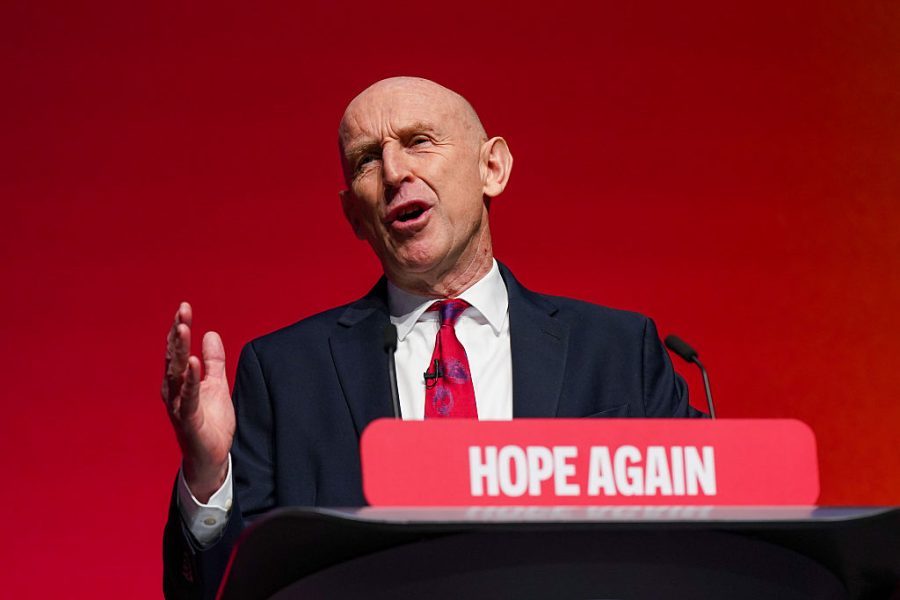
Twelve billion pounds a month, £3 billion a week, or £420 million a day. If we divide the latest estimate of the size of the ‘black hole’ in the public finances facing Chancellor John Healey by the time he has been in office, the shortfall is starting to grow at an alarming rate. It is very clear that there is no easy way out of the mess he has inherited from his predecessor Rachel Reeves. All Labour Chancellors seem run out of money eventually, but Healey appears to be getting there in record time.
With only a couple of weeks left until Healey’s first Budget, the Institute for Fiscal Studies (IFS) has nothing but bad news for the Chancellor. Higher than expected inflation means the cost of welfare payments is rising rapidly. Meanwhile, a sharp rise in the cost of servicing Britain’s £3 trillion of debt and the existing pledges to raise defence spending made during Keir Starmer’s premiership mean the IFS now estimates the Chancellor will need to find an extra £36 billion in the Budget or else risk breaking the government’s fiscal rules.
The Chancellor is left with no option other than trying to steady the ship and hoping for the best
It hardly helps that Healey’s boss, Prime Minister Andy Burnham, keeps making minor spending promises, such as capping bus fares or ‘ending rough sleeping’ – although most of the sums involved are too modest to make much difference. The really major spending items, such as reforming the triple lock on pensions or boosting defence spending, will end up costing billions more than expected.
It is hard to see how the government’s books can be balanced later this month. The tax rises that might please the backbenchers in Healey’s party, such as a stiff rise in capital gains tax, are not likely to raise any money and might even reduce revenues, since people will simply postpone the sales of assets to avoid any liability. Reducing the mansion tax threshold so that it turns into a ‘modest-semi-in-zone-three tax’ will take years to implement.
Labour’s manifesto rules out any increase in the three main taxes, so income tax, VAT and corporation tax can’t be increased. Meanwhile, fiddly changes, such as the proposed ‘warehouse tax’, have been ruled out, presumably after officials explained to the Chancellor that warehouses don’t pay taxes, people do, and the extra costs will simply be passed on to consumers and small businesses. In reality, Reeves already scraped the bottom of the barrel for minor stealth levies, and there is very little left to collect.
At the same time, Healey can’t cut spending in any significant way. The Labour party and the Prime Minister won’t tolerate that. Instead, the Chancellor is left with no option other than trying to steady the ship and hoping for the best. Perhaps something will turn up. Even so, at its current rate of growth, by the time 2027 rolls around, the ‘black hole’ will have grown by another £150 billion – and by then it will be threatening a full-scale financial meltdown.






Comments