
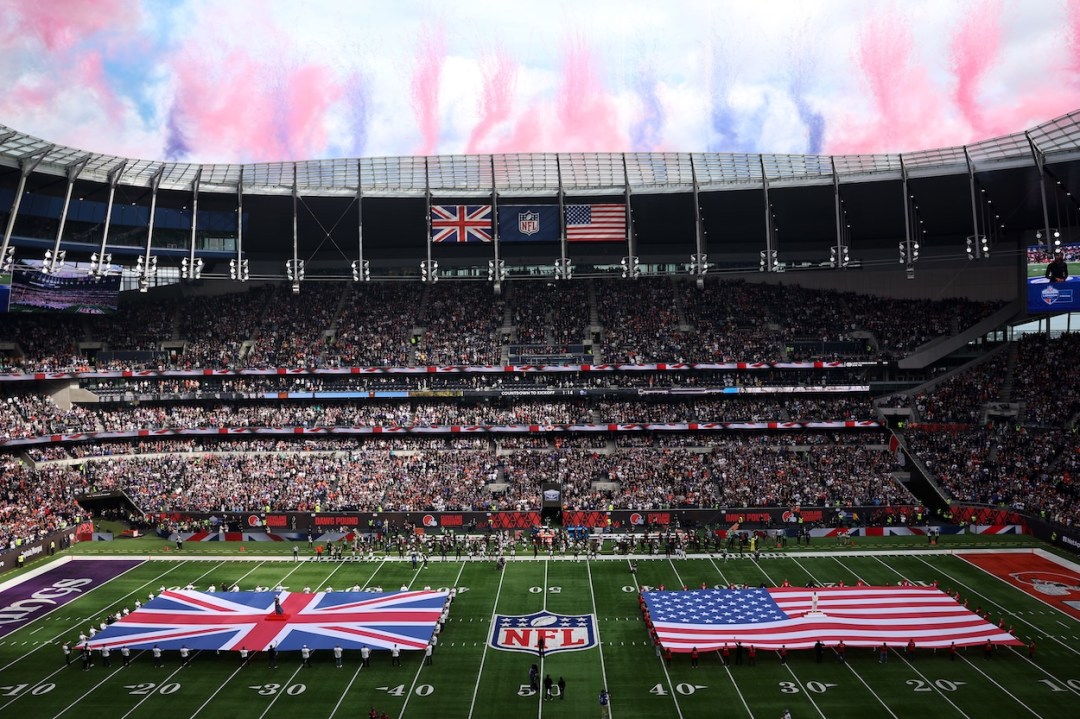
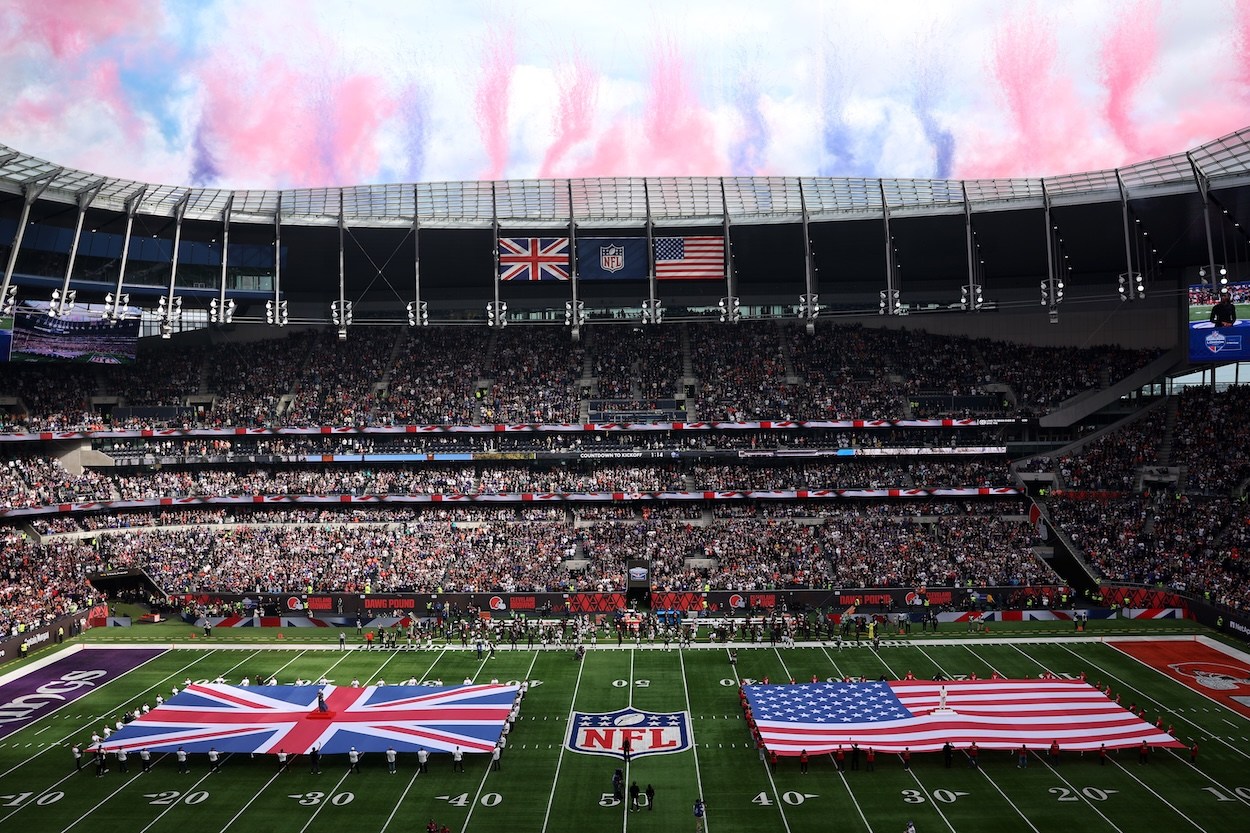
The United Kingdom is no longer a safe place for US Air Force bombers, it seems. But American football is another matter. Today, at the Tottenham Hotspur Stadium in one of London’s most ethnically diverse neighborhoods, the Jacksonville Jaguars will play the Philadelphia Eagles. It is almost certain to be a large scale bore-athon and another disappointment.
Take it from a Londoner who has been to several NFL fixtures in my home city: it don’t work
The game is one of nine NFL internationals this season – three in the UK, one in Australia, France, Spain, Germany, Brazil and Mexico. There’ll be all the razzmatazz: fireworks, cheerleaders, half-time shows. The TV commentators will hype up the foreign location. The pundits will talk about how exciting it is to see football expanding into new corners of the globe: even though next year the London games will have been running for two decades.
Few sports journalists, and particularly not the ones whose network bosses have forked out tens of millions for the TV rights, are brave enough to say what they really think. You won’t therefore hear much analysis of the unusual number of errors, the jet-lagged players, the sluggish performance of both teams, and the inevitably stifled atmosphere.
In the alternative media, people speak more freely. A few years ago, The Ringer, the sports and pop culture website, asked why the NFL sent so many “trash” games to London. And today on social media you frequently see American fans berating the NFL for the low quality of the international games, and for putting short-term profit over the long-term health of the sport.

The idea behind NFL internationals is obvious: to further expand America’s most popular sport into bigger global markets. But globalization often doesn’t suit team sports, which grow popular through local pride and a sense of regional identity.
The NFL may be able to carve out a few more billion in profits every year by exporting their product overseas but great sporting leagues are not a transnational products, like Coca-Cola or Taylor Swift. British football, or the Premier League, has thrived in America and all over the world because it the games are still played in Britain – although there are plans, worryingly, to change that.
Take it from a Londoner who has been to several NFL fixtures in my home city: it don’t work, the games are dull, the fans quickly grow bored and resentful of the cost of beer and food. Watching it on TV may be cheaper but it isn’t much more interesting.
I fell in love with the NFL because it is perfect Sunday night entertainment. Yes, the 9 p.m .kick offs frequently mean staying up till 1 a.m. Yes, for the Superbowl or other particularly exciting contests, you might have to pull an all nighter.
But for a foreigner, the appeal of the NFL is in large part the sense of distance. It’s the exotic Americana: the different regional craziness, for instance, between the Bills Mafia in Buffalo and the Who Dey Bengals in Cincinnati.
We know that NFL teams are “franchises’ that can be bought and sold and renamed or moved to a different part of the country. Yet we understand that loyalty works differently in America. In fact, the ruthless capitalism of the NFL, and the endless sacrifices to TV consumption, are part of the appeal.
Because it is so quintessentially American. We want the NFL to stay that way. It’s hard to admit you’ve wasted several hundred pounds watching obvious dross live at Tottenham or Wembley. Yet the more honest among us are, like our fellow sports fans across the Atlantic, are increasingly prepared to tell the truth. Keep American football in America. It’s better there.
I hope I’m wrong and today’s Jags vs Eagles match-up turns into an all-time thriller. But I doubt it. Most of my British NFL watching fans will just be glad when the international games are out the way, and we can go back to enjoying the game played the way it should be – in America.






Comments