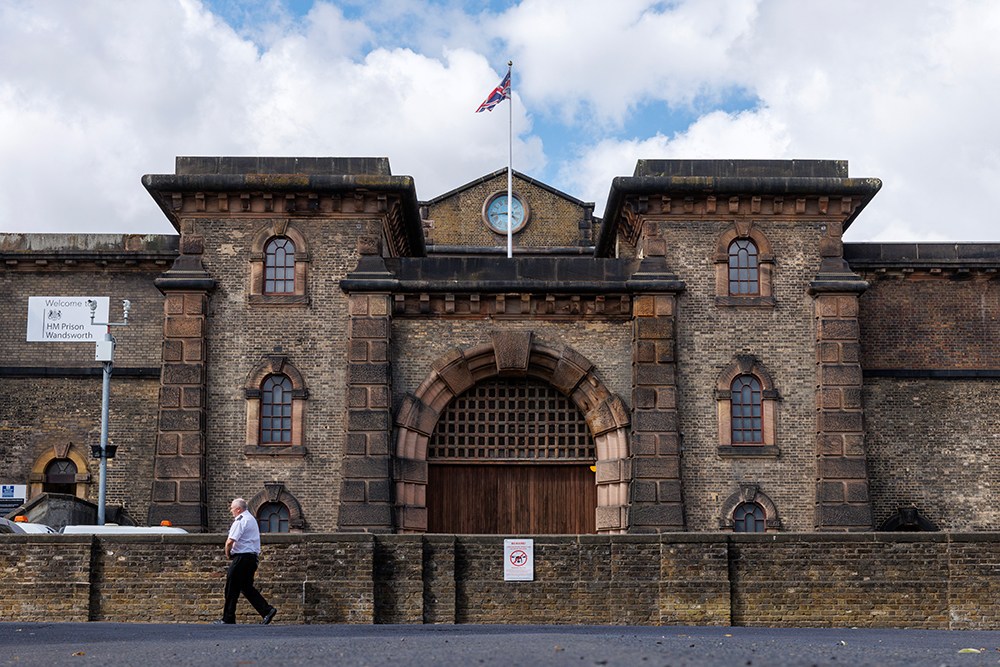


This Halloween, punters at a silent disco in Shepton Mallet’s former prison will be dancing on the graves of executed men, those who were hanged on the gallows (which remained until 1967) and buried in the grounds. The evening is promoted as ‘a scary night out behind bars’, hosted by ‘Governor Grim’, offering clubbers ‘Cell block anthems’ and ‘blood-bag cocktails’.
At Shrewsbury’s old slammer, known for its cruel segregation cells, tourists sign up for ‘immersive’ prison escapes in ‘The Hole’: ‘A fun, challenging experience designed for families, couples and friends!’ Meanwhile, HMP Oxford, now a posh hotel, offers ‘prison break’ packages promising a “‘get out of jail free” card to luxury guests’.
There are already prison-work initiatives such as Redemption Roasters. Why not extend the idea?
There’s little more tasteless than the repurposing of prisons as entertainment venues. What sicko gets off on a sojourn among suffering? Presumably the same people who look for Fred West’s now-demolished house.
Still, in light of the early prisoner release programme – Andy Burnham will set free 4,500 inmates to ease desperate over-crowding – could these venues be put to good use? Why not relocate prematurely released prisoners to work in novelty prisons?
Jail-tourist attractions would be marginally less crude if they offered positions to ex-cons. Knife criminals could work as hotel sous chefs, with fraudsters on the tills and lags sent down for tweeting mean things could be on service. Then we can see if they’re really rehabilitated. Part of the punishment would be having to deal with members of the public.
At least it’s a notion. The current problem is that Britain doesn’t have any coherent philosophy when it comes to prison. There are two approaches to the penal system. The American model: sling everyone in the bin forever or dispatch them in brutish executions; or the Norwegian model, where every prison officer has a PhD. We manage neither.

Perhaps the best we could do is offer prisoners entry into our service industry. What are the other options? In interviews with men leaving prison last week, many of them confessed at the gates that they’d soon be back. Ministry of Justice statistics show almost a third of prisoners re-offend, as do some 68.2 per cent of those who were serving short sentences. There must be better options than freeing a load of violent men and taking our chances.
One solution to prison overcrowding would be to make more things legal. Obviously not Palestine Action. But is all shoplifting really that bad? Do we really need the Online Safety Act? Clearing cells of people who have committed minor offences would leave more places for the most dangerous. Could we release everyone on remand? The clogged court system means there are some 15,386 remand prisoners, two-thirds of whom haven’t stood trial. Shouldn’t the innocent be free until proven guilty? I’d release anyone under 18 (we have one of the lowest ages of criminal responsibility in the world, at ten) and all women.
Giving prisoners jobs would at least offer them some sort of meaningful rehabilitation. As things stand, what do they get? The rates of recidivism reveal an unforgivable lack of government support, which is the early release scheme’s most acute failure.
People enter prison with high rates of neurodivergence, alcohol and drug dependency and care-home and abuse histories. Some 57 per cent of adult prisoners are functionally illiterate. But the real crime is that they leave prison still unable to read better than the average 11-year-old, as well as often becoming radicalised, more dangerous and still substance dependent. A 2022 House of Commons Education Committee report found a 90 per cent drop in prisoners taking A-levels (or equivalent) compared with 2010. The 2016 Coates Review recommended that education needed to be at the heart of the prison system but found it ‘inadequate for these purposes’. The 2022 report concluded six years later that ‘this aspiration has still not been realised’.
What incentives do we offer former prisoners to hold down jobs? What support is there for housing – or anything that gives them the bare minimum requirements to start a new life? Almost 20 per cent of prisoners leave prison with nowhere to live, which also means they can’t be tagged properly, despite MoJ studies showing those released with tags are less likely to commit further offences.
What is the purpose of prison? Except for a very small number of exceptional criminals – murderers, terrorists, some psychopaths – who need locking up for society’s safety, most prisoners flourish with rehabilitation.

Employment remains the most effective way of cutting reoffending – MoJ data suggests that it halves it in the first six weeks. Until recently the government had an expert in this area: James Timpson, who was the prisons minister. As the CEO of his family’s key-cutting and shoe-repair business, he employs hundreds of ex-prisoners. (Interestingly, he thinks ‘most women should not be in prison’.)
Lord Timpson’s resignation from government after just two years, on the day Andy Burnham entered No. 10, raises questions about Labour’s commitment to supporting business – or prisoners. Did he leave because the sluggish civil service made it impossible for him to do anything? Or did he think he couldn’t work with the new PM? Either way, his departure was a loss.
There are already prison-work initiatives, such as Redemption Roasters and The Clink restaurant chain (although it has faced challenges). Why not extend the idea? Reclaiming prisons as tourist attractions to give prisoners jobs would offer a radical solution. It would also helpfully test the intentions of the degenerates signing up for ghost tours around Shepton Mallet prison if a real murderer is leading them.






Comments