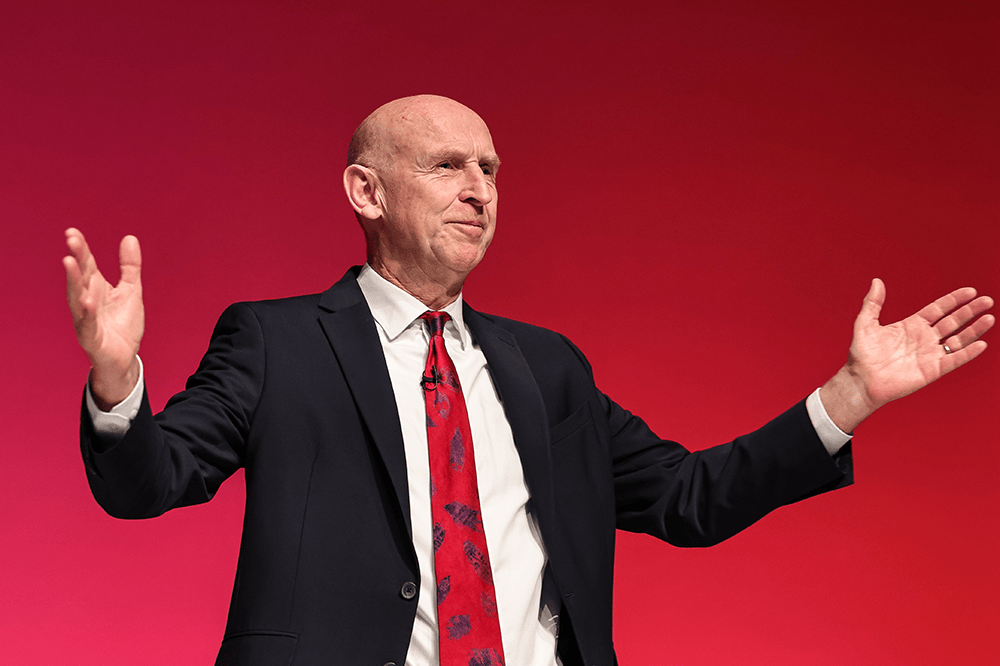


Chancellor John Healey’s ‘new age of industrialisation’ was one of the catchier soundbites of the Labour conference. But (to adapt Humphrey Bogart) it won’t amount to a hill of beans in this crazy world during a winter of soaring diesel prices, round-the-block pump queues and rationing to protect priority users. Which is all possible if President Trump enacts a 90-day block on diesel exports ahead of November’s mid-term elections in a desperate move to ease US domestic fuel prices, which have surged since his crazy Iran war began.
Four in ten engines on British roads are still diesel-fuelled, despite the hype for electric power. Besides ten million cars, the diesel fleet includes the vast majority of emergency vehicles. A full tank for an average family car or tradesman’s van already costs £31 more than it did at the start of the year. It could rise by the same again before Christmas – not least because the UK holds barely six weeks’ worth of diesel stock, having closed most of the refineries that had large-scale storage capacity.

We rely for fuel imports on the Netherlands first and the US second, but the Dutch in turn buy from the US and every wholesaler in Europe will wade into a bidding war if shipments diminish. A vision looms of a return to September 2000, when a truckers’ blockade of refineries in protest against fuel taxes brought the economy to a standstill.
And there’s no supply solution in sight, other than a vague hope that Trump pretends not to remember he said last weekend that he’s ‘thinking about [a diesel export ban] very seriously’. Even if he resiles, he has shaken the market in the wrong direction.
If he carries the threat through, Healey won’t be able to halt panic-buying or a plunge in business and consumer confidence; but he can suppress pump prices by temporarily reducing the 53p-per-litre fuel duty and the 20 per cent VAT rate, which would account for another 38p in a £2.30 litre. Has any Labour chancellor ever had the wisdom to slash tax to keep the economy alive? Diesel could be the test case.
Where’s my cheque?
It so happens that my diesel Audi, nicknamed ‘the fat cruiser’, was recently written off (while parked) by a lunchtime drunk-driver, and its replacement is a petrol-powered Skoda. So for all the hassle involved, at least my fuel costs should be lower pro tem. The oddity in an otherwise efficient digital claim process was that the insurance company eased its own cash flow by sending a cheque for the write-off value by snail mail. For ten unnecessary days I’ve been left in the last-century position of Billy Bunter awaiting a postal order.
Football’s hot leg
In my distant youth, I was an occasional denizen of the Shed at Stamford Bridge. No longer an active Chelsea fan, these days I watch instead the financial games of leading clubs and owners. So I’m keen to hear the ‘irrefutable evidence’ Manchester City says it will bring forward to rebut the 114 alleged breaches of Premier League rules of which it’s reported to have been found guilty.
Charges dating from 2009 to 2018 relate, inter alia, to not providing accurate financial information and not disclosing full details of player and manager remuneration. The appeal process will drag on as opposing legal teams rack up colossal fees. Arsenal, Liverpool, Manchester United and Spurs have signalled that they will each seek compensation of £100 million-plus if City is judged to have unfairly disadvantaged them. The big bucks at stake overshadow the fact that expulsion or relegation as a sanction on England’s most garlanded club would be traumatic for the loyal supporters who are its real long-term stakeholders. Sheikh Mansour bin Zayed bin Sultan Al Nahyan of Abu Dhabi, City’s ultimate owner since 2008, is probably too rich and distant to be perturbed.
Meanwhile, the other big football story of the week – the Prime Minister’s plan to reverse a 1985 anti-hooliganism ban on fans drinking alcohol during matches – stirred another youthful memory: of packed terraces cascading with urine and the related shame of going home with pungent soaked trousers. The Manchester City case is the reputational equivalent of what we used to call a hot leg for the entire venal milieu of top-flight football.
Capitalism’s song
Charlotte Church has castigated Ed Sheeran for choosing ‘consumerism and capitalism over doing the right thing’. I’m not sure I’d recognise either of these British songsters if they sat next to me on a bus. But as this column believes capitalism generally is the right thing, Church’s broadside – at her ‘End Times Pop Dungeon’ gig in Cardiff, described as ‘part euphoric rave, part total Dada-ist carnage’ and which I’m sorry to have missed – demands further enquiry.
Sheeran’s US tour is in a pickle following the sacking of the pro-Palestinian rapper Macklemore as a support act under pressure from venue owners; the withdrawal of other musicians in solidarity; and the cancellation of two more shows. Sheeran’s emotional (if scripted) apology at a concert in Philadelphia, presenting himself as a naive artist drawn into the maelstrom of Israel-Palestine anger, provoked mixed reactions, including Church’s.
But she’s not wholly wrong about Ed: there’s another Sheeran behind the sad ginger with a guitar. At 35, he has systematically amassed a portfolio of business interests, including rental properties across London, besides the tightly controlled operation of his recordings and tours. The Sunday Times estimates his fortune at more than £400 million. And you wouldn’t want to tangle with him on anything to do with music copyright, a field in which his lawyers have won or settled a series of high-profile cases.
In reality, Sheeran is a poster boy for the hard-nosed mode of capitalism that sometimes pervades the music biz. Whether his on-stage tears were sincere or crocodile, we certainly don’t need to feel sorry for him.





Comments