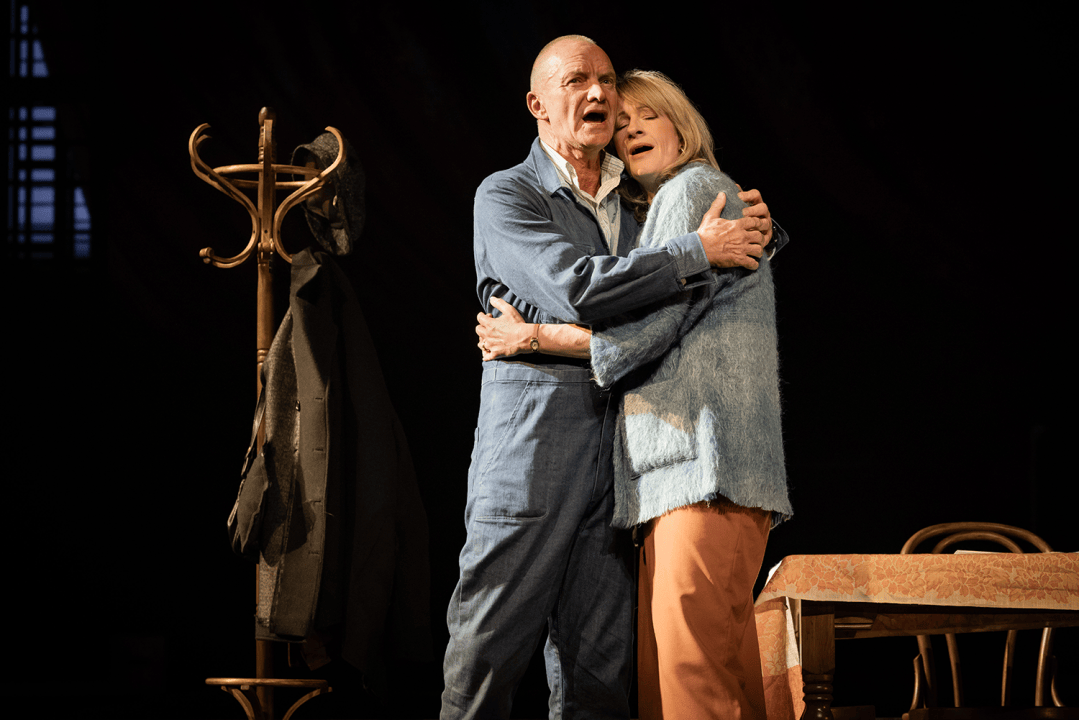


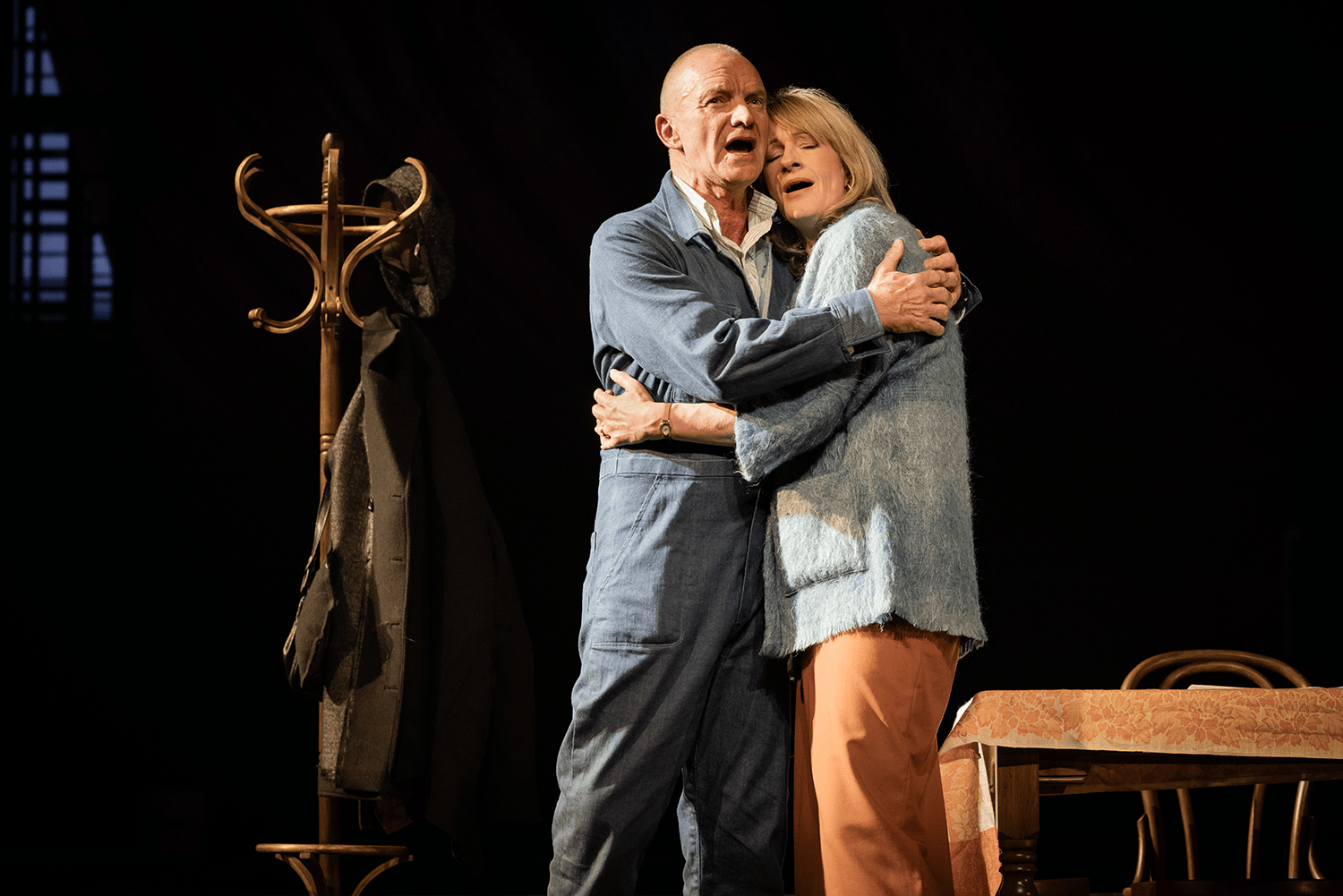
The Last Ship, a musical written by and featuring Sting, is touring Europe, Australia and America. The show is a class-war parable set in Newcastle during the 1980s. A team of shipbuilders are about to complete a new vessel, the Utopia, when a bossy government minister, Baroness Tynedale, arrives at the docks to deliver bad news. With her bright- blue suit and posh hectoring voice, she’s a pantomime Mrs Thatcher and she announces that the yard will be seized and flogged to private investors.
The shipbuilders establish a Marxist committee and plot to overturn her evil scheme. A gripping start. Plucky Geordies pitted against yuppie scavengers from London. The show even features a song about the competing merits of collectivism and monetarism.

Then it all implodes. The story takes off on a two-hour detour that explores the lives of various characters with emotional problems. Teenage Ellen dreams of starting a new life in London. Jackie the foreman (played by Sting) contracts a lung disease of unknown origin. The beautiful but prickly Meg can’t decide between two dreadful boyfriends. Will she choose wet blanket, Freddy, or faithless drifter, Gideon, who impregnated her and promptly ran away?
These sob stories mean nothing to the audience because they don’t affect the mutiny at the yard. Bad storytelling. Barney Norris’s clumsy script is an updated version of two earlier attempts by various writers. After 120 minutes of waffle, the story gets back on track. Security staff occupy the shipyard. The rebels devise a plan to kick them out. Baroness Tynedale shows up to take personal charge of the battle.
Then a surreal touch. A chorus line of militant feminists arrives dressed in matching jeans and tartan scarves. They look like fans of the Bay City Rollers. Perhaps they can break the deadlock. The ending, when it finally emerges, takes ages to unfold because it has to wrap up the stories of Ellen, Jackie, Freddy, Gideon and Meg, plus a couple of other figures.
The show seems to overlook its chief asset, Sting. He’s a decent actor (far better than Bowie or Jagger) and he plays the role of Jackie with rugged, hard-nosed sincerity. But he barely gets to exercise his vocal cords. Why did he not give himself a big crowd-pleasing number at the close of Act One? The probable answer is that a dramatic work is a collective enterprise, like class war, and the individual has to subordinate his ego to the interests of the group.
But that ideal doesn’t work in musical theatre, which usually centres on a single personality whose transformation delights and thrills the audience. This story has no lead character. And the design suffers from its own good intentions. The goal is to make the audience feel the dispiriting and oppressive atmosphere of a shipyard. A vast skeleton of metal girders has been constructed over the phallic prow of a ship that thrusts obtrusively on to the stage. It’s horrible and it stays in place throughout the action. This is a decent show but hardly a classic. Some audience members may have wondered why Sting didn’t just deliver a medley of hits and then hold a whip-round for the rainforest, like in the old days.
Table 17 is a romantic comedy that turns into a public tribunal or a bear-baiting session. At the start of the show, the crowd are invited to shout out comments and advice to the characters. We open with Jada getting ready for an inappropriate date. She’s so anxious about the meeting that she can’t even share the details with her therapist.
Rishawn is a dazzlingly gifted comedian who makes this a five-star show
Her date, Dallas, is a handsome stud with a nerdy streak who always wears green corduroy trousers. They meet at a chic restaurant staffed by snobbish narcissists. The barman fancies himself as a stud. ‘I get laid hard and often. That’s not a cocky statement it’s simply da truth.’ To demonstrate his technique, he leaps on to the bar and humps away at an imaginary girlfriend.
His colleague River runs the table bookings and he gets far too involved in the personal lives of his customers. When Jada and Dallas show up, we learn that they were engaged to be married but broke it off. Both want to see if the spark is still alive. Of course it is.
But will they snuff it out or feed the flames? The audience had their say. Shouts of ‘he’s lying’ or ‘don’t do it’ pealed out from the stalls. It’s rare to see a show where the crowd are so involved that they barrack the characters. Marisha Wallace plays Jada as a kittenish flirt who always wants more than she has. Multi-roling Michael Rishawn impersonates the restaurant staff and a seductive airline steward who tempts Jada away from Dallas. Rishawn is a dazzlingly gifted comedian who makes this a five-star show. A hilarious night out.






Comments