
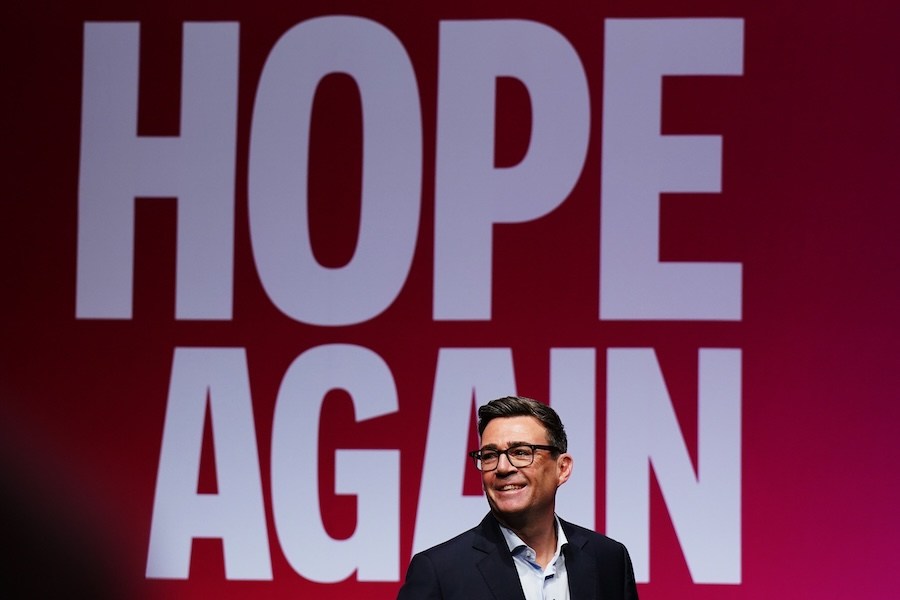
Not all heroes wear capes. Some wear black T-shirts. Andy Burnham has done what nearly every British politician knows needs to be done but dares never do. In his first speech as Prime Minister to the Labour party conference in Liverpool, Burnham announced the beginning of the end for the state pension triple lock.
From 2030 the triple lock will switch to a double lock of inflation or 2.5 per cent with a longer-term adjustment to keep pace with earnings over time – a sort of double and a half lock. It is welcome progress although the details could be messy.
It’s the most progress we’ve ever had on dismantling the dreadful triple lock
It will not, as Burnham intends, touch the sides on sorting out social care. And, of course, we will have to wait for that general election to come, and probably many years after it – even if Labour were to win another majority – to actually see if the triple lock does finally die. But the fact a prime minister is prepared to announce something that most political strategists consider to be electoral suicide – no matter how many economists argue for it – to a gathering of his own party at a ‘Hope Again’ conference is quite something. And it’s the most progress we’ve ever had on dismantling the dreadful triple lock.
It’s worth remembering just how dreadful it truly is. The lock – brought in by the coalition government – guarantees that the state pension rises each year by the highest of earnings growth, inflation or a floor of 2.5 per cent. It means pensioners always do at least as well as workers, are shielded from inflation and receive a real-terms bump when both are weak.
There was once a fairly good argument for it: Britain had pretty bad levels of pensioner poverty. But that is no longer true. Not only has the triple lock done the job it was designed to do, but private auto-enrolment workplace pensions have become so much more widespread. Supporters of the lock will say that our state pension is still low by international standards, but they miss this key point: private savings now do so much.
But besides the job being done, the triple lock has become staggeringly unaffordable. This year we will spend around £154 billion on the state pension. That’s the largest item in the welfare budget. Part of the reason that’s got so high? The triple lock has turned out to cost around three times as much as initially expected, according to the Office for Budget Responsibility (OBR). Over the longer term, the numbers become extraordinary: the OBR reckons the triple lock will add roughly as much to the rise in state pension spending as population ageing itself.
It’s just plainly unfair too. There’s a widely believed myth that the state pension is a pot that hard-working people have paid into all their lives, which just isn’t the case. It’s a Ponzi scheme whose obligations are paid for by current taxation from those working today. It guarantees that pension incomes rise at least as fast as those of the people working to fund them, despite the fact the typical OAP household is now about as well-to-do as the typical working-age household, or the fact nearly a quarter of pensioners have more than £1 million in assets. Today’s changes don’t go far enough but do begin to fix this.
There are going to be really difficult political hurdles ahead. Every other party will likely come out against this, looking for a gift from the pensioner vote. The Tories – who privately all want it gone – will undoubtedly campaign to maintain it. One Westminster figure who has seen internal party polling on this told me that supporting its abolition could really be fatal for the party. But as Tim Shipman suggests on Coffee House Shots this week, the ideal Tory scenario is probably to fight a campaign on this that they narrowly lose because they need it gone, just as any other party in government trying to balance the books needs it gone too.
That’s why what Burnham has announced today really is significant. Every man, woman and pigeon in Westminster knows this was a policy that had to go for the sake of the long term viability of our public finances. If Burnham can actually kill it, we should all be grateful.





Comments