Sex, tragic, premature death, adultery, frenetic plotting for the throne, exile, obsession with status and security, lust for money… If you think Charles Spencer’s new dissection of the Royal Family is pretty gory, try watching I, Claudius.

50 years ago, on September 20, 1976, the first of 12 episodes were aired in the BBC’s adaptation of Robert Graves’s I, Claudius (1934). They’re all on BBC iPlayer now. The Windsors have got nothing on the Julio-Claudian dynasty, the first Imperial dynasty of the Roman Empire. The first five emperors – Augustus, Tiberius, Caligula, Claudius and Nero – are made for TV. A mixture of genius, monstrosity, vanity, shyness and delusional madness, the emperors were perfect copy for Robert Graves – and he made a fortune out of the book and its successor, Claudius the God (1935).
The genius of Graves – and Jack Pulman, who adapted the book for TV – was to make the emperors chat and think in ordinary English. Graves’s inspirations were Suetonius and Tacitus. As a classics scholar at Charterhouse and St John’s, Oxford, it helped that he could read Latin in the original. But Suetonius and Tacitus are pretty heavy-going. Graves made their words light, amusing and readable. The Emperor Claudius says things like ‘So, I’m Emperor, am I? What nonsense!’
Think about it for a moment and it’s ludicrous that, in the TV series, most of the cast speak in received English, like they’ve just stepped out of a Noël Coward play – except for the slaves, who have all-purpose, foreign accents, and a sculptor who talks like Arthur Daley. And I’m not sure the Emperor Nero spoke much like Christopher Biggins either.
But, actually, it’s much more coherent and convincing to have everyone speak in conversational English, however posh, than for them to talk in cod Latin or olden-days American, favoured in Tony Curtis 1950s epics – ‘Yonda is da castle of my fadda, da dook.’ Graves’s brilliant device (replicated in the TV series) is to make the stuttering, lame emperor, Claudius, and his memoirs the heart of the story.
The genius of Graves was to make the emperors chat and think in ordinary English
Claudius, born in 10 BC, was brought up under the rule of Augustus. He saw, close-up, the reigns of Tiberius and Caligula. And he invaded Britain – much more successfully than the previous invasion by Julius Caesar. As an awkward, clever observer – which primary sources suggest he indeed was – Claudius could take in the terrible shortcomings of his monstrous relations. And the greatest monster of them all was his granny, Livia, the wife of Augustus. Born in 59 BC, dying in 29 AD, at the extraordinary age of 87, Livia was the best witness of all to the early days of the empire.
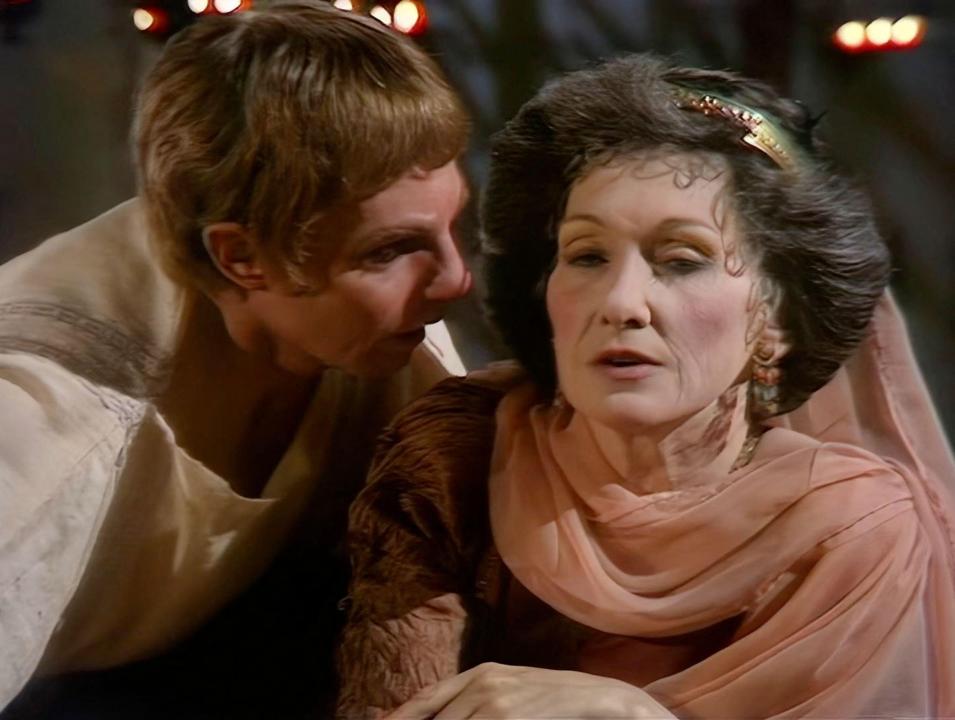
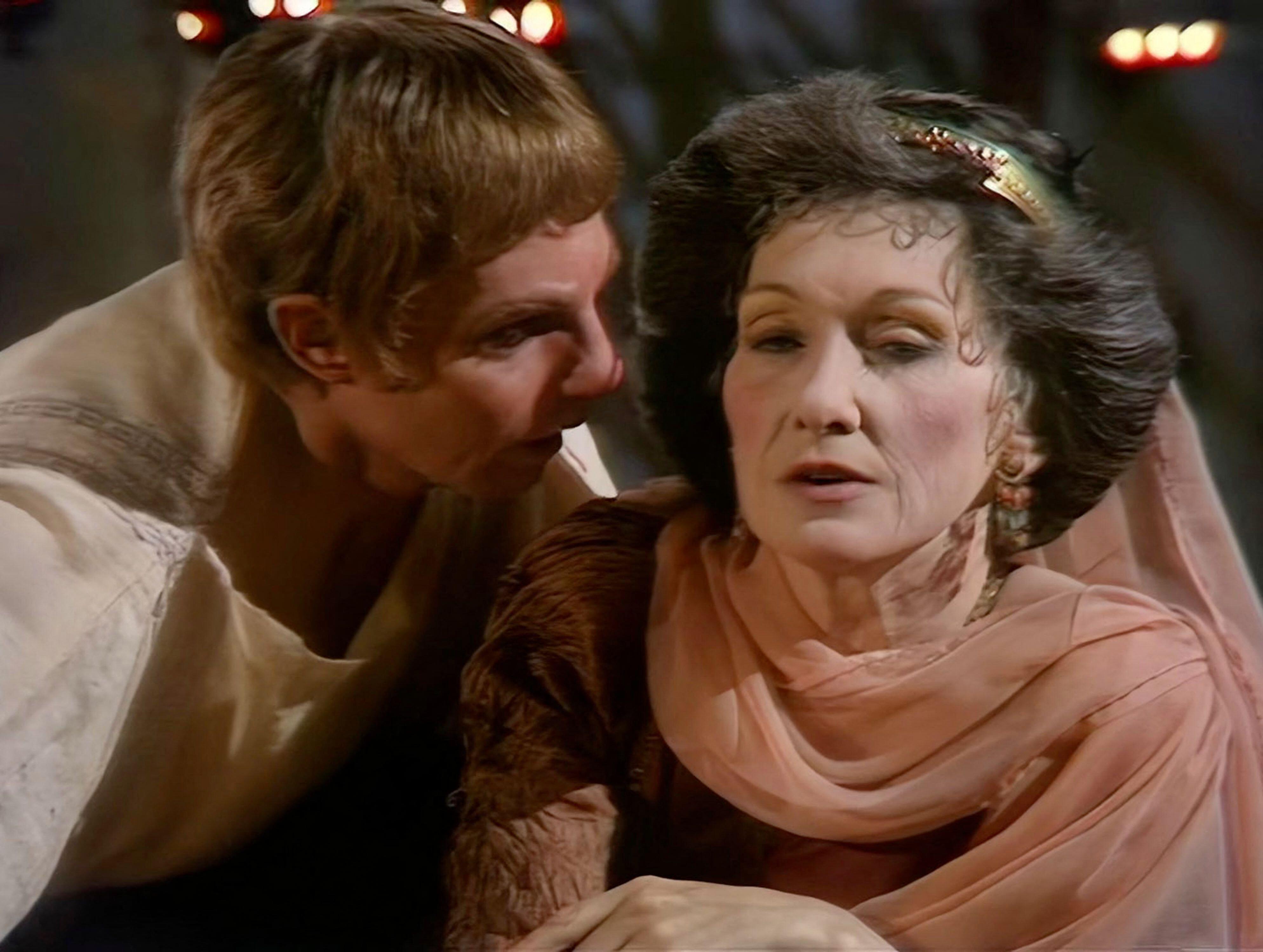
In Robert Graves’s sexed-up version, she was also the Great Imperial Murderer, meddling in practically all the premature deaths – poison was her favoured method – in the accident-prone Julio-Claudian dynasty. Derek Jacobi is sympathetic as the nervous, damaged Claudius – moving from the stuttering, shy child to the confident, clever Emperor. Equally, John Hurt does a marvellous turn as the capricious, crazy, deluded Caligula.
But the best piece of casting is Dame Siân Phillips, still happily with us at 93. She is a wonder as Livia: cool, vicious, clever, haughty and amusing. And she looks the part, too, reminiscent of the famed ‘Sappho’ fresco at Pompeii, thoughtfully sucking a stylus and brandishing a book. Most of all, Phillips is utterly convincing. Some of the acting in I, Claudius is very hammy, straight off the RSC stage. A clean-shaven Brian Blessed, as Augustus, isn’t quite the bellowing ‘Gordon’s alive!’ show-off he is in Flash Gordon (1980) but he isn’t far off.
The sets, too, are pretty unconvincing. The BBC didn’t have the budget to do huge outdoor scenes like in Cleopatra (1963) or spend much on make-up or costumes – Carry On Cleo (1964) looked particularly good because they used the cast-offs from Burton and Taylor in Cleopatra. You don’t get much of the atmosphere of Rome, either. It never looks very hot, always more like a British TV studio than a baking palace in the imperial forum. Television has come on in leaps and bounds since the first episode of I, Claudius – so much more convincing and chatty than those stagey days, then still rooted in the Laurence Olivier-style declaiming of Shakespeare.
But it’s easy to criticise 1976 TV by today’s standards. When it came out, I, Claudius was revolutionary. Amusing and light-hearted, it was years ahead of the sword-and-sandals epics Hollywood was pumping out just 20 years before. And it does a brilliant job of picking apart the extremely complicated Julio-Claudian family tree, crammed with adoptions and advantageous second marriages.
For all its lightness of touch, I, Claudius treats Graves’s book seriously, giving it 12 50-minute episodes (like the 1981 Brideshead Revisited, the best of all TV adaptations, which had 11 episodes, each over 50 minutes, with extra-long opening and closing episodes). Aspects of I, Claudius may seem distinctly dated today but the series was the beginning of bingeworthy, modern TV.



Comments