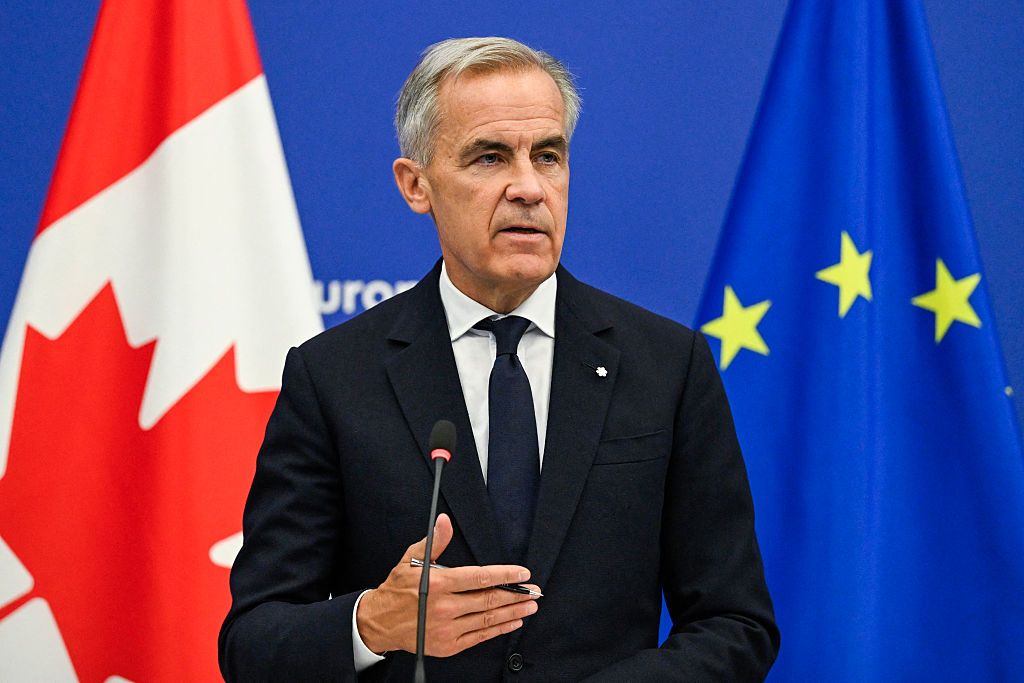
Canada and the European Union are on the path to forming some sort of a political relationship that no one can figure out. The terms and conditions are largely unclear to the general public – and, quite possibly, the participants themselves. Canada’s potential role in the EU hasn’t been properly defined or explained. The two sides can’t even agree what to call this arrangement, and have each described it as something different.
Here’s what we do know about the (likely) nucleus of the Canada-EU discussions.
Canadian Prime Minister Mark Carney has been trying to bring his country strategically closer to the EU for some time now. The former governor of the Bank of England described Canada as the ‘most European of non-European countries’ at a joint summit in Brussels last summer. While this comparison caught the attention of political commentators and columnists, including yours truly, it honestly seemed too far-fetched to be taken that seriously.
This was the wrong assessment, as it turned out.
An exclusive story by Bloomberg this month revealed Canada and the EU were actually ‘working toward a new, all-encompassing relationship that will range from trade to security.’ The arrangement would reportedly ‘aim to cover all areas of the relationship, including trade, security, supply chains and critical raw materials.’ Bloomberg pointed out that ‘it’s not clear whether new legal tools would be needed to formalise this partnership,’ whatever it ultimately entailed.
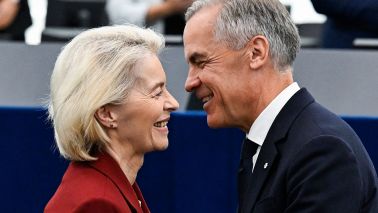
European Commission president Ursula von der Leyen then formally invited Canada on Wednesday to become its first-ever ‘associate member.’ As she said in her annual state of the European Union speech to an audience that included Carney, ‘We want to bring the relationship with Canada to the highest level possible. And, dear Mark, I said we must urgently reimagine our partnerships. So I would like to work with you on opening the door for Canada to being the first associate member of the European Union.’

As it happens, dear Mark provided his own response on Thursday.
Carney said he would be pleased to consider Canada becoming an associate member of the EU – or, as he preferred to call it, ‘an alliance for the future.’ Carney had originally pushed back against the associate member designation before attending von der Leyen’s speech, preferring the term ‘unique alliance.’ His tone seems to have softened a bit in the presence of his European masters… err, friends. ‘Canada is not in a position nor seeking to become a full member of the European Union,’ he said in his speech. ‘Therefore, it’s a different framework. It’s a framework that is relevant for a country that shares deep bonds with Europe.’ That’s why the PM ‘welcomes’ the EU’s offer and believes ‘Canada and Europe are stronger together.’
The Canadian PM’s flowery language may sound nice when it rolls off the tongue. The reality is that Canada’s status in the EU, whatever it’s ultimately called and determined to be, will be rather underwhelming and relatively meaningless.
Canada and the EU had already arranged a trade deal, the Canada-European Union Comprehensive Economic and Trade Agreement, nearly a decade ago. This 2017 agreement was designed to specifically remove 99 per cent of all tariff lines on products from the two trade partners. CETA still isn’t in full force, but it has been provisionally applied and ratified by 17 EU member states.
Trade and tariffs, the two main points of contention for Carney in his dealings with US President Donald Trump – which has led to a full-scale trade war between their two countries – have already been accounted for with the EU. Unless Canada’s unique alliance or associate membership leads to the remaining EU member states bringing CETA into full force, there’s really nothing further to do. Mission already accomplished, I suppose.
Defence and security have also been mentioned in the Canada-EU discussions. This would certainly be a new twist to the existing relationship, but to what end could it be accomplished? Canada is obviously not in geographical proximity to the entire European region. It can’t be properly protected by Europe in the event of an attack by a rogue state, totalitarian nation or terrorist organisation. And while the Canadian Forces could help with military strategy and training on a limited basis, Europe really doesn’t require additional protection from a middle power based in North America.
Mission that can’t be accomplished, I guess.
What’s the actual point of the Canada-EU discussions? Good question. I asked in a recent National Post column, ‘what more did Canada have to offer’ to the EU. The answer, as it turned out, was ‘virtually nothing.’ Much like this alliance or associate membership or whatever the heck it is they’re doing.



Comments