
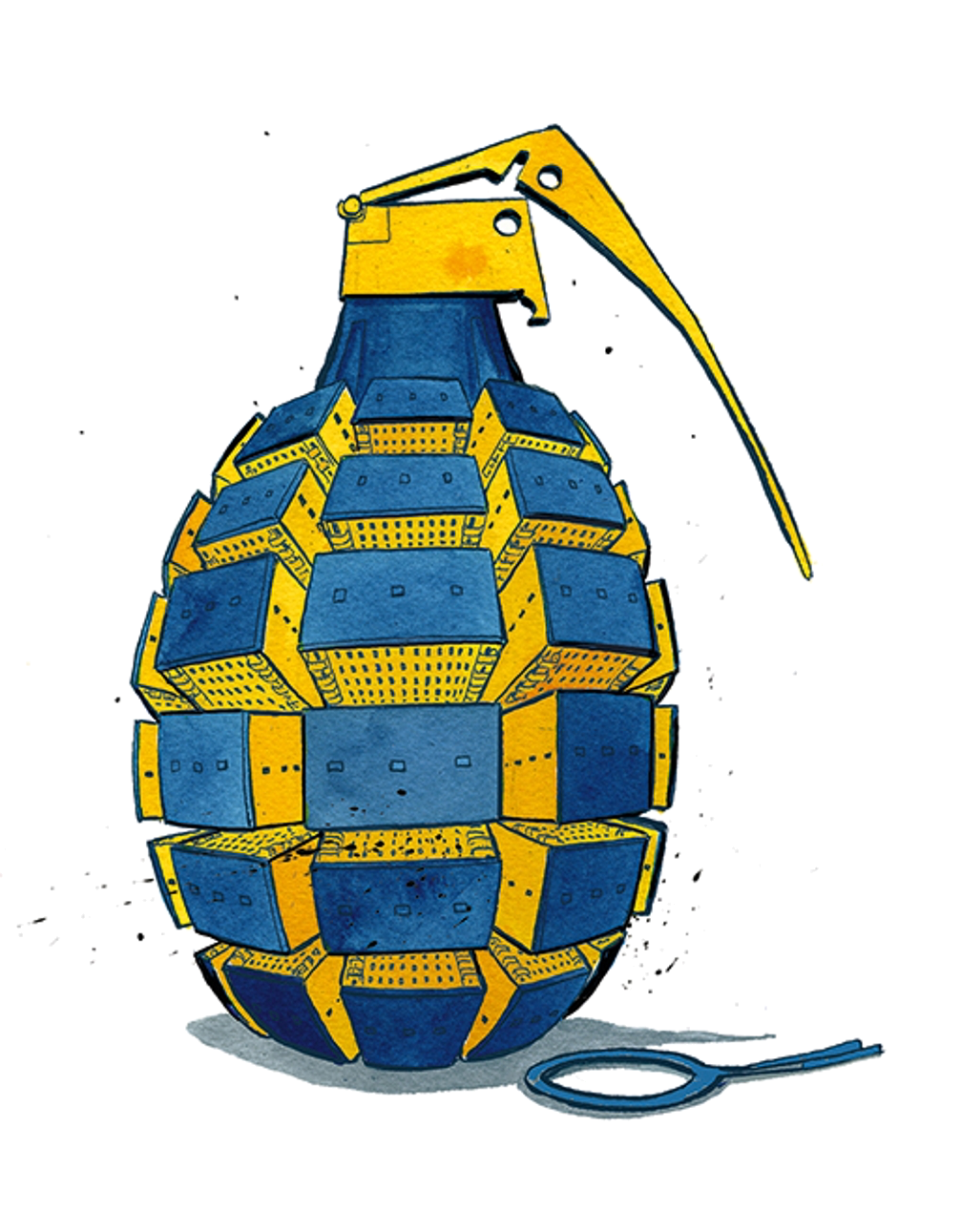
Should Sweden now replace Australia, with its famed points system for immigration control, as the overseas model of choice for the British Right? As Sweden prepares to go to the polls in a desperately close election this Sunday, it is well worth considering what Stockholm has achieved over the past four years – not just on migration, but also in the intimately correlated terrain of gang crime and extremism; in short, what the French call les aspects régaliens, those matters which lie within the exclusive competence of the State.
Scandinavia is certainly in vogue. The current Labour Home Secretary Shabana Mahmood has understandably sought to make the most of her association with neighbouring Denmark’s notably robust Social Democratic Prime Minister, Mette Frederiksen – a European centre-Left success story for our times. Frederiksen has reduced asylum claims by 28 per cent during her tenure in office; 91 per cent down from its 2015 peak at the height of the Syrian refugee crisis. But few would now place a big bet on the Parliamentary Labour Party (and perhaps even the Prime Minister) giving Mahmood the space to do anything like as much.
Rather, it is the current Swedish coalition which is the real “tribute act” to Mette Frederiksen; and consciously so, too. There, the traditional centre Right parties have worked together with the populists of the Sweden Democrats in a kind of “confidence and supply” arrangement. Known as the Tidö parties – named for the castle outside Stockholm where this key understanding was forged back in 2022 – they have produced one of the most serious public policy agendas of the era.
Whatever the outcome of Sunday’s election, the time is ripe for the post-Brexit British Right to look again at Sweden, the largest nation in Scandinavia in terms of the size of its population and economy. For Sweden has changed dramatically in recent years. It is less self-consciously the “moral superpower” that it once reckoned itself to be. Not only has Sweden abandoned its historic neutrality on the international stage by joining Nato in 2024; it has also forged a new, hard-nosed Scandinavian Realpolitik on the home front as well, abandoning the open borders and multiculturalism associated in the popular memory with the Olof Palme era of Social Democratic hegemony from the 1960s to the 1980s.
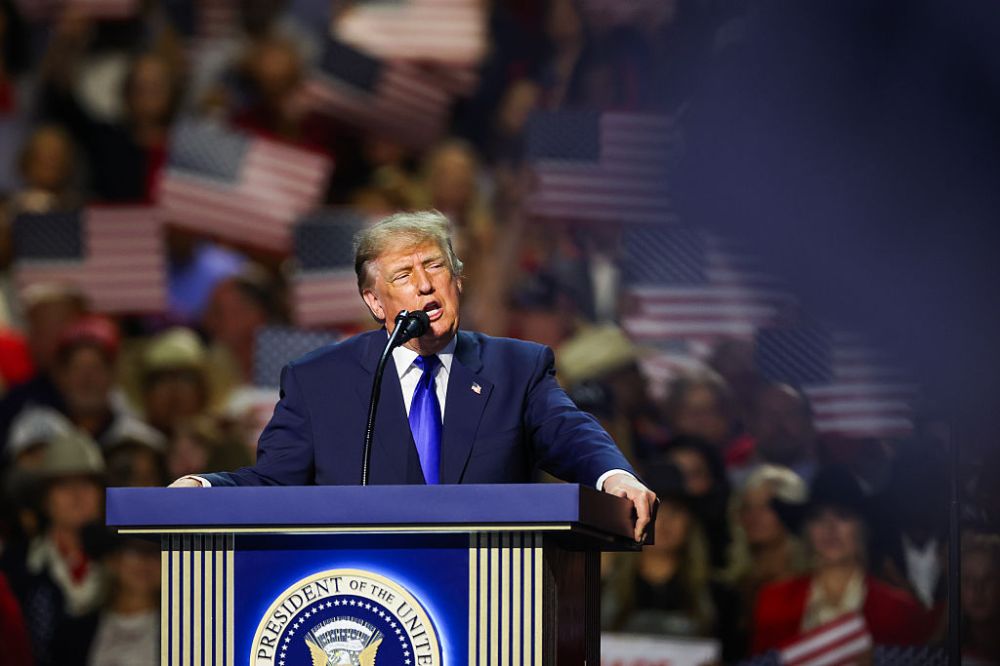
Ryssen kommer – “the Russians are coming” – is an old Swedish saying and Stockholm has centuries of handling that threat one way or another, despite its neutrality. But as one well-informed British official observes, the Swedes now face “a major enemy from within” as well – to employ Mette Frederiksen’s Thatcher-style expression in the Danish Folketing recently. This constitutes a very different and novel challenge; geography matters, but so does demography.
Things had become so bad in Sweden that the Danes had even minted a term for the travails of their larger northern neighbour: Svenske Tilstande – “Swedish conditions” – with negative connotations. Likewise, back in 2021, the German tabloid Bild could run the headline “Statistics prove Sweden is the most dangerous country in Europe” – highlighting rampant gang crime and illegal migration in the Scandinavian equivalents of the bleakest of French banlieues:“parallel societies” that are physically within Sweden, but are not of it.
In short, Sweden had gone from being one of the most homogenous societies in the world in 1960, with 0.1 per cent of the population with one non-European parent to 4 per cent in 1990, rising to 19 per cent in 2022; for example, that year, 92 per cent of the population of Rinkeby north of Stockholm had a foreign background, with half originating from Africa. And in 2015, Sweden took in 162,877 asylum seekers during the Syrian crisis – equal to roughly one asylum seeker for every sixty inhabitants. Moreover, too many in these “parallel societies” wanted the State’s money, but declined to accept its authority: in areas such as the Rosengård district of Malmö, the local fire brigade would demand a police escort before entering.
Such levels of demographic and cultural change brought other problems in their wake. According to the Swedish Security Service, [Säkerhetspolisen – known by its acronym, SÄPO], the country’s Salafi-jihadist milieu grew from an estimated 200 people in 2010 to some 2,000 by 2017. Thus, around 300 people travelled from Sweden to Syria and Iraq to join jihadist groups, one of the largest contingents per capita in Western Europe; many of them died there.
For the first time there were Islamist terrorist attacks in Sweden: the Iraqi-born Swedish citizen Taimour Abdulwahab al-Abdaly, who had graduated with a BSc in Sports Therapy from the University of Luton in 2004, carried out a suicide bombing in Stockholm in 2010; seven years later, Rakhmat Akilov, an illegal Uzbek migrant whose application for a residence permit was finally rejected on appeal, drove a stolen truck into pedestrians on Stockholm’s Drottninggatan, killing five; and later in 2017, the Gothenburg Synagogue was firebombed.
Some of these jihadis were home-grown; others were not. After the fashion of “Londonistan”, Sweden became a magnet for cohorts from Mogadishu – 30 or so had left Sweden for Somalia to join al Shabaab – and also for IRGC (Islamic Revolutionary Guard Corps) cadres partnering up with criminal gangs. The cocky, self-confident esprit de corps of the jihadis was summarised by the jaunty line which did the rounds in such circles at the time: “People used to say that as long as SÄPO knocks on your door, you know you are on the right path to Islam”.
All this was light years removed from the concept of the largely homogenous folkhemmet – the welfarist “people’s home”, pioneered during the interwar years by the ruling Social Democrats as an interlocking national web of family-style mutual obligation from cradle to grave. This model eventually became unsustainable – when the traditional assimilationist approach to absorbing relatively small numbers of new migrants of earlier periods in Swedish history was abandoned during the Olof Palme epoch in favour of a multiculturalist approach that encouraged newcomers to retain their own traditions and languages.
The British Government has dipped its toe into this approach, through strong English-language requirements and some existing welfare conditionality; but it has stopped well short of the Swedish model
Curiously, Palme was one of the first major Swedish figures, in a debate in the Riksdag in 1979, to raise the dangers of uncontrolled numbers of migrants. Later generations of senior Social Democrats also issued warnings: thus, in 2022, then-Prime Minister Magdalena Andersson – who may yet become head of Government again after the election – warned that Sweden did not need any more “Somalitowns” or “Little Italies”. But, in the round, there was too little in the way of an all-of-government effort to sustain any effective pushback.
Ironically, it is the current shaky coalition Government of the broad Right which has sought to pull many of the remaining levers of the old Social Democratic state – literally to restore national boundaries but also, metaphorically, to reassert the civic boundaries of what it means to be a Swede. It is a complex tale of three Ps: politics, policy and public administration – all of which have been many years in the making.
Back in 1971, Roland Huntford – the Observer correspondent in Stockholm who died earlier this year – wrote a highly controversial book about Palme’s Sweden entitled The New Totalitarians (such was the conformism of the era that it is held that this work contributed to his early departure from the country). One of the chapters was entitled “Welfare as an Instrument of Control”. The Tidö parties are now seeking to do just that once again, but this time in the banlieues of Gothenburg and Malmö, places long exempted from any form of conditionality for receipt of welfare – and the benefits of being in Sweden more generally.
That is what has begun to change under Tidö. Certainly, there has been some top-level institutional innovation – of which the new National Security Council is one of the most important. Until 2022, there had been no permanent body embedded in the Prime Minister’s Office responsible for integrating these strands in a systemic, strategic way; the creation of the British National Security Council (NSC) in 2010 was very much on the minds of the main Swedish centre-Right party, the Moderates, when they were planning its creation in Opposition from 2017 onwards. In the face of the greatest security challenge of modern times, the NSC’s priorities are not just Nato, which Sweden joined in 2024 because of Russia-Ukraine; but also migration, “parallel societies” within the country, counter-extremism and foreign influence.
The architect of this new structure, Henrik Landerholm – who served as the first National Security Advisor – states that it has set the tone for the whole-of-government approach that has been the hallmark of the Tidö coalition. So although the Swedish NSC derived inspiration from the UK model, it goes well beyond its British counterpart’s regular focus on international affairs; it also addresses challenges on the home front and performs the kind of coordinating function which the Whitehall NSC does not.
Indeed, the Government’s inventory of what it has done in the course of this outgoing parliament, called the “Implementation Review of the Tidö Agreement” and published in May 2026, is one of the most comprehensive accounts of its kind; not all of it has been implemented; but it does betoken a level of energy on these issues that British Governments have only very rarely brought to the debate in this country – and kept them front and centre of State activities.
The review thus details at least 52 relevant Government inquiries and legislative measures – ranging on every matter from honour-based violence (there are three initiatives alone on that topic, with different Government Departments in the lead, including criminalisation of virginity tests and virginity certificates (point 4.47 of the Tidö inventory); strengthening laws against child marriage and polygamy (5.20); two inquiries on making Swedish language compulsory for newcomers, including at the pre-school age (5.33); making deportation more frequent following criminal offending (5.21); tightened requirements for acquiring citizenship (5.13); the Swedish Police Authority (the name of the national force there) is mandated to expand and make internal immigration controls a permanent part of its day-to-day operations (5.3); advocates a system of information sharing and mandatory reporting between the police and other public authorities that come into contact with illegal residents – with municipalities and other public bodies being obliged to notify the Swedish Migration Agency and the Swedish Police Authority (5.3); gives the Swedish Migration Agency, the Swedish Police Authority, the Swedish Tax Agency and the Swedish Prison and Probation Service strengthened mandates to cooperate on returns of illegal migrants, with the funding for those activities increased where necessary (5.4); links development aid more closely to migration policy, including by making aid conditional on countries cooperating with Sweden over the return of their nationals (5.22) – an approach subsequently put into practice in an arrangement with Somalia under which Swedish aid was redirected alongside increased Somali cooperation over forced returns.
Asylum claims are down by 96 per cent over 10 years, the lowest levels since 1985. Shootings are down from 391 in 2022 to 158 in 2025, the lowest in a decade
On welfare, the programme reduces pull factors by restricting newcomers’ access to benefits (5.19); restricts social assistance for people living in Sweden illegally (5.23); seeks to make asylum seekers contribute more towards the costs of their reception (5.12); makes benefits for newcomers conditional on participation in civic orientation (5.29); and reduces and restructures establishment benefits (state support) for newly arrived migrants (5.31).
The British Government has dipped its toe into this approach, through strong English-language requirements and some existing welfare conditionality; but it has stopped well short of the Swedish model, which more deliberately uses welfare as a tool for integration.
To adapt Winston Churchill’s famous metaphor, Tidö’s approach may not be the beginning of the end; but in policy terms, it constitutes the end of the beginning. Asylum claims are down by 96 per cent over 10 years, the lowest levels since 1985. Shootings are down from 391 in 2022 to 158 in 2025, the lowest in a decade (though bomb blasts have gone up from 136 in 2024 to 189 in 2025). Police figures, however, suggest there remain 17,500 active gang members, including 1,700 minors, dubbed by some as “child soldiers”. Success in the pushback against Islamist ideology is harder to measure – the sharply reduced immigration numbers help there, too – but funding streams for faith groups that do not fully subscribe to Swedish values are being questioned and cut as never before.
Who deserves the credit here for the improvement in Sweden’s condition? There is no doubt that for all the coalition tensions, the Tidö parties collectively have injected a consistent dynamism into the public debate on these issues, which did not exist previously; sharp-edged populists somehow working alongside longer-established parties to produce a viable programme with a three-seat majority in the unicameral Riksdag. Moreover, under the Swedish system, individual Minsters tend to enjoy little autonomy within their own departments and formal decisions need to be taken collectively by the Cabinet. Again, this has not impeded an ambitious programme.
How did the politics of all this work in practice? The populist Sweden Democrats, the largest single party on the Right, supported the coalition but did not take any Ministerial seats as part of the “confidence and supply” arrangement; the cordon sanitaire around them from the era when they were akin to “parliamentary lepers” (to use Harold Wilson’s phrase about Peter Griffiths back in 1964) was still too strong in 2022 and the Premiership was therefore taken by Ulf Kristersson of the Moderates, roughly the equivalent of the Conservatives.
If the Tidö parties do now secure a new lease of life, the Sweden Democrats (whom all polls indicate are going still to be the largest party on the Right after the election) will claim its share of Cabinet slots – potentially including the position of the Minister of Migration. The incumbent Prime Minister now accepts the Sweden Democrats’ claims on office, too – though the Sweden Democrats leader Jimmie Åkesson states that he will not seek the Premiership until 2030. Significantly, when it comes to Russia, Åkesson’s party is more at the Giorgia Meloni than the Marine Le Pen end of the populist Right spectrum, accepting Sweden’s accession to Nato and measures against the Putin regime; opinion would not tolerate anything else now (some of the pro-Russian elements of the Sweden Democrats have decamped to the far-right Alternativ för Sverige).
Certainly, the Sweden Democrats have played a central part in changing the language of debate – what Swedes now call the åsiktskorridor, the unwritten limits of what citizens regard as acceptable to discuss. Their message is less the stuff of traditional nationalism than of ensuring that all newcomers play by the rules of the highly intrusive Swedish ‘‘nanny state’’; faint echoes here of the shift on the French populist Right, which for some time now has repositioned itself from its historic position of being the defender of the traditional prerogatives of the Catholic Church to being the most hard-edged advocates of a laïcité it once despised. As the Tidö inventory shows, most of the parties now speak the language of what one academic study termed “welfare chauvinism” – giving priority to Swedish citizens who have paid their dues.
The Sweden Democrats’ election posters affixed onto the sides of buses in Skaraborg, near Gothenburg, recently, give a small but significant flavour of the shift in the terms of ideological trade. The campaign advert ran: “Do you miss Mogadishu? The repatriation grant will help you get home”. After twenty ethnic Somali bus drivers called off sick in protest, the bus company, Västtrafik, withdrew the posters for safety reasons. The local Sweden Democrats denounced the removal of the posters as censorship. Their rejoinder is of a piece with the Party’s long-time slogan, “Vi säger det du tänker” – “we say what you think” (echoes here of Jean-Marie Le Pen’s line, “Je dis tout haut ce que les Français pensent tout bas” – “I say out loud what the French think quietly to themselves”).
This small election-time skirmish was nonetheless revealing
But this small election-time skirmish was nonetheless revealing. First, it attracted surprisingly little attention in the scheme of things: after all, both in tone and in substance, it was more direct than the “hostile environment” towards illegal immigration promulgated during Theresa May’s tenure at the Home Office between 2010 and 2016. Surprisingly, perhaps, the original repatriation initiative was promulgated back in Olof Palme’s day in 1984; but the Tidö coalition has significantly increased the quantum for those who wish to take up the repatriation option (5.17 of the Tidö implementation inventory).
Although the Tidö coalition is coming to the end of its term, the policy energy is still there, notably amongst the traditional parties of the Right. Thus, Deputy Prime Minister and Christian Democrat leader Ebba Busch launched a detailed policy platform in May 2026 entitled Action Plan: Stop Islamism in Sweden. Campaigning at a rural Church gathering at Vårgårda near Gothenburg, she told The Spectator that her top priority items in the next parliament are banning the hijab and sharia courts and stopping regular calls to prayer from public buildings.
Similarly, Benjamin Dousa, the Overseas Aid Minister – reckoned by many observers to be the Moderate to watch in the future – played a key political role in the process, requiring certainty that any Swedish aid will not go to organisations which support antisemitism, terrorism, Islamism, or undermine women’s rights. This led to a review process that stopped Government funding going to Islamic Relief Sweden via the Swedish International Development Cooperation Agency (SIDA). At his office in the Foreign Ministry in Stockholm, Dousa tells The Spectator how this new and more exacting “precautionary principle” ensures that Islamic Relief Sweden’s disbursements in developing countries do not find their way into the wrong hands; a notable policy win in a society that has historically venerated overseas aid as a central plank of its global virtue.
As with all reforming ministries, the battle of ideas matters here too – and for a country of its size, Sweden has produced a striking amount of preparatory academic work that informed the 2022-26 Government’s agenda. Thus the intellectual engine behind the reappraisal of Islamic Relief Sweden is Magnus Ranstorp – a Board Member of SIDA and a leading world authority on terrorism, who is now Strategic Adviser at the Centre for Societal Security at the Swedish Defence University.
Ranstorp’s own career highlights just how these issues have now moved centre stage. Back in 2009, he was the co-author of the pathbreaking Rosengård report on the Malmö suburb which warned that an increasingly assertive radical Islamist milieu was imposing religious and social controls on sections of the community, particularly women. This, he predicted, would create conditions conducive to radicalisation. The Rosengård report triggered a firestorm of criticism from left-wing politicians, academics and activists – and even from SÄPO. Yet its central warnings were vindicated: as noted above, Osama Krayem, an Isis foreign fighter, was radicalised in Rosengård.
But Ranstorp’s main concern now is less with terrorism inside Sweden’s borders than it is with the infiltration of key institutions of State and civil society. He was thus a key advocate within the system of the French Interior Ministry report of 2025 on the Muslim Brotherhood – which highlighted the role of the Ikhwani presence in Sweden, which is small but influential because of Qatari funding and its role in broader European Islamist structures such as the Federation of Islamic Organizations in Europe (FIOE), now renamed the Council of European Muslims (CEM).
In consequence of the French Interior Ministry report, the Swedish Ministry of Labour – where integration policies reside – has now commissioned Ranstorp to map political Islam’s effects on democracy, institutions and integration, including infiltration into public institutions, to report in 2027; separately, the Swedish Ministry of Justice has also commissioned a review on resilience against infiltration of municipalities, regions and the business sector, the Infiltration Commission, also scheduled to report in 2027.
Ranstorp has also been a significant figure in the work of the Swedish Psychological Defence Agency – an official body which was conceived in 2018 under the previous Social Democratic Government to deal principally with Russian disinformation and political warfare; in recent years, it has widened the scope of its work to include rebuttals of Islamist campaigns against Sweden. Thus, the Swedish Psychological Defence Agency exposed a massive online global campaign conducted against Sweden – claiming that social services there deliberately placed abused Muslim children into care with non-Muslim families, thus leading them to abandon their religion.
Another significant official body is the Centre for Preventing Violent Extremism – set up in 2018 as a unit within the Swedish National Council for Crime Prevention to disseminate learning about threats and to coordinate work between central Government, regions and municipalities. In practice, it does not confine itself to violent extremism alone (“the crocodiles nearest the boat”, to use then-MI5 Director General Jonathan Evans’s metaphor during his appearance before the Intelligence and Security Committee inquiry into the 7/7 bombings); it addresses non-violent extremism as well.
In 2025, the Government also appointed a special investigator to map and to propose a framework to prohibit or discourage foreign funding of religious communities and other activities that are linked to extremism of all kinds: the highly energetic Justice Minister, Gunnar Strömmer of the Moderates warned that the Muslim Brotherhood and the Russian Orthodox Church were both trying to gain influence in Sweden. Its published proposals were based on data from the Swedish Financial Supervisory Authority, the Swedish Tax Agency and the member banks of Finance Sweden; the compilation showed that between 2020-2025 incoming cross-border transactions amounted to SEK 3.5 billion (£270million). It proposes that the Swedish Agency for Youth and Civil Society (MUCF) should become the permanent review authority for transfers of funds from overseas to Swedish religious communities.
Such independent agencies have long enjoyed a significant status in the Swedish constitutional tradition, where they formed an early bulwark against the power of an absolutist monarchy going back to the 17th century; in short, the Swedes got there long before the British Conservatives launched their own rather different “agentification” programme during the later Thatcher/Major eras. But whereas that process in Britain often places UK agencies beyond the reach of Ministers under the rubric of “operational independence”, the Swedish system (for all its supposed “dualism” between policy-making and administrative functions) has proven in practice to be more sensitive to democratic sensibilities than Roland Huntford’s account gave it credit for.
In national security matters, in particular, Swedish agencies such as SÄPO were ahead of generations of politicians; perhaps because they were less in thrall to Swedish ideas of “moral superpowerdom” than most. They proved capable of learning from their mistakes: thus back in April 2019 SÄPO and the police forged a joint operational programme called Redex (Reduction of Extremist Violent Milieus), partly based on the UK model of more structured intelligence cooperation.
Cooperation between the services of Sweden and the United Kingdom is closer than ever
Significantly, cooperation between the services of Sweden and the United Kingdom is closer than ever – under the UK-Sweden counter-terrorism dialogue, part of the broader strategic partnership between the two countries established in October 2023. It is certainly needed: in July 2026, a Norwegian teenager was convicted at the Old Bailey of conspiracy to murder after travelling to Huddersfield to carry out a contract killing for Foxtrot, the Swedish criminal network linked to the Iranian regime. Britain had already sanctioned Foxtrot and its Sweden-based leader Rawa Majid in 2025 for Iran-directed violence against targets in Europe.
Where the Swedish security model approach does differ appreciably from that of the United Kingdom is in the willingness of SÄPO, as its lead Agency, to tackle non-violent extremism. For example, since 2019 (again, well before the Tidö coalition) with the introduction of a statutory “ownership and management assessment”, there has been a more rigorous set of conditions for becoming a school owner in Sweden.
In 2021-22, it emerged that children at the Framstegsskolan in Rågsved, southern Stockholm, risked radicalisation by being in an environment that promoted social separation rather than respect for fundamental democratic values. The school’s founder, known simply as “AA”, had twice been Chairman of the Federation of Islamic Organisations in Europe (FIOE), which the Muslim Brotherhood had described as its Continental branch. SÄPO’s formal assessment supplied to the Swedish Schools Inspectorate in March 2022 stated that “AA” had “for several decades been a central person in the dissemination of a totalitarian Islamist ideology incompatible with Swedish democratic values”. In May 2022, after SÄPO’s assessment and its own investigation, the Swedish Schools Inspectorate revoked Framstegsskolan’s authorisation to operate. It concluded that the leadership was unsuitable to run a school. The decision meant the school could no longer operate from August 2022.
For wider pedagogical reasons, the Tidö coalition pledged under paragraph 6.24 of its policy inventory to increase the powers of the Swedish Schools Inspectorate. But they certainly had extremism in mind as well. An amendment in 2023 to the Education Act introduced an explicit democracy condition – making anti-democratic influence a legal ground for failing the suitability test as an owner of a school. The Government then instructed the Swedish Schools Inspectorate to intensify inspections of religious schools and other entities where there was a risk of extremism. In December 2024, the Stockholm Court of Appeal ruled in four cases that SÄPO’s information about links to violent extremism was sufficiently concrete to justify the Swedish Schools Inspectorate’s withdrawal of licences. Indeed, between 2019 and 2024, there were nine revocation decisions affecting 14 schools because of the risk of anti-democratic influence; in seven of the nine cases, the Swedish Schools Inspectorate received information from SÄPO.
The Swedish Schools Inspectorate can thus open an investigation and ask SÄPO for intelligence or an assessment about people connected with a school – as occurred in the case of the Cordoba International School in northern Stockholm, after four pupils disappeared abroad in 2023. It is the Swedish Schools Inspectorate which takes the regulatory decision to close or to reform the school; but SÄPO alerts the Swedish Schools Inspectorate of its concerns as required. The contrast with the United Kingdom is stark: would any Director General of MI5 contact HM Chief Inspector of Schools to report his or her concerns about an educational establishment, or vice versa, for that matter?
Likewise, SÄPO calls out specific Islamist institutions that it deems to be a threat to national security. In 2025, it made the assessment that the Shia Imam Ali Islamic Centre – a mosque in Järfälla – was being used by the Iranian regime as a platform for intelligence operations and other activities in Sweden against opponents of the regime. The Swedish Migration Board (another independent Agency) duly decided to expel the Imam. Again, can one imagine MI5 “naming and shaming” similar religious organisations in this country, such as the Islamic Centre of England which is currently under investigation by the Charity Commission over its alleged ties to the Iranian state (which it denies)? It may be that the current Government’s promise earlier this year of an annual published extremism review in the document, Protecting What Matters: Towards a more confident, cohesive, and resilient United Kingdom, will seek to do that; but the signs are not promising.
If the Social Democrats do now win – and whatever happens, they have certainly not been consigned to electoral oblivion, after the fashion of France’s Socialist Party or Greece’s PASOK – how much of the Tidö legacy will they leave in place? There is plenty of pedigree in the Social Democratic tradition for them to adopt a more muscular stance on such issues; indeed, Social Democratic politicians like to point out that the traditional centre-Right parties were supportive of the original decision to open the country’s borders to higher levels of migration – for the sake of the needs of business. Thus both Magdalena Andersson in Sweden and Mette Frederiksen in Denmark still describe their right -of-Centre opponents as the “bourgeois parties”.
To adapt another famous metaphor from British history, the Swedes may yet save themselves by their own exertions, and the rest of us by their example
There has certainly been an extensive period of reflection within the Social Democrats, precisely because the issues of immigration, integration, crime and extremism cost the party dearly back at the time of the last election in 2022, amongst white and non-white Swedes alike. The Social Democrats’ “revisionism” has been led by Lawen Redar, the 36-year-old daughter of Kurdish migrants and an MP since 2014. As such, too, she falls squarely within another Swedish tradition: females from ethnic minority backgrounds willing to raise hard questions.
Redar led the Social Democrats’ working group on these issues and in April 2025 presented the Party Board’s new package headlined Sweden needs social cohesion, which has played into her Party’s election manifesto. “I think we should be deeply self-critical. I am critical both of myself and my own party” she declared – and, internally, the findings of this body were not uncontroversial within the Social Democrats. Significantly, perhaps, in this context, she met with Lord Glasman and David Goodhart on a recent trip to London.
The Social Democrats’ public position in the current election campaign, and the emergence of Redar, thus constitute a kind of backhanded tribute to what Tidö has done over the last four years; on standard crime issues the Social Democrats vote with the current coalition roughly 70 per cent of the time in the Riksdag. Moreover, Redar’s focus is on the more obvious “integrationist” aspects of policy – such as the need to learn Swedish in the 14 schools where 100 per cent of pupils have a foreign background.
But she shies away from saying much about the sharper-edged ideological aspects of Tidö’s agenda, such as the robust “precautionary principle” towards recipients of Government grants and the role of the Muslim Brotherhood. For example, will the current official inquiry into religious radicalisation, with a focus on political Islam (headed by Magnus Ranstorp) survive such a change of Government? And, if so, on what terms?
After all, the Social Democrats may well be dependent in any future broad Left coalition after the election on the Greens and the Left Party – which strongly oppose Tidö’s measures. In the closing days of the campaign, the Left Party continues to be plagued by new revelations of anti-Semitism and Medieval-style conspiracy theories amongst its candidates.
Back in 2005, the Hungarian-born Swedish microbiologist Georg Klein described his adoptive countrymen as fredsskadad – or “peace-damaged” – for assuming peace to be the natural state of affairs. No longer. To adapt another famous metaphor from British history, the Swedes may yet save themselves by their own exertions, and the rest of us by their example. Whoever would have guessed it?
Lord Godson is Director of Policy Exchange. This is part of his series for The Spectator on extremism and immigration issues on the Continent




Comments