Midway through a podcast appearance, my host became distracted by a flurry of social media posts claiming that he was a paid agent of the Israeli government.
The host was Tim Pool; the accuser was Alex Jones, until then Pool’s friend and ally. The dispute began last month, when Pool suggested that Jones’s recent dip in online viewers had more to do with his wavering on Donald Trump than with any covert censorship. The argument quickly escalated, with Jones asking whether Pool was taking “marching orders” from Benjamin Netanyahu. I have no beef with Jones, but I doubt that Pool, who earns a healthy eight figures from his podcast, would torch his credibility for a little extra money.
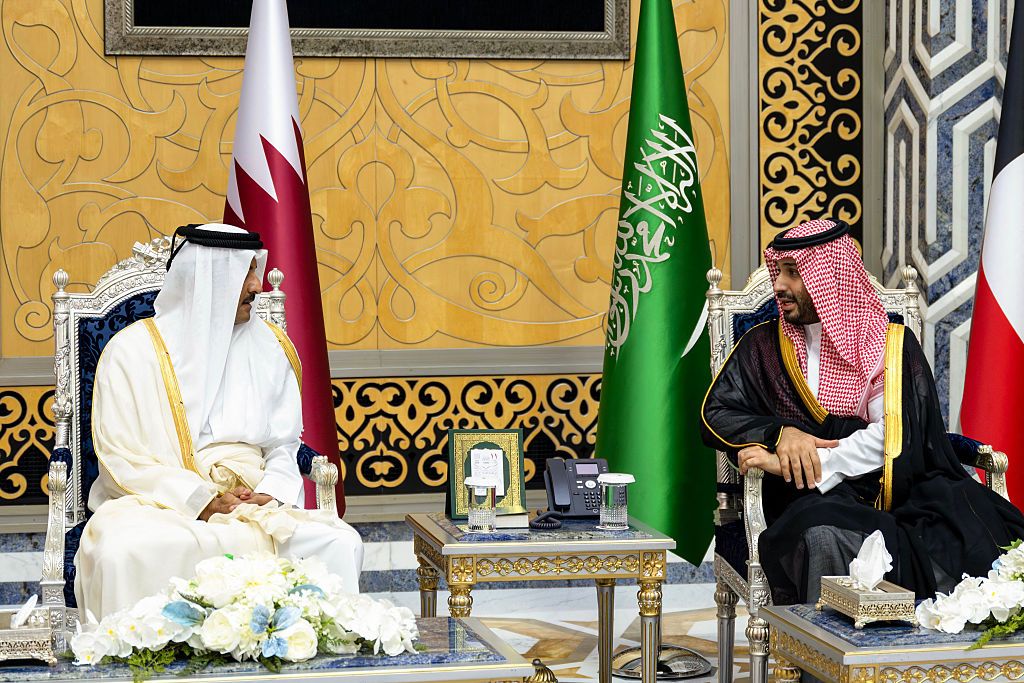
Similar allegations fly when it comes to Qatar, the Gulf state frequently accused of covertly funding influence operations in the US. Suspicion has fallen especially on Tucker Carlson, dubbed “Tucker Qatarlson” by pro-Israel voices who suggest that the former Fox News host is somehow on the emirates’ payroll.
This makes even less sense than the Pool allegations. Carlson was earning more than $15 million a year at Fox. Multiply that over six years, add his current position as one of America’s most-watched podcasters, and it is clear he needs Qatari riyals even less than Pool needs Israeli shekels.
This is how political disputes now tend to go. As an online argument goes on longer, the probability that one or both parties will be accused of shilling for a foreign power – usually Israel, Qatar, China, Ukraine or Russia – approaches one. It is the new Godwin’s Law of the modern internet.
Weakening a rival country by propagandizing its public was once a task that fell to Cold War spies
Adding to the general paranoia is the fact that influencers are not required to disclose whether a foreign government has paid them. Florida Representative Anna Paulina Luna hopes to change that with an amendment to the Foreign Agents Registration Act. Luna claims that “a large portion” of influencers “have been approached at one point to push a certain position that’s probably tied to a foreign country.” Such campaigns are indeed real, and they are quickly becoming more sophisticated.
Pool was embroiled in the last major story about influence campaigns. In 2024, the Tenet Media affair initially seemed like a major scandal: two individuals allegedly linked to Russian state media were accused of paying major influencers – including Pool, Benny Johnson, and Dave Rubin – to produce content. It turned out to be a dud. According to the indictment filed by the Department of Justice, the two Russians had hidden their true background from the influencers, none of whom were implicated by the DOJ, and who were described by PBS as having been duped.
An analysis by the left-wing tech mag Wired, generally hostile to most of the figures involved, found that Tenet Media’s channel focused on topics the influencers tended to cover anyway: critical race theory, transgender men in women’s sports, and illegal immigration. There was comparatively little content about Ukraine on Tenet’s channel, which according to those involved merely licensed existing content from creators, while exerting no editorial influence.
It’s a poor propaganda operation that must hide its true purpose from those involved while paying them to cover topics they were going to address anyway. After all the crying wolf during the Russiagate fiasco in Trump’s first term, the Tenet affair was met with a collective shrug.
But some serious campaigns are being uncovered. The social media site X recently announced the discovery of around 200,000 automated accounts based in China – a vast bot farm which, among other things, was amplifying concerns about AI data centers “in a manner that could manipulate a legitimate debate about American AI and energy policy.” According to the platform’s global affairs team, the bots were posting comments and AI-generated cartoons about data centers driving up energy prices and enriching Silicon Valley elites at the expense of ordinary people.
Here is a foreign-influence campaign that actually makes sense. China and the US are locked in a furious contest for AI supremacy. As the US uses trade restrictions and overseas alliances to deny China the advanced hardware it needs to keep pace, it makes perfect sense that Chinese agents would want to stoke public suspicion of data centers, which are critical to America’s edge in the AI race. Weakening a rival country by propagandizing its public was once a task that fell to Cold War spies in the CIA and KGB. Now it’s carried out in cyberspace by influencers and faceless bots.
When it comes to paying influencers, China has been in the game for some time. As early as 2021, the New York Times was reporting on the Chinese state’s practice of enlisting western YouTubers to parrot government talking points. These influencers denied the widespread abuse of the Uighur minority in Xinjiang and alleged that Covid originated in the US, rather than China. The Associated Press has also found Chinese state media employees rebranding themselves as independent “lifestyle bloggers,” slipping condemnations of the West’s Ukraine policy in between travel tips.
China has vast resources to spend on influencing the western public, but it is far from the only player. The claims against Pool and Carlson are probably bogus, but that does not mean all allegations of Israeli and Qatari influence campaigns are without merit. Netanyahu has called social media “the most important modern battlefield,” and his government has backed the sentiment with a quadrupling of Israel’s foreign PR budget, which now includes substantial payments to online influencers. It is less clear how much Qatar, Israel’s chief regional rival in the US influence game, has actually spent on influencers. Qatar had reportedly put money behind a much-publicized expedition of MAGA personalities to Doha last December, though it was never conclusively proven. What is known is the vast sum the Qataris have spent on more traditional routes to influence in the US: more than $250 million spread across 88 lobbying and PR firms since Donald Trump’s first term, plus generous eight-figure donations to leading policy institutes including Brookings and Aspen.
One can hardly blame foreign countries for playing the influence game: western ones do it too. A three-year investigation by Declassified UK, published last summer, found that the British government had paid a private company, Zinc Network, to recruit online influencers across central and eastern Europe. In one instance, the company tried to sway the 2023 Slovakian elections in favor of the pro-EU, anti-Moscow party. Paid influencers were apparently asked to sign non-disclosure agreements before being told about British Foreign Office involvement. One former employee described the Zinc Network campaigns as essentially “interference in a sovereign country’s internal affairs.” My organization, the Foundation for Freedom Online, found that the US government was also involved, funneling around $10 million to Zinc via USAID – an agency that, contrary to the claims of outraged liberal commentators, is not solely dedicated to feeding starving Africans.
Every capable nation state – including those we like – is trying to propagandize the others’ publics. The question we all want answered is how to tell a real foreign-influence campaign apart from paranoid finger-pointing on social media.
Once upon a time we trusted institutions – chiefly the western intelligence community – to make that determination for us: to identify and counter foreign skullduggery. Unfortunately, that community obliterated its credibility during Russiagate.
The largely imagined specter of Russian influence was used to justify spying on Trump’s first presidential campaign, criminally charging his national security advisor and many of his senior staff, censoring swaths of Americans whose social-media accounts were falsely labeled “Russian bots” and, at a critical moment in the 2020 campaign, suppressing a potentially election-swinging New York Post exposé on Hunter Biden. Like the Praetorian Guard and the Ottoman janissaries before them, those charged with external security could not resist turning their weapons inward. It was a monumental abuse of power, and one that makes official allegations of foreign influence a little harder to believe.
There is another wrinkle in the foreign-influence narrative that ought to be considered. What about the people who support foreign powers not because they are paid to, but because for some reason – racial, religious, ideological, or all three – they hate white, western capitalist countries?
Take Hasan Piker, the left’s answer to Nick Fuentes. He is best known for an ever-expanding list of third-rail statements, including “America deserved 9/11” and “I hate America,” as well as his infamous remark that it is “a little bit better” for the daughters of millionaires and billionaires to be raped than other women. He also performed a dance routine mocking Charlie Kirk’s assassination.
Piker has lately caught the travel bug – specifically for communist countries. In November he visited China, where he declared that there is “no patriotism in my heart” for the United States. More recently it was Cuba, where, alongside Britain’s former Labour leader Jeremy Corbyn, he complained that the US was responsible for the island’s longstanding poverty.
What about the people who support foreign powers because they hate white, western countries?
Like Pool and Carlson, Piker probably doesn’t need any extra pocket money from the Chinese or the Cubans. He simply wants communist regimes to succeed.
More suspicious is the man who organized the Cuba excursion, which included numerous figures from the international Third Worldist left. That man is Neville Roy Singham, who made his fortune – just less than $800 million, from the sale of a software company – in the US before decamping to Shanghai.
Piker is only the latest Singham project. For decades, Singham has cultivated an international network of leftist influence, spanning YouTube channels with millions of views, newspapers in India and training workshops in Africa, as well as activist groups (notably Code Pink) in the US. The empire is now run from an office in Shanghai, which Singham shares with a Chinese propaganda outfit.
Singham’s network essentially parrots Chinese government talking points. In Washington, Code Pink activists visit congressional offices to deny evidence of forced labor in Xinjiang. In South Africa, Singham funded publications that praised China’s involvement on the continent and urged Africans to disbelieve “propaganda” about Chinese policy in Taiwan and Hong Kong. In India, the authorities raided a news outlet belonging to Singham over allegations of ties to China. The New York Times published photographs of Singham attending a Chinese Communist party forum. This is the person who organizes Piker’s trips to Cuba.
That said, both Singham and his groups strenuously deny any formal or financial links to the Chinese government. He may well be telling the truth. Quite apart from his independent wealth, Singham, 72, has been a hardline Maoist since the 1970s. Back then, large parts of academia, the media and the activist left supported America’s foes – not because any foreign power was paying them, but because they wanted communism to triumph over the hated capitalist West. Entire academic fields, with names such as “decolonialism” and “post-colonial studies,” are the product of that same impulse.
The Berlin Wall may have fallen, but the true believers didn’t go anywhere. They now have younger ideological apprentices in the Pikers of the world. We should by all means remain vigilant against those who covertly push the narratives of foreign powers for pay, and support efforts such as Representative Luna’s, which will hopefully uncover hidden funding. But we should also remember that there are those who simply want the West’s enemies to succeed. In many ways, that is the bigger problem.






Comments