The comedians have bolted. Once, they were confined to underground clubs, scheduled radio, sitcoms and panel shows. But no more. They buck across our feeds, whinny down podcasts and nuzzle our thumbs for ‘likes’.
The old stables are falling into disrepair. Television comedy is contracting. British broadcasters commissioned 41 per cent fewer scripted comedies in 2023 than the year before, making it the most in-decline scripted genre. The BBC has been retreating from comedy for a decade: its first-run comedy output fell from 225 hours in 2010 to 108 in 2022-23. As television’s doors close, comedians are being driven elsewhere.
At the end of July, the British television institution, Live at the Apollo, which launched a thousand comedy careers into the mainstream, was axed. The Friday night favourite is being laid to rest as the BBC explores ‘digital plans’.
This means short-form reels. And the move makes sense. For years, Live at the Apollo sets have been written to create clippable viral segments. They might as well cut the middleman. This practice is known as ‘clip farming’. Jokes are written to reach around a minute, and the set (and long-form video) is just there to be harvested for clicks.
In the digital era, comedy starts with a viral hook. Niche character comedy thrives on social media. ‘Five guests you’ll meet at a destination wedding’; ‘Girl with ADHD cleans her house’. The hope is that you’ll see it and think, I (me, myself) go to destination weddings where I have to meet people! I clean my house! Relatability has always been a comic asset, but like the rise in hyperreal ‘confessional’ literature, the more literal the better.
But hooking people’s attention with a minute-long video, buried among everyone else’s minute-long videos, is different from entertaining an audience in a scheduled slot. If you see comedy live, or even watch it on television, you’ve bought in – no one wants to have wasted their time or the ticket price, or to return to flicking through terrestrial channels.
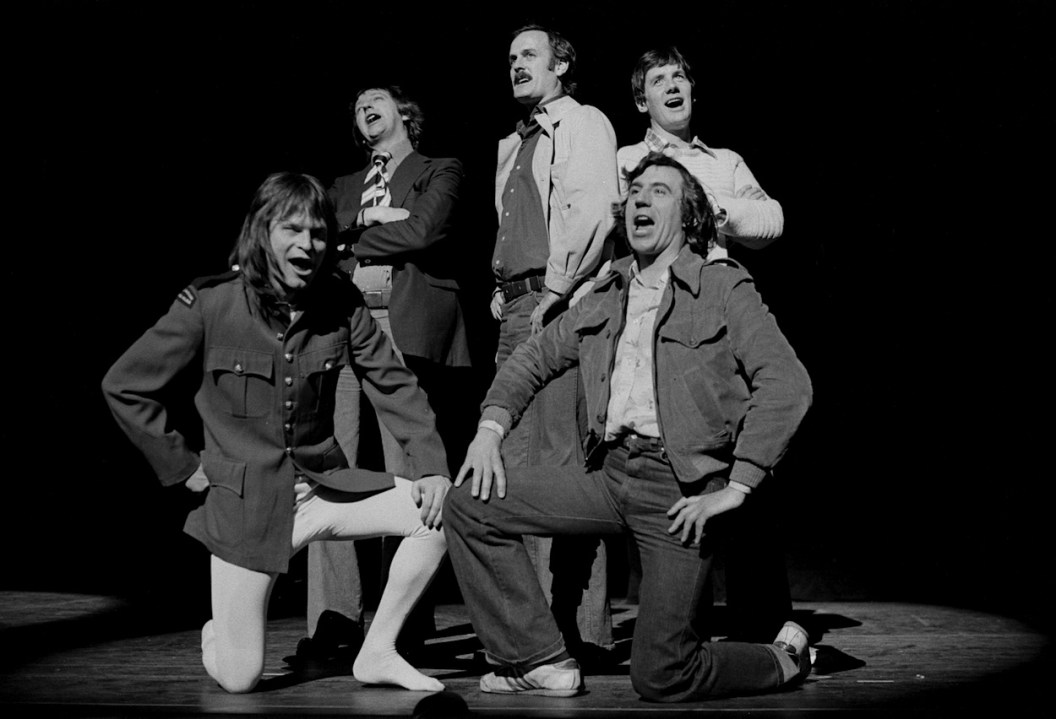
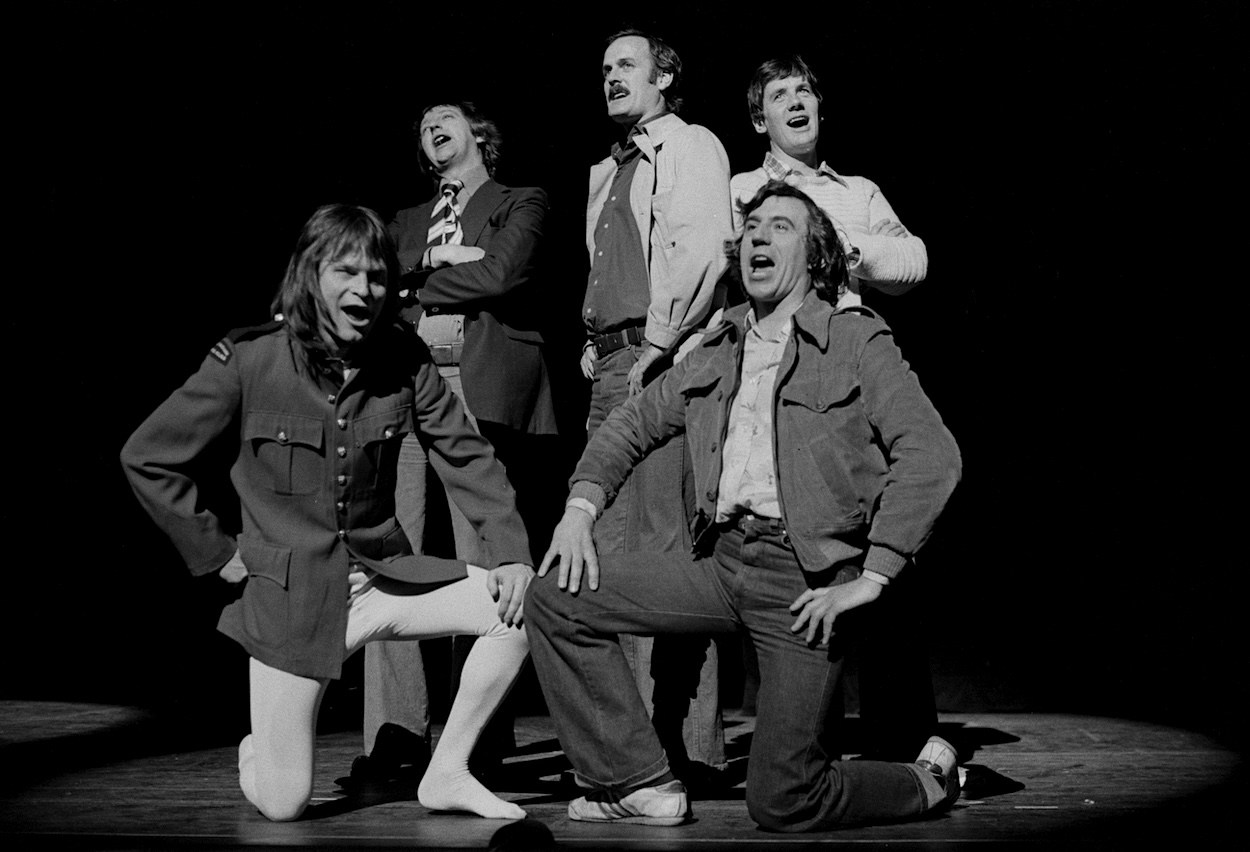
Who would write a joke like the beloved Four Yorkshiremen today?
A live Monty Python performance of the beloved Four Yorkshiremen sketch runs to just over three minutes. Four wealthy Yorkshiremen trade stories about their deprived upbringings, each more absurd than the last, satirising the tendency of older generations to exaggerate how hard things were ‘back then’. The first proper laugh arrives at 1:15: ‘Oh, we used to dream of living in a corridor.’ Everything before is groundwork. The sketch becomes funnier through repetition and escalation, continually rewarding the audience for its attention. But it starts small. Who would write a joke like that today?
Finlay Christie is a Gen Z comedian who has never had trouble with the algorithm. His sharp observations about white people who seek cultural validation and spot-on impressions of national treasures, such as David Mitchell, have earned him hundreds of thousands of followers across Instagram, YouTube and TikTok.
Finlay has a calm, collected presence when I meet him at Edinburgh Fringe. He’s here preparing for his upcoming tour, Champagne Casanova. When Finlay says that maintaining a social media presence is easy, I believe him. ‘I had a reviewer say once that I was everything that’s wrong with the world,’ he says. ‘So I think I have this instinct to defend groups that everybody else hates.’ He tells me about a radio show he recorded recently where he could hear the audience walking past the green room. One woman said, ‘Yeah, he just says outrageous things, you know, to try and get a response.’ Finlay twinkles. ‘What do they think comedy is?’
He tells me he’s written two television scripts. ‘It’s utterly pointless. Utterly, utterly pointless. Absolutely no point.’ Why? ‘There’s no budget, so I can make something on YouTube with the same budget as Channel 4, and if I make it on my own I can make it exactly how I want to do it. TV wouldn’t be recognisably my own by the time it’s finished.’
I ask him why he put in the effort to write those two TV scripts. ‘The first script’s the thing I’m proudest of. It’s great,’ he says, not put off by the pilot not being developed into a series. Institutional approval still holds an appeal to Finlay. ‘I wanted to make a TV show because I guess I want to please the teachers.’
No art form depends so much as comedy on eliciting an immediate response from its audience. It has to make us laugh. But that’s not all the medium is for. It is clear at the Fringe this year that most comics have something to say. Most of the shows I saw were written under the umbrella of some wider human journey: a life-changing diagnosis in the family, a disastrous move to a foreign city, reconnecting with dead parents by reading their erotic love letters from the 1980s.
Necessarily, reels don’t allow their audience this layered experience. They need the audience to immediately connect with the content, then that connection is rewarded with a laugh. Longer sets typically communicate things which are harder to grasp, confront issues in a different way, chart what the performer is trying to make sense of with laughter.
Finlay says the best laugh is carried through the room at points he can’t quite explain. ‘My friend said to me after a gig recently, “That joke has such a big laugh and I don’t know why.” And I was like, “Yeah, me neither. That’s so nice.”’
While at the Fringe I phone British comedy veteran Arthur Smith. He sounds wistful that he’s not attending this year’s festival. ‘It’s a great playground. A playground of the imagination.’ He admires the younger generation with their online platforms but tells me that he struggles with the void of human connection that digital engagement leaves.
‘I’m trying not to be a bitter old bastard and I think I’ve mostly succeeded. But it’s really not the same online as a group of people all in the same room, sweating and laughing away together. Laughter brings them together. If you see something funny on your own, you might not bother to laugh.’
I speak to Alfie Brown and Jessie Cave between their performances. The pair have four children together. Jessie does her own unique brand of theatrical comedy, employing puppets and embroidered cushions as characters. Alfie does more conventional stand-up. Each has a dedicated following and extensive, critically acclaimed showreels but registers unease at the importance of social media content in sustaining a career.
Alfie has just come off stage after performing his raucous show The Entertainer, which, from next month, he’s taking on a three-month-long tour of Britain. Wild-eyed and alert to the room, the social contract between the audience and performer is not lost on Alfie. Punters might have felt more comfortable behind a fourth wall. He’ll hector the audience, raising the intensity of his performance to get more of a reaction from the crowd if necessary. In a set less saturated with jokes he is easily the most commanding performer I see this Fringe. When the punchlines come his full-throated delivery gets the loudest laughs. After he gets off stage he is pulled in different directions by friends and industry guys wanting to buy him drinks.
Jessie is waiting for me outside the gig with her mum and four children in a whirl of merry chaos, the youngest swinging from bannisters. Notably, there are no crèche facilities at Fringe for performing parents, making this cornerstone of the British comedy circuit more hostile to artists with dependants than typical Gen-Zers. Jessie has performed a run of Work in Progress shows at the Fringe, alongside a limited re-run of her 2018 show Sunrise, which is back on at the Young Vic next month.
For Alfie, the advent of short-form content has created too many ‘trendy’, superficial jokes. ‘The tragedy of short-form video content being everyone’s template for joke writing is that it encourages a template for joke writing where homogeneity is incentivised.’
He tells me that his father, Steve Brown, a composer and lyricist, had similar misgivings about imposing rules on creativity. ‘My dad said he wrote his most interesting music before he ever learned to play the piano. As soon as he learned the rules, he was beholden to a structure, a template, a rule book.’
Funnily enough, when I speak to Finlay, he identified the other side of the same coin. ‘Social media is much less terrifying when it’s gamified. It’s less scary than it was when I was in school, when the numbers reflected how popular you were. Now it’s just about making funny videos.’ For Finlay, it’s often not about hard work. ‘Sometimes people want to see the laziest content ever, like literally you in your bedroom having just thought of it, no green screen, no props. That would be too contrived.’
I think about A Room of One’s Own. Woolf says that there must be a lock on the door to keep people out while the artist is working. It’s probably indisputable that our phones make it harder to concentrate, however scrupulous we may be about screen time. Jessie tells me that while she was writing her novel Sunset she got distracted by trying to film videos aimed at going viral online. ‘You can’t be writing something long-form and checking social media,’ she says, shaking her head. ‘Of course you can’t.’
‘The great irony,’ Alfie says, ‘is if you’d done the sketches more and written a worse novel, the novel would have done better than if you hadn’t done the sketches and concentrated only on the novel.’ But cultural capital hasn’t caught up with short-form content, even if there might be more money and market appeal for it. Artists still want to write longer-form works – novels, full-length scripts – because they allow them the freedom to convey something complicated. Raw, human stuff is often contradictory. It takes that bit longer to get our head around it. In longer works we might learn something about life, or other people, or what it feels like to be those other people living their lives in the myriad ways they chose to live them.
It is hard to imagine much of today’s ‘content’ lasting four centuries
Alfie says: ‘Reading a book gives the illusion of disconnection because you’re in another world, but actually you surface so much more connected to the world with a better understanding of it. Social media offers the illusion of connection, whereas actually it disconnects. I think that’s why people have never been so lonely.’
I ask Arthur Smith what becomes possible when a comic performance really works – when everyone is awake and the audience is as alive to the moment as the person on stage. He tells me about the ending of his one-man comic adaptation of Hamlet. ‘I quoted Albert Camus: “In answering the question ‘Why do I not commit suicide?’, we answer the fundamental question of philosophy.” Then I went through a heap of reasons not to, some of them quite silly, and ended with the fact that, in 1599, someone wrote a play that could still blow you away.’ Smith recognises that art made centuries ago can still feel startlingly present. Shakespeare is an extreme example of artistic longevity, but as institutions retreat from longer-form work to ‘explore digital avenues’, it is hard to imagine much of today’s ‘content’ lasting another four centuries.
Alfie tells me a story about the last time he drove his dad to hospital, taking him from his home for the final time.
‘He said, “Oh, before we go, can I play you the live version of ‘King Harvest’ by The Band?” And he was just mesmerised. Dying and mesmerised by Levon Helm and Robbie Robertson and all the talent they had together.’
Alfie says that’s the reason he keeps at his own craft; the work matters because from the great collaborative project that we have been chipping away at for millennia, art, we can even begin to make sense of our deaths.
As institutions face funding cuts and our engagement with art migrates online, it’s important to remember that life is long, not short.






Comments