
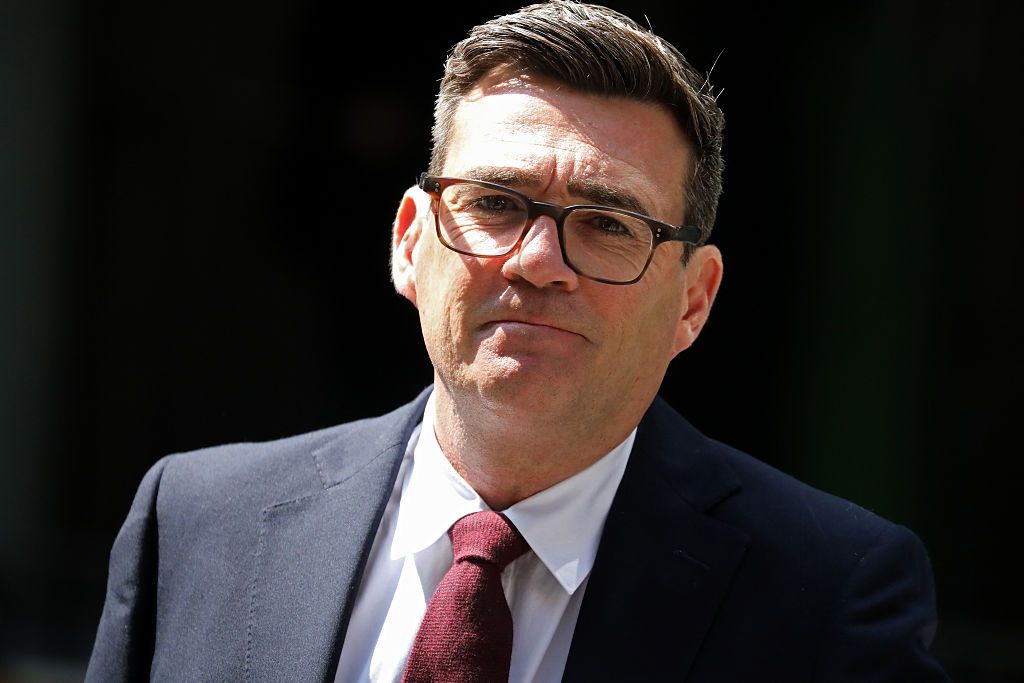
Is Andy Burnham running a ‘circuit breaker’ government from the one led by Keir Starmer, or is it a ‘continuity’ administration? Chancellor John Healey seems to think it’s the latter, telling Sky News that: ‘This Labour government has been a government of change for the last two years. We now step that up with Andy Burnham as leader. We’re a continuity of a Labour government with a change of leader, looking to see growth in every postcode, give people just a little bit of breathing space, whether they’re in households or businesses, but above all to see growth, hope and some future for all parts of this country.’
What does that word salad really mean? It is continuity from Starmer in the sense that the previous Labour leader was elected on a promise of ‘change’ without defining what that meant – and the main change he managed to deliver was the holder of his own job. Healey, of course, was both part of that government and one of the major factors in Starmer’s own tenure coming to an end, given he resigned as defence secretary over Starmer and Rachel Reeves’s refusal to provide adequate funding for the armed forces. But he is also the one now charged with providing the most continuity in that he and Burnham remain committed to the same fiscal rules set out by Reeves. Regardless of the different framing, the government still has to make the same numbers add up.
Burnham sees things rather differently: when he spoke in his first speech as Prime Minister of the ‘circuit breaker’, he followed that with a promise to bring ‘forward the biggest changes in the last 40 years’, including ‘a new political model and a new economic model’. Now, as I said earlier this week, the new Prime Minister does have a habit of making a very brightly-coloured pledge that turns out to be much paler when detailed as a policy. But this is still a much more specific and ambitious definition of the word ‘change’ than Starmer ever offered.
It appears, though, that Burnham is happy to delay that big change for a little while – at least till after the party conference season. He has pushed back Alan Milburn’s final report on young people and work until later in the autumn, presumably in order to avoid every fringe in Liverpool being a bunfight over what benefits the government should and shouldn’t be touching.
Perhaps dodging the debate is sensible, and suggests that the Prime Minister really does have some quite big plans on welfare. A government source also told the Telegraph today that Burnham could only work on ‘one big issue at a time’ – which might have been a criticism, but is also possibly the PM learning from Starmer’s failure to reform benefits. Starmer did not give very much bandwidth at all to the brewing benefits row in his own party because he was so focused on foreign affairs, and turned his attention to the rebellion far too late in the day.
Burnham will know that he will need to put everything behind a push to change the welfare system, and that he can’t be distracted from that. But he can’t push the confrontation over that welfare bill away forever, otherwise he will be leading a continuity government in the worst sense: it will once again be a government that fails to answer the big questions facing this country.




Comments