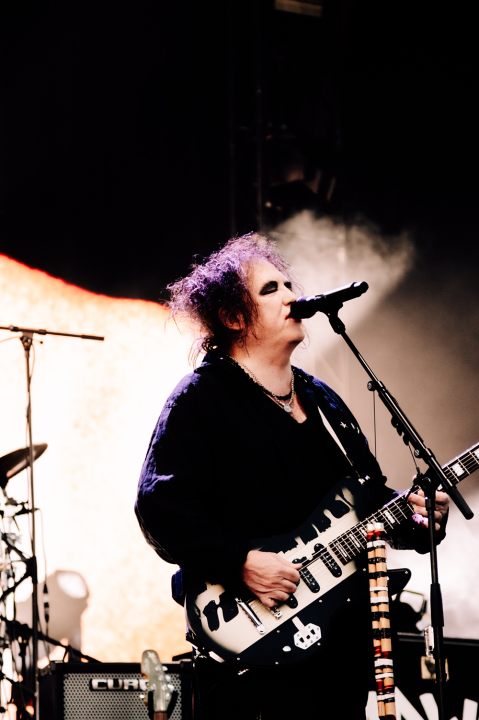
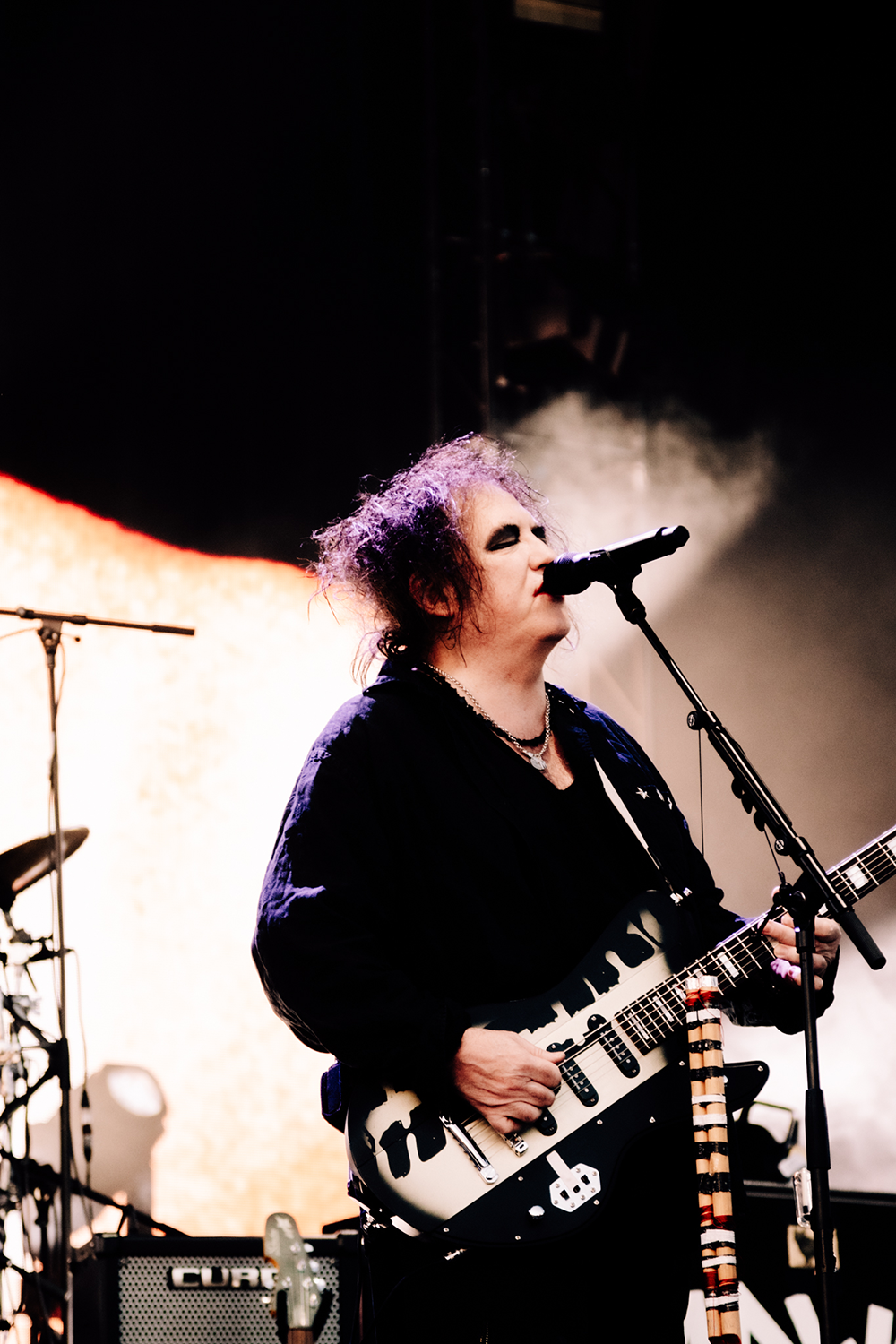
My, how other so-called legacy acts must envy the Cure. There are plenty of bands of 40 or 50 years standing where the original fanbase brings along their offspring to concerts– but very few where so many tribes seem to gather so willingly under their own steam. From post-punk survivors to domesticated millennials, Gen Xers and Zeders, pop kids, neo-goths and sundry alternative types, the Cure seem to say something specific and urgent to each constituency.
Perhaps it’s something about their songs speaking to the child in the adult, and the adult in the child. In any case, there we all were, on the outskirts of Edinburgh, on a warm summer Sunday, rising and falling to the music as the planes came and went at the airport next door.
Unlike many of their contemporaries, the Cure seem to be a band forever living in the moment. They only relatively recently released Songs Of A Lost World, an excellent album of new original material, and although none of the record was performed in Edinburgh, there was a palpable sense of a band still in a state of discovery rather than treading dutifully through old glories.
This was an extended summer festival set, heavily weighted with tracks from the 1989 album Disintegration. It was less punitive than their last British shows in 2022, with an almost perfect blend of light and shade. It certainly didn’t hurt that the Cure have so many great songs. Not just the ones you know – ‘Pictures Of You’, ‘In Between Days’, ‘Just Like Heaven’, the strange, dream-like rush of ‘Charlotte Sometimes’ – but numerous others lurking around the edges of a vast catalogue. Several of these were aired, including ‘Three Imaginary Boys’ and a racked ‘Prayers For Rain’, while the desolate ‘Trust’ met its opposite force in a euphoric ‘Push’.
Following the death of utility band member Perry Bamonte last year, Eden Gallup, son of bassist Simon, has stepped into his place on stage (meanwhile, the 17-year-old son of drummer Jason Cooper, Gabriel, played saxophone on ‘A Night Like This’; clearly it’s not just the audience bringing their kids to the shows these days). The personnel change has brought about a subtle shift in energy, pushing the sound into something less stately and a little more wiry.
And if in the past it sometimes felt that Robert Smith was merely splashing in the shallows of adolescent extremes, at 67 he has now well and truly been through the fires of experience. Whether dark or Day-Glo, the songs felt deeper and more consequential as a result. He’s still a uniquely singular frontman: hands clasped in front of his chest like a troubled priest, hair resembling an exploded osprey nest, smudged lips flickering between grin and grimace. His voice, whether kittenish purr or alienated howl, was remarkable, and entirely undimmed by age.
As has become customary, the encore delivered a final flurry of hits, one tangerine-flavoured headrush after another: ‘The Lovecats’, ‘The Walk’, ‘Friday I’m In Love’, ‘Close To Me’, ‘Why Can’t I Be You?’ Fizzy pop songs about animals and food, sickness and sex. Everyone danced. I’m not quite sure how it happened, but the Cure have become the most inclusive outsiders in the world.
Fizzy pop songs about animals and food, sickness and sex. Everyone danced
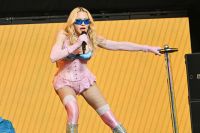
I wonder whether Phoebe Bridgers’s songs will similarly stand the test of time. When the Californian singer-songwriter became a star in 2020 with the release of her second album, Punisher, it was slightly tricky to work out why (a high-profile romance with Paul Mescal, which has since ended, probably didn’t hurt). Her voice was appealingly gauzy, as though everything she sang was filtered through cotton wool, and she could clearly write a decent song, but while she belonged to the lineage of the likes of Elliott Smith and Sufjan Stevens, she seemed to lack the idiosyncratic character of either.
Bridgers’s third solo album makes a similarly ambivalent case for her brilliance. On the upside, Lost Weekend adds a welcome twist to her sound: there’s some nicely sour synth effects, while a ghostly vocal arrangement very effectively undercuts the swooning formality of ‘The Governor’s Waltz’. The more upbeat moments never quite convince, however. ‘Lost Boys’ barrels along pretty tamely, while ‘Haunted’ comes off like an indie-folk Eagles, with its cloying confection of harmonica, fiddle, banjo and pedal steel.
Mostly, Bridgers’s sad, pretty voice seems most comfortable singing sad, pretty songs called things like ‘Kill Me’. The result is a solid, heartfelt indie roots album, but it’s still hard to see quite what all the fuss is about.


Comments