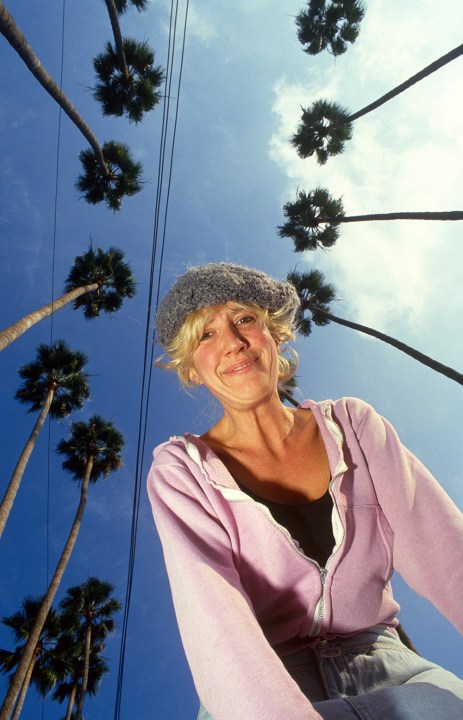


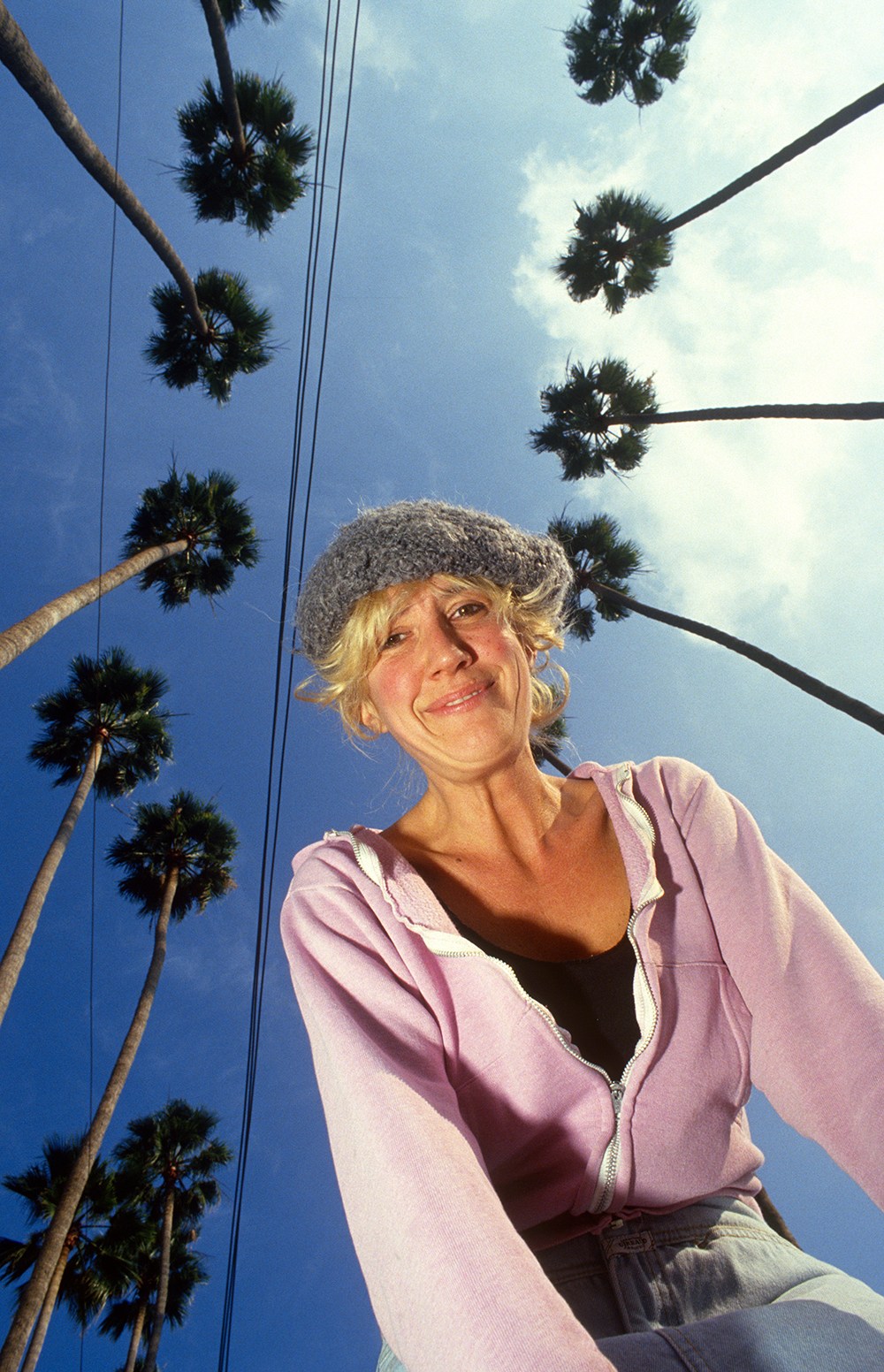
‘I regard Too L.A. as Eve’s second masterpiece – her first being, of course, Slow Days, Fast Company – and her most consequential work,’ is how the editor Lili Anolik introduces the book she concocted out of the late Eve Babitz’s sent and unsent letters. ‘It’s a West Coast, late 20th-century Room of One’s Own, a feminist cri de coeur.’ This is Anolik’s third book all about Eve. She is Babitz’s Boswell. But Too L.A. reminds me of Helen Fielding more than Virginia Woolf.
I can’t say I didn’t relish this book, but by the midpoint I started to feel downright uncomfortable reading it
In masterpieces of her own devising, Eve Babitz (persona) is a bona fide sex goddess with Jim Morrison between her thighs. In her private correspondence, Eve Babitz (person) is Bridget Jones on acid. She measures her days in pounds and cigarettes: ‘I’m trying to get back to weighing 130lb again. I nearly always weigh 135 and I won’t feel I’ve really conquered the smoking thing until I weigh 125lb.’ She’s neurotic about her body: ‘My ass is still the worst one there is.’ The men she meets are awful: ‘Peter Canter is a leg squeezer and not very charming.’ And they appreciate her most when she seems half-witted. Marty from Jefferson Airplane ‘seemed to like me best when I did dumb things like ask what “all those lights were” in reference to the Golden Gate Bridge’.Mr Darcy turns up, imperilling planned spinsterhood. But (plot twist) he’s gay. Our heroine takes too much acid. Also too much coke. Also too much booze. In 1982, she joins AA and quits writing letters. The End.
‘The Eve who survives the Seventies as a person, doesn’t survive the Seventies as a writer,’ Anolik concludes, quoting Eve’s cousin as saying: ‘Eve’s existence was just so unhinged. She believed it had to be that way for her to be a writer.’ Babitz’s existence may have been unhinged, but if sobriety ruined her writing, who wrote Black Swans and I Used To Be Charming?
I can’t say I didn’t relish Too L.A., but by the midpoint I’d started to feel downright uncomfortable reading it. It felt like rummaging through a dead woman’s underwear drawer. If a few of these letters had been sifted out and packaged up to form a book the size of one of those Penguin Little Black Classics I’d agree that Anolik had midwifed a masterpiece. The letter Babitz wrote to Joseph Heller thanking him for a jacket puff is one of them:
In your little quote you say that I make ‘even the shoddiest character interesting and attractive and even the dreariest of relationships fascinating and exciting’. But, Joe, I don’t think anyone’s shoddy. I find what other people regard as worthwhile dread prisons and what people usually regard as crummy, I sometimes can’t even blink I’m so enchanted.
She then quotes Laurie Colwin as telling her agent:
Someone should give the author [of Slow Days, Fast Company] a good spanking if this is the sort of life she actually leads. Although if some jerk lived this way, it would strike me as extremely squalid, Miss Babitz makes it sound extremely romantic.
The letter to Heller is what Anolik is referring to when she says Too L.A. consists of a ‘feminist cri de coeur’ on female fitness for the literary canon. It reads more like a cry for better book reviews to me. She goes on:
What I want to know is, if I tell everyone about my disease, and about my Granma dying of cancer next door, and the cat kicking the bucket in my closet, and how horrible it is being in love with a man who supposedly prefers men and how ghastly it is watching my mother succumb to everyone dying around her… then do you think people will like me better?’

The letter is especially special. In it, Babitz is explicit about what most writers conceal: exactly what she intends to achieve as an artist. She tells Heller:
See, I can’t even put my nose to the typewriter unless my creatures slink around in platinum lamé pyjamas… I am the character. I keep feeling as though nobody knows about a person like me and that I’m original.
After reading the book three times, I think I understand Anolik’s claim at the start of this review. Too L.A. is Slow Days, Fast Company with its starlet stripped of her platinum lamé pyjamas. That’s all well and good, but I’m not sure Babitz wanted anyone to see her like that.
As a reader, and a fan of both Babitz and Anolik, am I glad this book exists? Yes. If I’d written the material in Too L.A., would I have wanted it published? No. Like Byron, Nabokov and Larkin, I’d have wanted it burnt.





Comments