Sociology is an academic discipline that I generally steer clear of. It seems as full of trendy guff as Education. But there is a minority report, a subculture that questions progressive orthodoxies.
A new book co-written by Jennie Bristow and Ellie Lee called Growing Up in the Culture Wars is in this frail tradition. They offer some excellent insights into what has gone wrong. One insight is that mainstream sociologists have become confused about the idea of normality; it has become seen as an oppressive threat. They acknowledge that there is a healthy sociological tradition of criticising ‘normativity’, meaning the way in which societies reinforce the status quo by presenting it as natural. ‘But challenging normative assumptions about how things should be is very different from the current onslaught on the very idea of normality.’ If all social norms are presented to young people as dubious, they will feel very at sea.
This dark new habit of sucking up to students has led universities to become politically partisan in a new way
Their thoughts on higher education are particularly sharp. Once universities started competing for paying students, they drifted into flattering their muddled radicalism, which might be more ascribed to them than real. And they even flatter their lack of expertise on their chosen subjects, fearing to intimidate them. The courses must be tailored to their imagined needs, lest they are scared off.
This dark new habit of sucking up to students has led universities to become politically partisan in a new way. In the past, they allowed students to pursue radical causes, but stayed neutral. Now, they ‘behave like political parties and adopt a particular stance on contested social issues by affiliating themselves to organisations such as Stonewall, supporting causes such as BLM (Black Lives Matter), flying Pride flags and promoting rainbow lanyards, and making research funding contingent on meeting “inclusive” criteria.’ Thus they signal that their purpose is not scholarship but the pursuit of ‘social justice’.
The authors are right to put the blame not on young woke folk but on their elders, who pre-emptively adapt to their perceived wokeness. It’s a pathetic failure of responsibility, and courage. They conclude that ‘cultural nihilism has turned our education systems into engines of disintegration, attempting to socialise young people into the conviction that western culture is not a heritage to be absorbed and renewed, but an evil force to be resisted and destroyed.’
The key problem, as I see it, is that the humanities have a slightly dishonest relationship with ideology. They have, for many decades, claimed to be neutral. Before that they were the acknowledged servants of Christian civilisation, or liberal western values. Well, it is better to seek to be neutral, you may say. But it doesn’t work. Humans involved in education need to construct some sort of ideological project. And a vacuum gets filled by something or other.
Consider English, which I studied. The subject started off, in the early twentieth century, with an assumption that great literature was the expression of a great culture. By the time I studied it, in the 1990s, there was embarrassment about any claim to cultural greatness, and a tendency to disparage such naïve traditionalism. Instead, let’s just study these texts neutrally, like cool enlightened scholars, and of course we will bring our socio-political concerns to them.
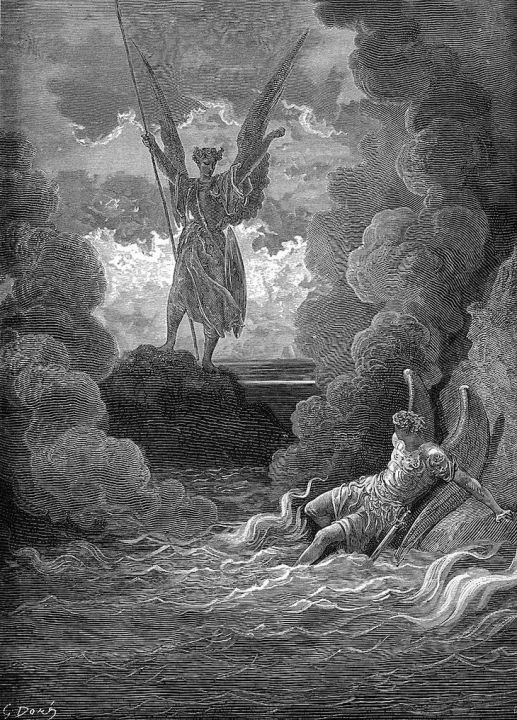
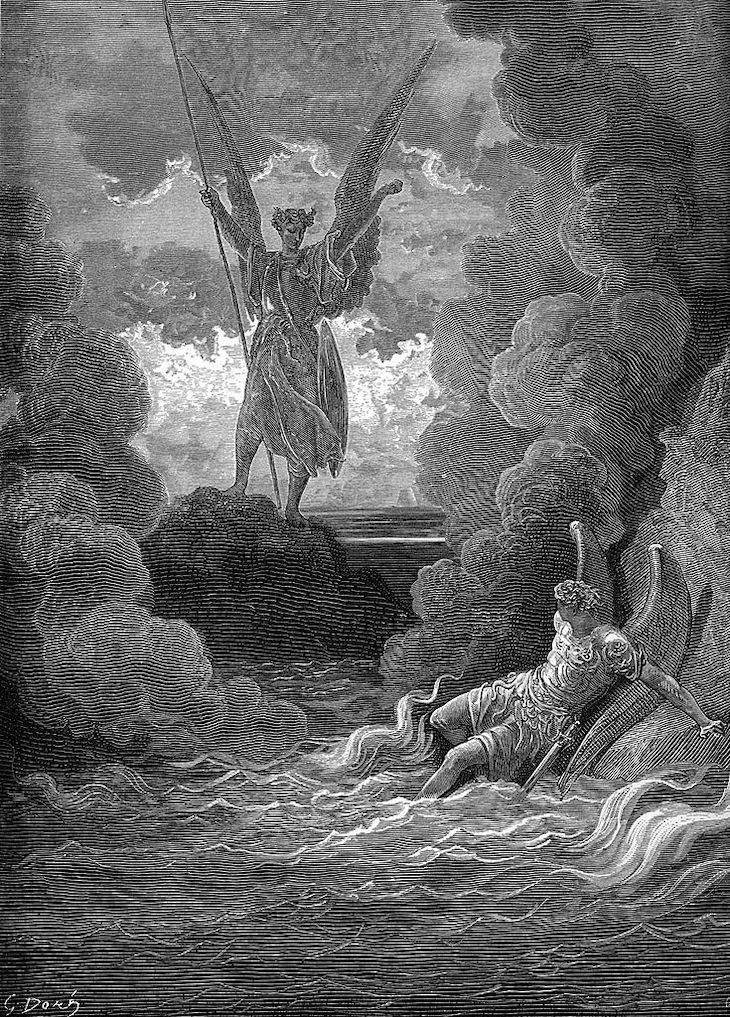
But this doesn’t add up. Why these texts? Why any texts? There is something richly muddled about a student being encouraged to read Paradise Lost or Middlemarch without any wider ideological rationale. Does such study imply an affirmation of our Christian heritage and its post-Christian offshoot? In the 1920s, when the subject got going, the answer was obviously yes – in fact the question didn’t really make sense, it was so obvious. How cowardly of an entire academic culture to evade this question, and to present the evasion as something rarified. We must reconstruct the humanities around some basic cultural realism: we affirm this tradition.
The ideologically neutralised humanities are over. Rightly.



Comments