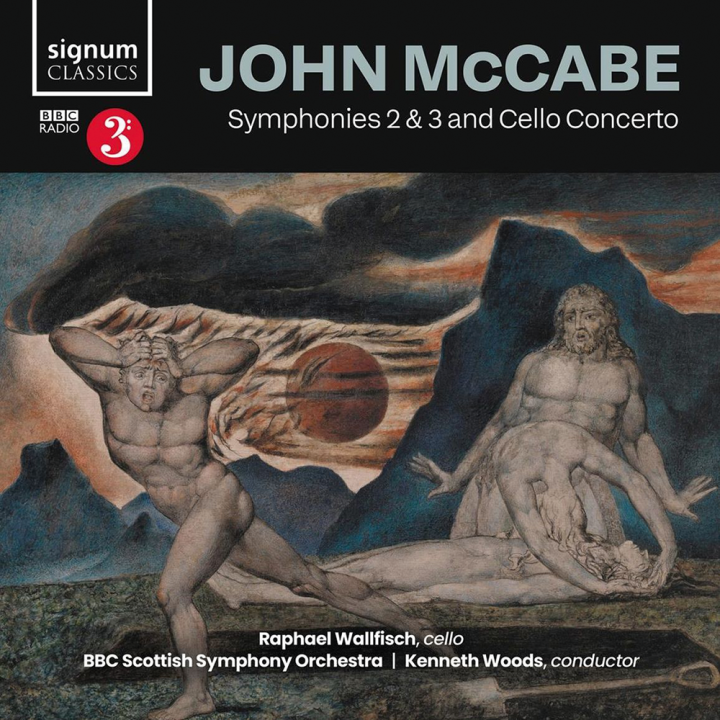
Grade: B+
‘Cheltenham Symphonies’, they used to call them – a catch-all term for the kind of large-scale, traditionally inclined postwar works that found a natural home at the Cheltenham Music Festival. But it was also a sneer: a dig at the supposedly parochial nature of British music in the 1960s and 1970s. Over in Europe, the avant-garde was doing whizzy things with Marxism and electronics. British music, went the narrative, was suburban, outdated and drab.
Now listen to John McCabe’s Third Symphony of 1978. McCabe’s orchestration is as gorgeous as a bird of paradise; it shimmers like the colours on the surface of a bubble. Not that there’s anything fragile about McCabe’s musical engineering. McCabe, a Liverpudlian who died in 2015, was a formidably intelligent pianist (his Haydn recordings are still unrivalled) and in fact the Third Symphony takes its inspiration from Haydn, plus another of McCabe’s symphonic heroes, Carl Nielsen.
You’d never guess it. McCabe’s imagination – here, and in the bigger, more austere Second Symphony of 1971 – has a force that stands unaided, and which carries over into his late cello concerto Songlines, eloquently played by Raphael Wallfisch. Don’t be fooled by the hippy-dippy title; it’s closer to Shostakovich than world music.
All three works are driven with fiery conviction by American conductor Kenneth Woods who has spent much of the last decade reviving and recording Britain’s neglected symphonic heritage. Some day we’ll thank him. Meanwhile, the BBC Scottish Symphony Orchestra struts like a peacock – and why wouldn’t they, when Woods and McCabe make them sound this good?



Comments