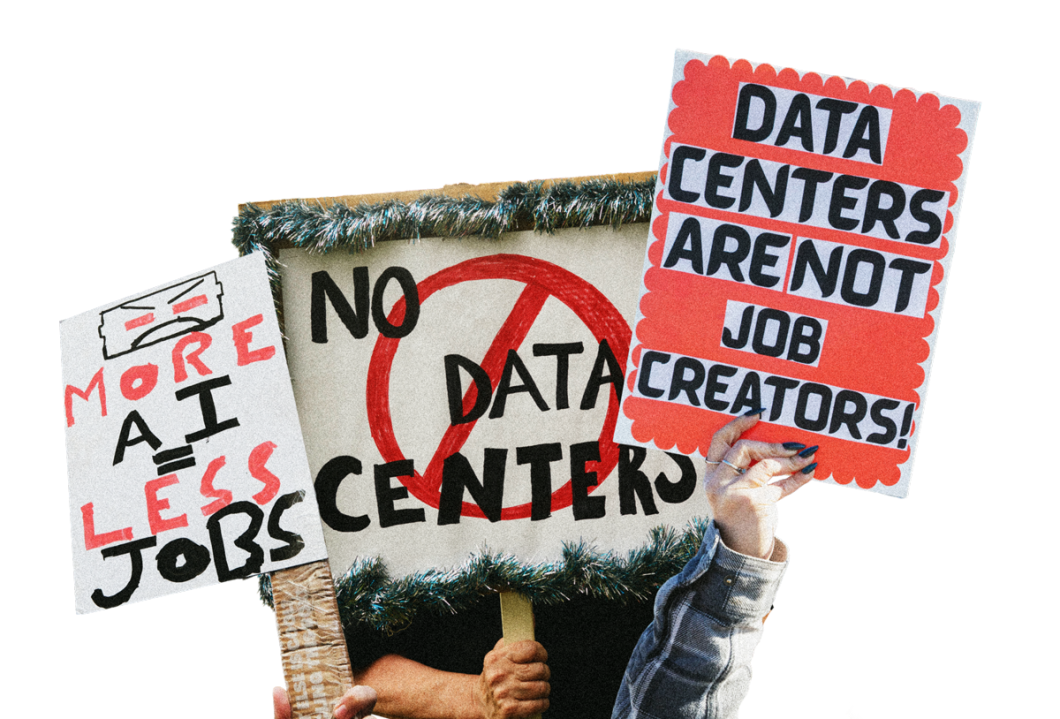

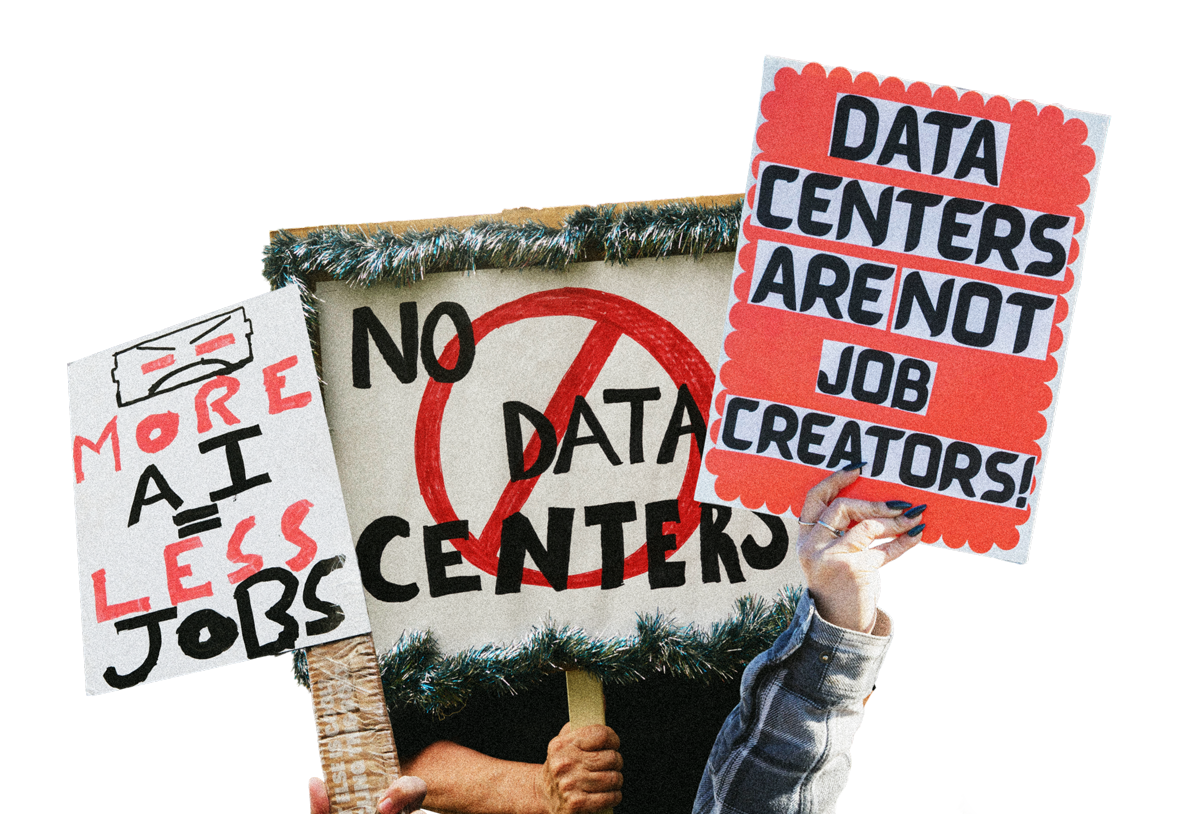
There’s an old saw in politics that says, “If you are explaining, you’re losing.” Over the past few months, Big Tech and its allies in the legacy media have been doing a lot of explaining about data centers, including why they are needed and why more communities should welcome the projects. But Big Tech’s public relations challenge got a lot harder last month, when country music legend Willie Nelson declared people need to “fight against data centers invading our land.” Nelson, who owns a house and farm in his hometown of Abbott, Texas, also said, “The last thing we need is a loud, water-thieving, light-polluting data center anywhere near our town (or any others for that matter).”
Nelson, who’s still kicking at age 93, may be the most famous man in America, and his comments reflect an unprecedented backlash against Big Tech, AI and data centers that’s happening all across the US. A recent poll by Fox News found that “by a 40-point margin, voters opposed data centers in their area to support artificial intelligence.”
When you have AOC and Tea Party types lining up together, you are seeing a populist revolt
I’ve been a reporter for four decades. And over the past 16 years, I have been closely tracking the global backlash against Big Solar and Big Wind. I have documented that opposition in the Renewable Rejection Database, which now includes more than 1,300 entries from around the world.
But I’ve never seen anything like the raging rebellion against data centers and AI.
The numbers are gobsmacking. In the first seven months of 2026, I have documented 274 bans, rejections, restrictions or moratoriums on data centers in the US, all listed in the Data Center Rejection Database. In June alone, I documented 74 rejections. For comparison, there were 49 such rejections in all of 2025 and just nine in 2024.
Indeed, the rejections are happening so fast it’s hard to keep track of them all. Here are a few examples: in May, the tiny town of Spring Hope, North Carolina, passed a one-year ban on new data centers. In June, the San Marcos, Texas, city council voted to ban all data centers permanently. In July, commissioners in Palm Beach County, Florida, nixed a large data center proposed to be built about 20 miles west of Donald Trump’s Mar-a-Lago swankienda. Also in July, New York became the first state to stop all data center construction when Governor Kathy Hochul issued an executive order placing a one-year permitting moratorium on the facilities.
Why is this happening? And why is it happening now?
After reviewing hundreds of rejections and numerous polls, I believe the biggest issues are voters’ concerns about water and power, distrust (or outright hatred) of Big Tech, fear of what AI might mean for jobs and rage at Silicon Valley oligarchs and their enormous fortunes. As a friend of mine put it recently, regular folks can’t fight Google, Facebook and Amazon online, but they can fight them at the local zoning board. And that’s exactly what they are doing.

The opposition reflects a cultural backlash that cuts across party lines. In June, Representative Alexandria Ocasio-Cortez, a Democrat from the Bronx, one of the most liberal members of Congress and a possible presidential contender in 2028, introduced a bill that will prohibit construction of new data centers until “Congress passes comprehensive legislation to address the economic, environmental and safety impacts of artificial intelligence.”
On July 18, a right-wing group called Humans First – it claims that “Big AI globalists seek to hijack our government to get Washington, DC to put Big AI before American people” – coordinated 142 protests in 42 states. Humans First is chaired by Amy Kremer, a stalwart Trump supporter who identifies herself as a “founder of the modern day Tea Party.”
When you have AOC and Tea Party types lining up on the same side of an issue, you aren’t looking at a normal political fight. You are seeing a populist revolt.
Opposition to data centers is surging as US residents are seeing steep increases in their power bills and, fair or not, many people are blaming data centers for the price hikes. Big Tech has commissioned several studies to try to debunk those claims, including one by the Data Center Coalition that found “no historical evidence of cost shifting from data centers to other utility customers.” But a mid-July report by PJM, the largest grid operator in the US, did blame data centers for putting new demands on the system that could cost consumers some $6.3 billion. And on July 22, Moody’s Ratings said that PJM’s system lacks “adequate mechanisms to ensure that the cost of building new supply is borne by the new entrants and instead socializes new-build costs across all customers.”
Opponents are also rightly concerned about the noise pollution generated by data centers’ HVAC systems. In March, NBC4-TV in Washington, DC, reported on a data center in Ashburn, Virginia, that, according to neighbors, “sounds like a helicopter is about to land.” A reporter from the station measured the noise from CloudHQ’s data center at 93 decibels.
To put that number in perspective, the National Institute for Occupational Safety and Health recommends wearing protection for any noise averaging 85 decibels or higher, regardless of exposure duration. In April, residents of Mount Pleasant, Wisconsin, began lodging complaints about the noise from a Microsoft data center. One resident said, “It’s a nightmare. I’ve lived there five years. I want to leave. It’s no longer fun. I’ve got headaches. We’ve got box fans running in order to cover the sound at night.”
Water usage issues may be the most emotional concern that opponents use to fight data centers. Big Tech companies are saying their newest centers will use minimal amounts of water, but that has done little to allay concerns. Google’s water consumption jumped 34 percent last year, to 10.9 billion gallons, nearly double what it used in 2022 and roughly equal to the water used by a city of 250,000 people. And some data center developers are aggressively pushing to grab as much water as they can. In July, a developer who wants to build a large data center in central California filed a lawsuit to get access to water from a local irrigation district. The project is expected to use about 260 million gallons of water per year.
In short, people all across the US are fighting data centers because these projects are not providing sufficient value to their communities. Add in soaring electricity bills, noise pollution, significant water usage, worries about property values and viewsheds, as well as a splash of anger at Big Tech, nascent fears about AI and a few photos of Jeff Bezos canoodling with his surgically enhanced spouse aboard his $500 million, 417ft superyacht, and you get a near-perfect cocktail of hot-button issues that’s mobilizing activists from across the political spectrum. How bad is the problem? Even Loudoun County, Virginia, which calls itself the data center capital of the world and handles up to 70 percent of the world’s internet traffic, is now considering a moratorium on new data centers, so it can establish regulations that will “better protect our communities and natural resources.”
Some data center developers are aggressively pushing to grab as much water as they can
Big Tech has realized it can’t afford to ignore the opposition. Earlier this year, seven tech companies and hyperscalers signed on to President Trump’s Ratepayer Protection Pledge, which says that their data center projects won’t impose higher costs on other electricity consumers. The pledge now includes 281 signatories, including Amazon, Google, Meta and Microsoft, as well as big data center operators like QTS and Digital Realty, and dozens of electric utilities. Microsoft has also recently pledged to become “water positive” by 2030, an effort that it says will be achieved by “decoupling data center growth from water use.”
Will surging opposition stop AI in the US? That’s doubtful. According to data from the consulting firm Aterio, 789 data centers with 62 gigawatts of capacity are now under construction and new projects are being approved almost every day.
But it’s also true that the anger at Big Tech is real and growing. American voters and populist politicians are ready and willing to vilify data centers, AI and Big Tech. That means the data center issue will loom large in the November midterms and the 2028 presidential race. As one Texas lobbyist told me recently, the anger is easy to understand. The titans of Big Tech, he said, are “easy people to hate.”






Comments