
I remember being in The Spectator’s offices on a Tuesday afternoon not long ago when I noticed a group of staffers clustered round a computer screen. One let out a guffaw of laughter, followed by another, then another. People sitting nearby demanded to know what was so funny and someone started reading it out. Before long, the entire room was roaring with laughter – proper, hysterical, uncontrollable laughter. Rod Liddle had filed his column.
I was envious, obviously, but also laughing with everybody else. Rod was one of those writers it was impossible to dislike, however successful he became, because reading him gave you so much pleasure. That was true even if you didn’t share his politics, provided you had a sense of humour. (Yasmin Alibhai-Brown and George Monbiot were not fans.) I remember him grumbling to me that Fraser Nelson, our then boss, had assembled a group of young staffers to vet his columns, a sort of Spectator version of sensitivity readers. This crew became known as the ‘Snow Patrol’ and were the target of many a vituperative barb in Rod’s internal messages. But he needn’t have worried. They loved his writing as much as everyone else and he was never asked to change a word.
Rod was one of those writers it was impossible to dislike, however successful he became
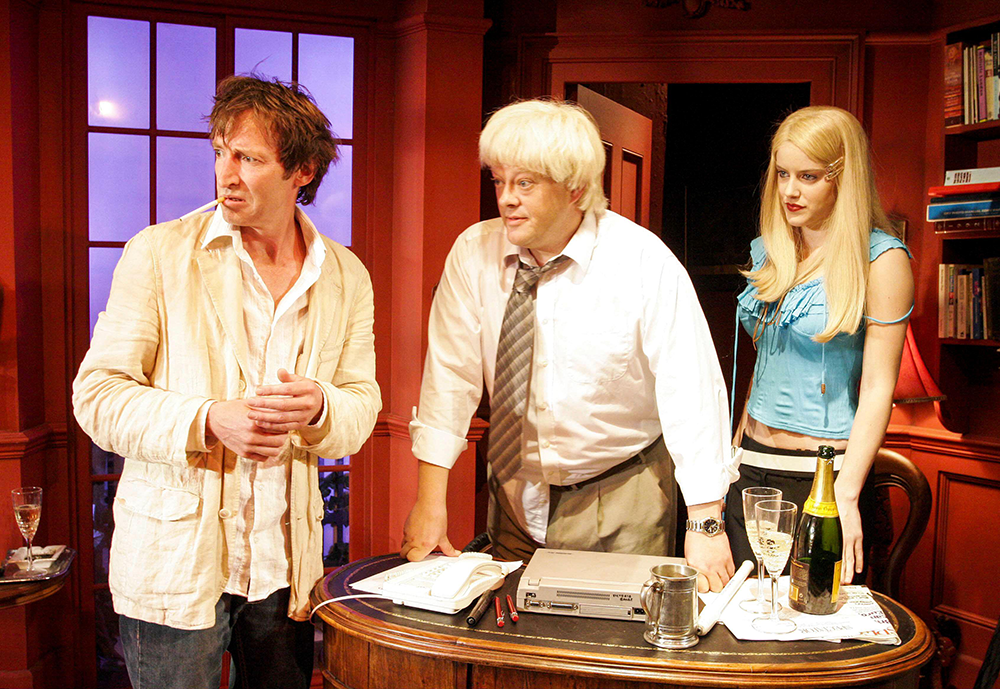
We didn’t always get along. Lloyd Evans and I included Rod as a character in Who’s The Daddy?, our play about the three sex scandals that beset The Spectator in 2004. It was unavoidable because he was the protagonist in one of them, having abandoned his wife on their honeymoon in Malaysia to return to England so he could resume his affair with a 22-year-old who worked for the magazine. He was 44 at the time and his wife, who was also the mother of his two children, wasn’t best pleased, writing a series of savage articles in the Mail.
He reviewed the play for the Sunday Times – ‘a witless amalgam of knob jokes, bum jokes, tit jokes, single entendres, buggeries and blow jobs’ – and vowed to punch me in the face if he ever saw me again. When we bumped into each other at a party a few months later he did no such thing of course. Like most scalpel-wielding columnists, he was warm and friendly in person and we buried the hatchet over a bottle of champagne.
One of my favourite memories of Rod was taking him to lunch at Nobu with a rich landowner friend who hoped to persuade him to come shooting. Rod was a passionate animal lover, particularly of birds, and often railed against blood sports in his columns. He was polite and respectful, which can’t have been easy, given his depth of feeling, but what really impressed me was his encyclopaedic knowledge of the subject. My friend, who’d made a fortune in the City, thought he could talk him round, being both clever and a bird-loving conservationist himself. But Rod was having none of it. He reeled off statistics like the Radio 4 editor he once was and seemed to know more about the nesting habits of red kites than the grousemoor owner. It was a reminder that beneath the bloke-ish exterior was a man of considerable learning.
Not that Rod was perfect. He was a Millwall fan, after all. But it would be wrong to say he lived by the club’s motto: ‘No one likes us, we don’t care.’ After I wrote a column about Caroline getting caught up in a street battle between some visiting Millwall supporters and the police outside QPR’s stadium, he telephoned me in some distress and said he and some friends would like to take her to a game to make amends: ‘We’ll make sure she has a good time, Tobes, and return her to you safely at the end of the afternoon.’ She declined the offer, but was touched that he cared what she thought about the club’s fans.
He did care because he saw it as his mission in life to stand up for England’s white working class, whether in London’s Docklands or the north-east, where he lived. It was his hatred of the metropolitan elite’s snobbish contempt for that beleaguered demographic that fuelled his best journalism, from ridiculing those academics who wanted to overturn Brexit to howling with rage about the neglect of Britain’s former industrial heartlands. He didn’t just talk the talk, either, standing as a candidate for the SDP in Middlesbrough South and East Cleveland at the last election.
When Graham Greene first learned of Evelyn Waugh’s death he said it felt as if his commanding officer had died. I feel the same way about Rod. Fighting the culture war will be a lot harder without him leading us over the top every week.




Comments