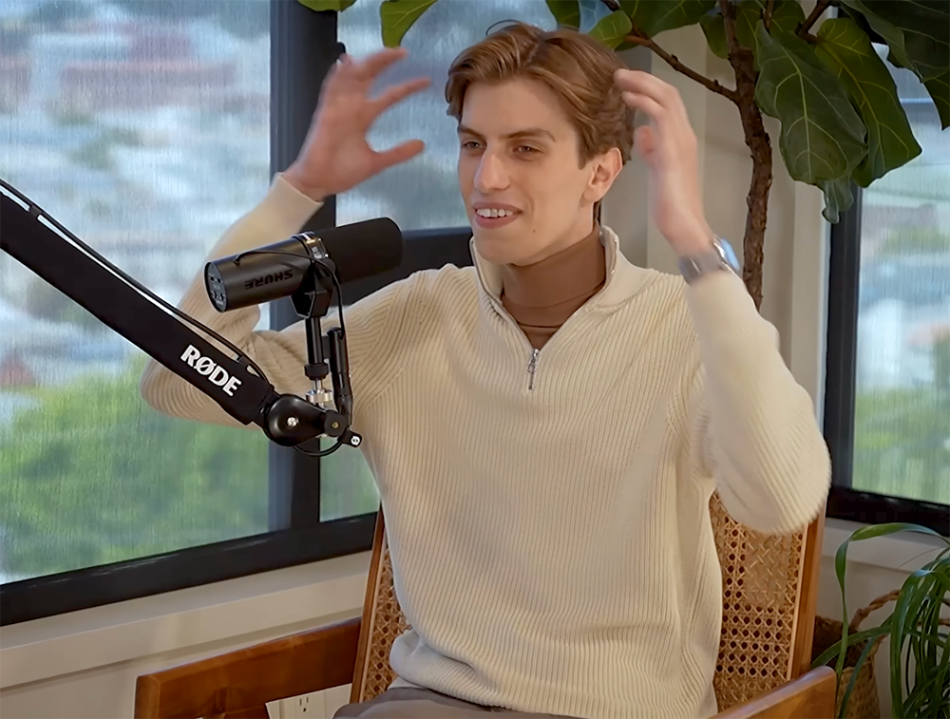


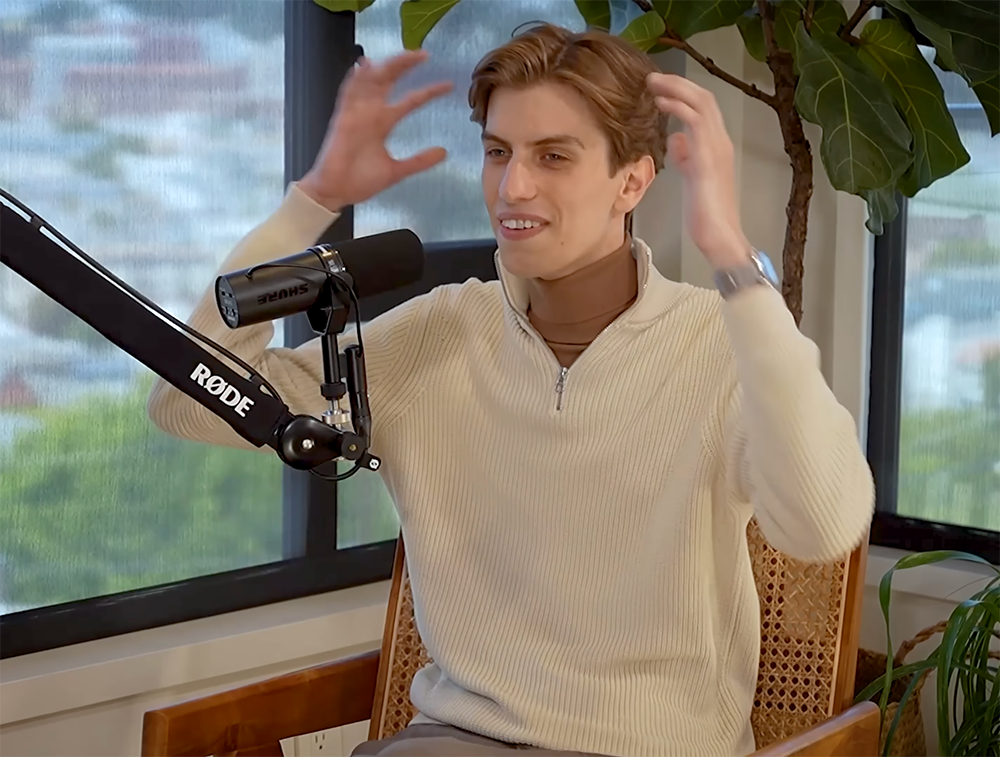
Situational Awareness is a hedge fund that has just taken a spectacular dive. Its name was adopted from the title of an essay by the fund’s 24-year-old German founder, Leopold Aschenbrenner, exploring the promises and perils of AI ‘superintelligence’. Many people who thought Aschenbrenner himself was super-intelligent gave him money to invest and, for a brief while, he outperformed their wildest expectations, his novice fund clocking up a 439 per cent return in the first half of this year.
But in July it plunged from $45 billion to $10 billion as AI-related stocks tumbled and its entire holding of listed shares had to be sold to raise liquid funds. Now market-watchers are asking whether he’s the harbinger of a wider crash or just an overhyped shooting star. I’d say the latter: despite his guru-like persona, Aschenbrenner’s investment style was as naïve as it was dangerous.
He was leveraged (that is, deploying borrowed money) at a ratio of four to one, multiplying potential losses as well as gains on his investors’ capital. Almost all his picks were AI stocks or options that naturally move in a pack, creating so-called ‘concentration risk’. He was heavily exposed to the volatile Korean stock market, which fell by a third from a June peak, and also held short positions (bets that share prices would fall) in ‘legacy’ software stocks such as Adobe which rallied as AI stocks faltered.
One way or another, Aschenbrenner could hardly have constructed a riskier portfolio and is remarkably lucky still to be 80 per cent up on what’s left of his fund for the year to date. Wunderkind he may be, but in investment terms he also looks like what used to be called an idiot savant.
On the dungheap
When I declare that the story of Argos moves me to tears, you’re right to guess I’m referring to Odysseus’s faithful old hound who expired on an Ithaca dungheap after recognising his returning master – and not to the downmarket catalogue retailer which some observers fear is destined for the dungheap of business history. Indeed, I’ve always thought it an insult to literature’s finest canine creation that his name was stolen, in 1973, for the first of what became a chain of more than 660 outlets selling cheap homeware and electronics.
Argos was acquired by Sainsbury’s in 2016 as part of a £1.4 billion takeover of Home Retail Group, which also owned Homebase and Habitat. Partially integrated into the parent supermarkets, the Argos mix of in-store and online shopping struggled against Amazon and has now been sold for £120 million, after the separate sale of its financial services arm and the collapse of talks with a potential Chinese buyer.
Sainsbury’s shareholders will suffer a ‘non-cash impairment’ of £350 million while 14,000 employees contemplate their fate under private-equity owners, Swift Partners, which claim a sharpened Argos will be ‘an excellent platform for growth’. Others may wonder how this unloved and outdated brand, like its abandoned classical namesake, managed to survive so long.
The last emperor
Here in France, the heat and the wildfires have receded and the restaurant prices have been hiked since last year – more on that next week – while entertainment has been provided by a spat between Le Monde and the country’s richest citizen, 77-year-old Bernard Arnault. In a six-part investigation, France’s equivalent of the Guardian portrayed the creator of the LVMH luxury group as an autocrat who foments family rivalry, dictates content to his media outlets, whispers in politicians’ ears and uses tax breaks to fund his philanthropy.
Arnault is certainly as ruthless as any self-made billionaire: he rose by way of a legendary power-grab in the 1987 merger of the Louis Vuitton luggage brand with Moët Hennessy in champagne and cognac. But he went on to create Europe’s most valuable company, providing a secure home for 75 celebrated brands from Dior to Chateau d’Yquem that’s all the more admirable for being a last fortress of craft skills in a world of sinister digital advance.
And his riposte (on X) to Le Monde is as funny as it is magisterial. He pleads guilty to whispering, not only to French presidents but also to British prime ministers – though perhaps ‘I should have stayed [at home] speaking only to my dog’. Accused of confiscating guests’ Hermès ties (because it’s a brand he doesn’t own), he admits to having several himself. His family, far from being at war, ‘call one another on Sundays’; and their custodianship protects 40,000 French jobs.
There are sure to be skeletons in the Arnault armoire, but British readers may think it’s a pity he wasn’t born on our side of the Channel.
Combustible neglect
I can attest to the changing climate of south-west France that’s blamed for the inferno which devastated 42,000 hectares of the Gironde. Some 120 miles to the east in my patch of the Dordogne, we used to expect rain every afternoon but now enjoy almost unbroken summer sunshine. As in everything, however, there are economic factors.
The afflicted area between Bordeaux and the Atlantic (I learn from Medieval Histories) was marshland grazed by sheep until 1857, when Napoleon III ordered it to be drained and planted with pines – which were tended by resin-tappers until that industry declined in the mid 20th century.
After which, no one cleared the ground vegetation that acts as kindling for pine plantations in dry summers. Meanwhile, declining wine demand led to the combustible neglect of adjacent Gironde vineyards. Just as the concreting of England for housing estates and industrial sheds has increased flood risks that are exacerbated by altered rainfall patterns, so zealots accuse humanity at large of burning the planet when very often what’s really changed is local topography, driven by local profit and loss accounts.



Comments