
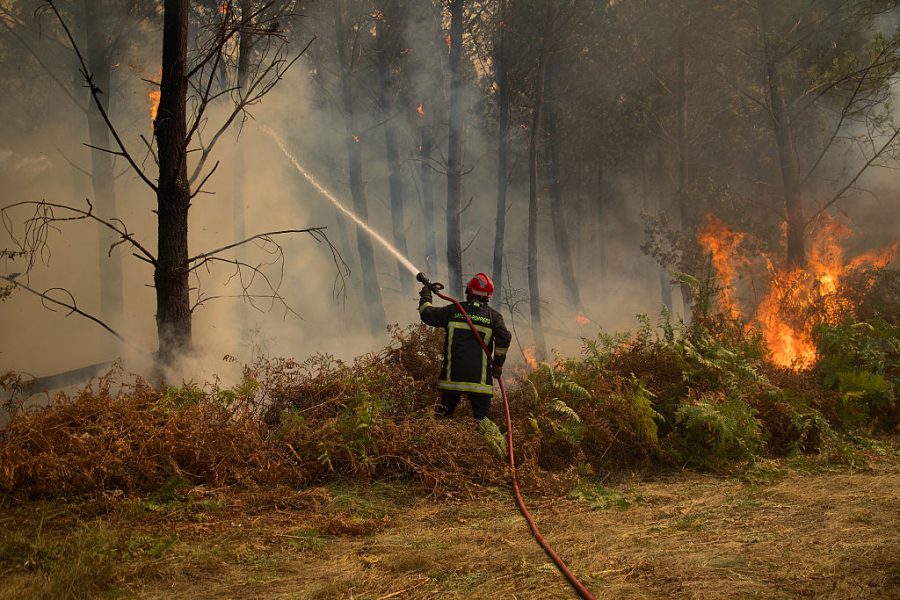
Europe is burning. From France to Spain, from Portugal to Greece, and even in Britain, the continent has been engulfed by flames this summer. In France, more than 117,000 hectares have been lost to a succession of wildfires and nearly a quarter of a million people have been evacuated. It’s already been dubbed ‘the worst season of fire in history’.
In Madrid, Paris and in other European capitals, politicians argue about the fires – or rather the response to them. The lack of fire-fighting aircraft in France, for example, has been seized on by opponents of Emmanuel Macron’s government.
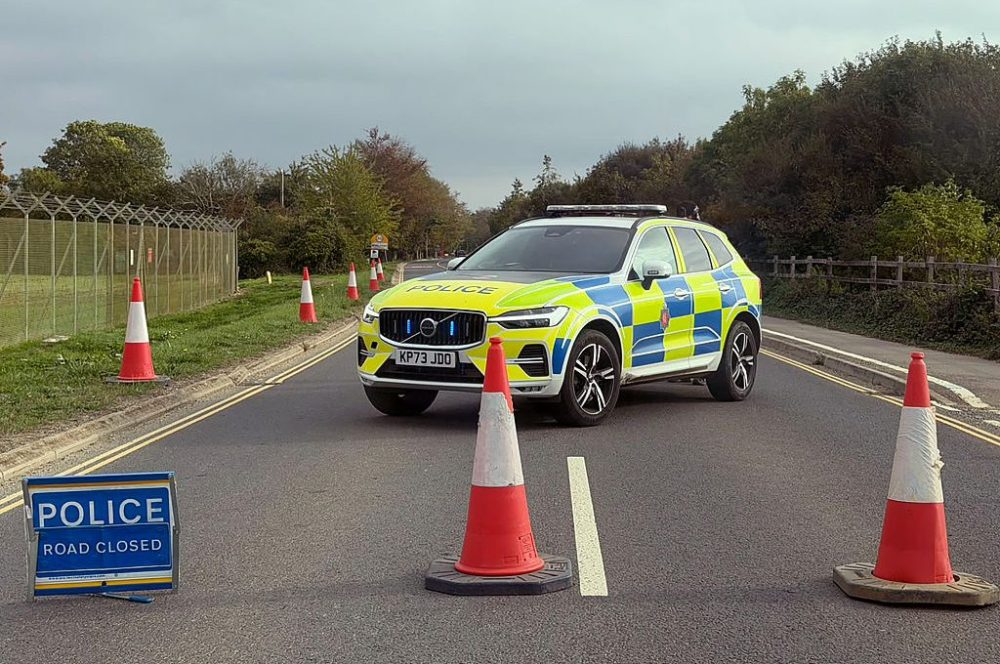
Some of the media have focused on the human aspect: the fact that the majority of the fires have been started by people, either inadvertently or deliberately. Hundreds of arrests (predominantly young males) have been made by European police forces and in France courts intend to take ‘tougher criminal action’ to deal with fire-starters.
Abandoned farmland and unmanaged forests have created the conditions for a perfect firestorm
But all this misses the crucial point, as Matt Ridley wrote in this week’s magazine. Most of Europe has made a mess of its wildfire management strategy this century. Ridley quoted Andrew Gilruth, chief executive of the Moorland Association, who explained: ‘In England the authorities are obsessed with rewilding and restricting all commonsense measures for reducing fuel loads.’
A lack of common sense has characterised Europe’s response to wildfires in the 21st century. During the scorching summer of 2003, some 740,000 hectares were burnt and in response, the EU ‘set up an expert group to advise on how to prevent and fight fires in Europe’.
They published a report in early 2005, Forest Fires in Europe, declaring that their ‘general principle is to restore nature and not to change the landscape’. The report contained a great many statistics about forest fires in EU member states and bemoaned ‘the lack of a common EU forestry policy framework’. The report recognised the increased risk because of ‘climate change and desertification’ but it didn’t offer coherent solutions.
It took another 21 years before the EU finally unveiled its wildfire strategy in March this year. It contained the usual Brussels waffle about ‘holistic approaches’ and ‘stakeholders’. Roxana Mînzatu, the Executive Vice-President for Social Rights and Skills, Quality Jobs and Preparedness, declared:
Europe must be ready before the first fire starts. That means building a real culture of preparedness: equipping people with the right skills, supporting firefighters and first responders, and helping communities understand the risks they face.
Underneath the trite soundbites, there was a recognition in the report that Europe has allowed great areas of combustible vegetation to spread throughout EU member states in recent decades. Abandoned farmland and unmanaged forests, together with droughts and rising temperatures, have created the conditions for a perfect firestorm.
The report said that in order to prevent future wildfires, the EU must pay ‘farmers and foresters to thin forests, graze livestock and restore abandoned land’. It also recommended restoring peatlands, flood plains and wetlands to retain moisture.
This strategy will take years to implement effectively. And, crucially, has the EU really got the will? At a meeting of agriculture ministers in Brussels in May, Environment Conmissioner Jessika Roswall announced that the Commission does ‘not plan any new initiatives on forest management’.
The management of forests and land planning is also the preserve of individual governments and the EU has struggled for a unified approach. Brussels can recommend and encourage but it can’t force governments to act. Sweden and Finland are the most resistant to EU interference on forest management, while France also broadly believes the issue should be one of national competence.
Critics claim there is no competence. There was a huge wildfire in the south-west of France in 2022, an area famous for its intensive maritime pine monoculture. Many hectares of pine trees were lost. The response? To replant thousands of pine trees in exactly the same layout.
On Monday, Emmanuel Macron visited the Gironde department, in the south-west of France, where more than 40,000 hectares have been lost to flames this month. The president was confronted by the independent mayor of one town affected by the fire.
‘We need a better-maintained, larger firebreak, even if it means losing 1,000 or 2,000 hectares,’ said Bruno Lafon, the independent mayor of Biganos and the head of the association for the protection of forests against fire in his region.
Lafon also took aim at politicians and environmentalists pontificating in Paris. ‘We need to stop talking,’ he said, adding that the Paris elite and the people whose homes are burning ‘no longer live in the same world’.
The same rings true of the Brussels elite. It’s time to stop talking and take commonsense action.




Comments