When an estimated 10,000 North Korean troops were deployed to Russia’s Kursk region in October 2024, it was a reality few observers had predicted. A handful of months later, in January and February the following year, this number would be topped up by as many as a further 4,000 men, as the hermit kingdom sought to signal it was going all out in assisting the Kremlin’s war against Ukraine.
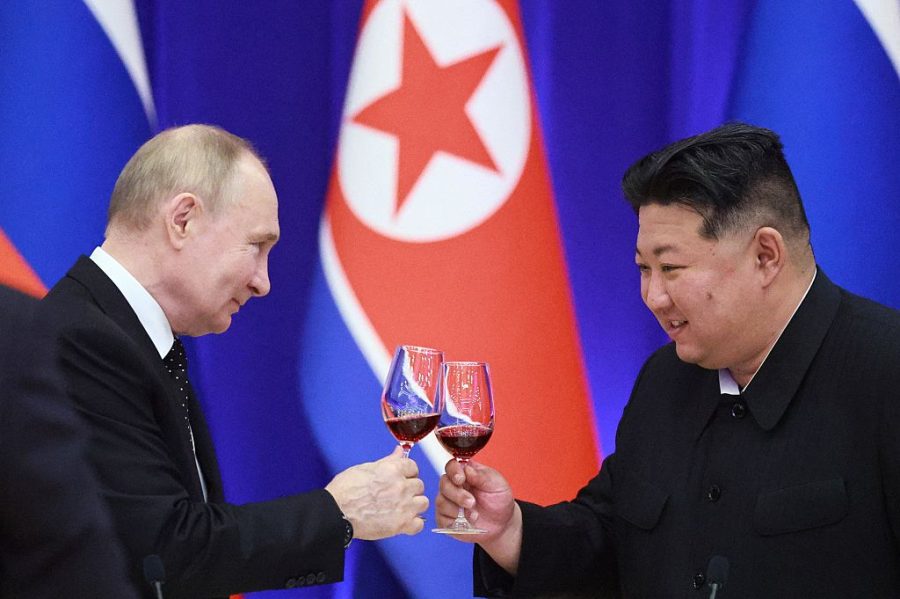
With North Korea and Russia now in a solidified alliance bound by a mutual security pact, we should not be surprised at the recent claim by Ukrainian president Volodymyr Zelensky that Russia plans to accept an additional 30,000 North Korean troops later this year. Though we do not yet know where or how they are likely to be deployed, one thing is for sure: the alliance between Russia and North Korea is blooming.
By now, the story is well-known. In exchange for vast numbers of munitions (most notably over 12 million rounds of artillery), ballistic missiles, and manpower, North Korea has sought everything it wants and needs from its former Cold War patron. This has included humanitarian assistance, crude oil, ideological support, and missile and military technology much coveted by Kim Jong-un.
A war in Europe is not limited to Europe
Pyongyang has not done badly in this regard. North Korea may not yet have tested any intercontinental ballistic missiles since Donald Trump returned to the Oval Office in January last year, let alone any nuclear weapons. Nevertheless, Pyongyang’s tests of new and improved missile capabilities and delivery systems have only demostrated how the Kim regime is using its relationship with Russia to fulfil its ultimate goal: recognition as a nuclear weapons state.

The dispatch of North Korean troops to the war in Ukraine was, in the past few years, predominantly limited to the Kursk region along the Russian border with Ukraine. Yet, in April last year, their participation in the war was acknowledged for the first time. Thanks to the North Korean forces, Pyongyang and Moscow lauded, the Kursk region had been ‘liberated’ and a Kremlin ‘victory’ claimed. Zelensky’s most recent warning – namely, that preparations have been made in the nearby Voronezh region to receive twice the number of North Korean troops – should not be taken lightly.
Not even North Korea can avoid the realities of war. Over the past year, state-controlled media has displayed Kim honouring the fallen as the bodies of killed soldiers have been repatriated to their homeland. Only last year, he looked visibly emotional as he fought back tears while being presented with repatriated coffins draped with North Korean flags, carrying the war dead.
North Korea may have announced that the death toll stood at just over 100, but the true figure is assumed to be far higher. Earlier this year, South Korean intelligence estimated that approximately 2,300 North Korean soldiers have been killed in the Kremlin’s war, with a further 4,000 casualties.
These reports have not gone unnoticed by the Kim regime, for whom sustaining domestic legitimacy is paramount. In February, Kim provided the families of killed soldiers with newly-constructed apartments in Pyongyang. In April, too, Kim, in the presence of Russian defence minister Andrei Belousov, unveiled a war memorial in Pyongyang for those soldiers killed in what the North Korean leader termed Russia’s ‘sacred war’.
Kim will not be oblivious to the domestic costs of sending as many as 30,000 troops to fight an ongoing war. This would be North Korea’s largest overseas deployment of troops to date. Even though little is known whether they will be sent to the front line or otherwise, the contribution of Pyongyang’s troops will be hardly insignificant.
Estimates show that Russia has faced nearly 1.5 million casualties, comprising 450,000 deaths, between February 2022 and June of this year. These additional North Korean troops will become useful cannon fodder for the Kremlin. Simultaneously, the lessons these troops will learn about the realities of modern warfare will certainly prove useful for Pyongyang.
The numbers of North Korean casualties will only increase. Yet, the past four years have revealed Kim’s priorities. His ambitions for North Korea to expand the scope and sophistication of its nuclear and missile capabilities are far higher on his list of priorities than caring for the lives of his people. Indeed, during his visit to North Korea this April, Belousov announced that Pyongyang and Moscow would together seek to bolster their longer-term military cooperation all the way to 2031. Here, the message is clear. Even if, by 2031, the Ukraine war has ended – whether permanently or, as is the case with the Korean war, temporarily – this relationship between Cold War patron and client won’t wind down anytime soon.
This Monday marked 73 years since North Korea ironically and perversely claimed to have won one of the world’s most notorious unfinished wars: the Korean war. Warfare in the 21st century, however, is far more interconnected than those in decades gone by. As North Korea prepares to send more troops to aid the Kremlin’s fight, the message to the West is evident. A war in Europe is not limited to Europe. And, in turn, any future war in Asia will not just be Asia’s concern.





Comments