
You could think of it as a Venn diagram. One circle would contain all the people who have read Homer’s Odyssey (it would contain a much, much smaller circle of people who have read it in the original Greek). The other circle would contain all the people who have seen Christopher Nolan’s film. The second of those two circles would contain all the people whose opinion on the movie was remotely worth listening to. The overlap between those two circles would contain all the people who, potentially, would have anything interesting to say about the relationship between Christopher Nolan’s work and the Homeric poem.
Grumbling that movies aren’t the same as the books goes back forever
And yet. Until just a couple of days ago, the overlap between those two circles was precisely nil – but news pages around the world were resounding to a series of “controversies”, ginned up by idiots on social media, centring on precisely Nolan’s fidelity, or otherwise, to his source material. The sort of people who enjoy losing their minds over this sort of thing were losing their minds over the casting of a black Helen of Troy. The inclusion in the cast of a trans actor, Elliot Page, produced just the reaction you’d expect too. (Wait’ll they get a load of Tiresias.) It wasn’t all from the culture-war right, I should say. There was a bit of leftist handwringing that more of the actors weren’t Greek.
A good deal of this is painting-by-numbers outrage. We’ve had the same tedious go-round over Harry Potter (a black Hermione!) and Hamilton (black Founding Fathers!) and Bridgerton (black Georgians!) and 1917 (Sikhs on the Western Front!), and any number of other properties whose casting has in any way played fast and loose with what’s imagined to be a historical or literary original. But there seems to be a special level of investment, a special degree of defensiveness, when it comes to Homer.

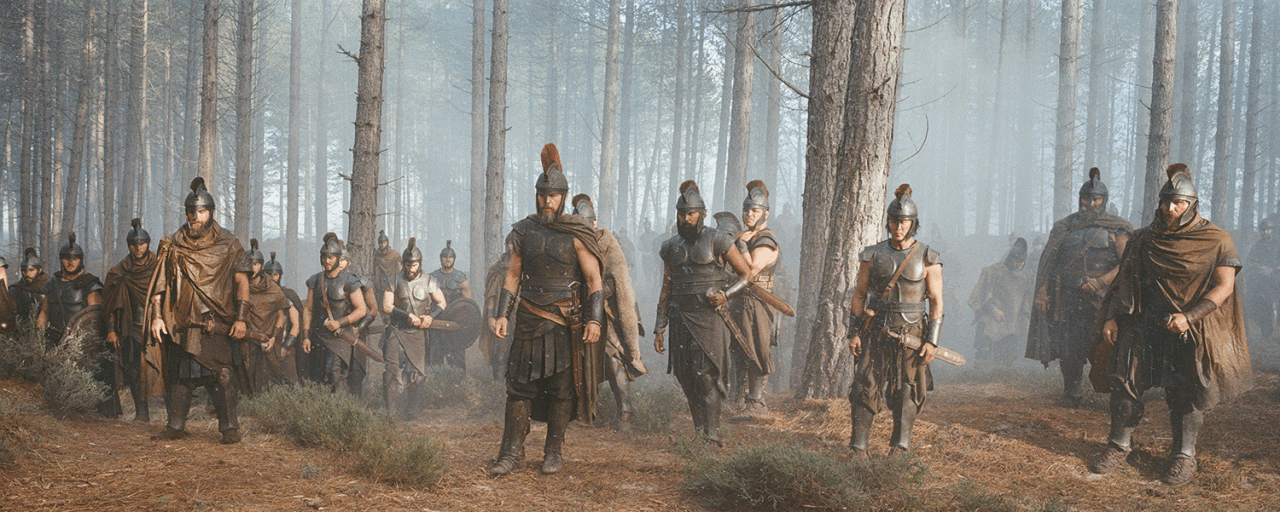
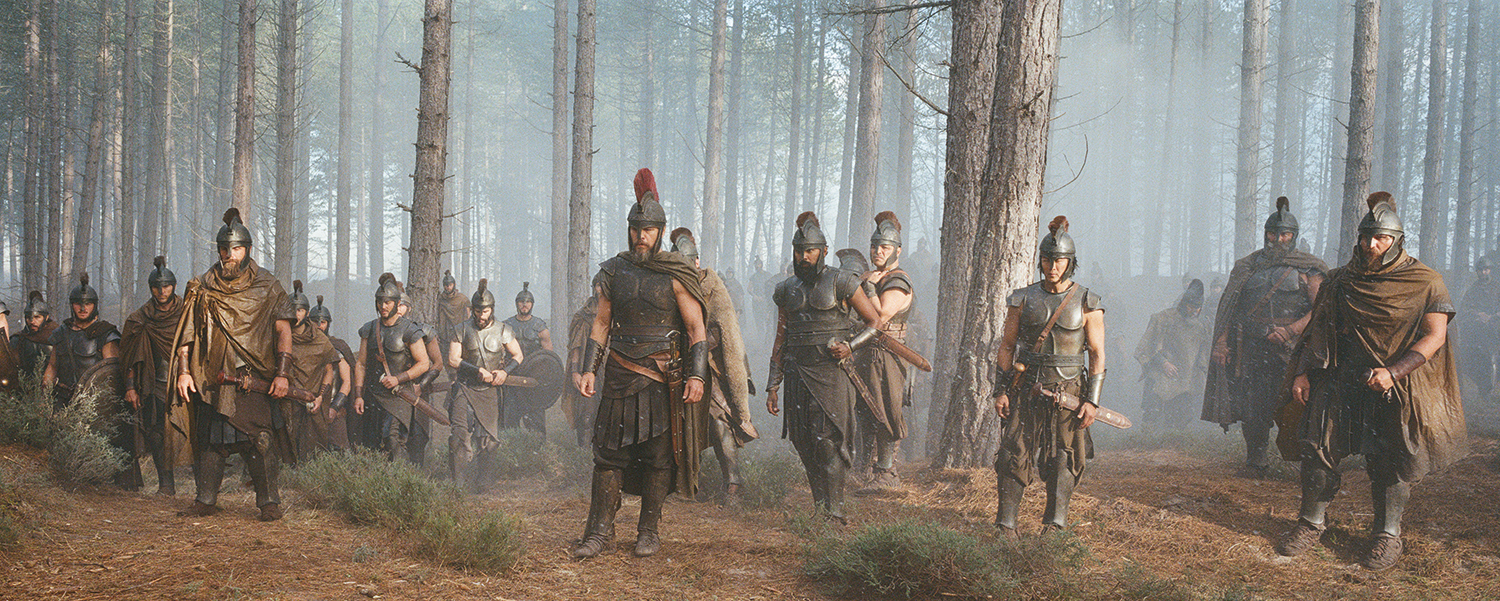
Meanwhile the military history hobbyists were concerned about failures of “historical accuracy” (in a story with one-eyed giants, peevish Gods and malevolent whirlpools). Why did the Greeks speak in English with American accents and use contemporary slang? How come the armour wasn’t precisely appropriate to what we know of Bronze-age military equipment? How come that trireme looks like a Viking longship? I haven’t seen people complaining that Nolan’s sea wasn’t purple-black and the sky metallic, but I expect they’re out there.
Grumbling that movies aren’t the same as the books goes back forever. Stanley Kubrick’s The Shining isn’t a bit like Stephen King’s book, some (loudest of all Stephen King) complained. The Hail Mary Project dumps hundreds of pages of intensely nerdy sciency stuff. Practically nobody is seen writing a letter in any of the movie versions of Dracula. And anyone ever read Peter Benchley’s Jaws? It has a brilliant ending – the shark just stops – but not one that was ever going to be much use to Steven Spielberg.
It’s specially bizarre in this case though, that people are getting so ventilated about fidelity to the original of a story that has no original. Homer, as far as we know (which we don’t, really), may have been a single man and he may have been a committee. He was, or they were, as far as we know (which we don’t really) writing a story several centuries after the events it described happened; or probably didn’t happen, or in the case of the Odyssey, certainly didn’t happen. The best guesses are that the written version of Homer’s poems – the “original” – are the terminus of a generations-long tradition of oral storytelling in which each storyteller would adapt and reshape what came before. Far from being a foundation-stone of Western civilisation, it’s more like a cup dipped into a vast river as it meanders through the mist.
And Homer is after all in the business of mythology. It is the defining quality of myth that it is ceaselessly adaptable. As Tim Whitmarsh argues in his excellent new book Rome’s Age of Revolutions, what the Bible tells us of the story of Jesus’s birth is not only mythological, but was likely influenced by the mythology surrounding the birth of the Emperor Augustus. If Nolan makes his Greeks seem in part like modern Americans, he’s only doing what Homer did to his own predecessors.
The culture-war ding-dong about Homer is, in a sense, mythological itself. It’s based on a second-hand idea of Homer which feeds into a fetishisation of the classics – or at least an idea of the classics; a whiter, straighter, less cosmopolitan, more homogenous and altogether less weird idea of the classics – as the touchstone for “Western civilisation”.
Tech bros with their selective readings of the stoics; Maga AI slop turning Elon Musk and Donald Trump into Roman centurions; Curtis Yarvin quoting Aristotle in support of slavery. Here is historical myth as identity-building; historical myth as propaganda. It’s what Homer did for the Greeks, and what Virgil did for the Romans – so I don’t suppose, in the end, we can complain. Sing, muse…




Comments