

Reason, David Hume noted, is a slave of the passions. Arguments, especially political crusades, are often rooted in emotional responses, with the evidence assembled to justify a position which is heartfelt but often wrongheaded.
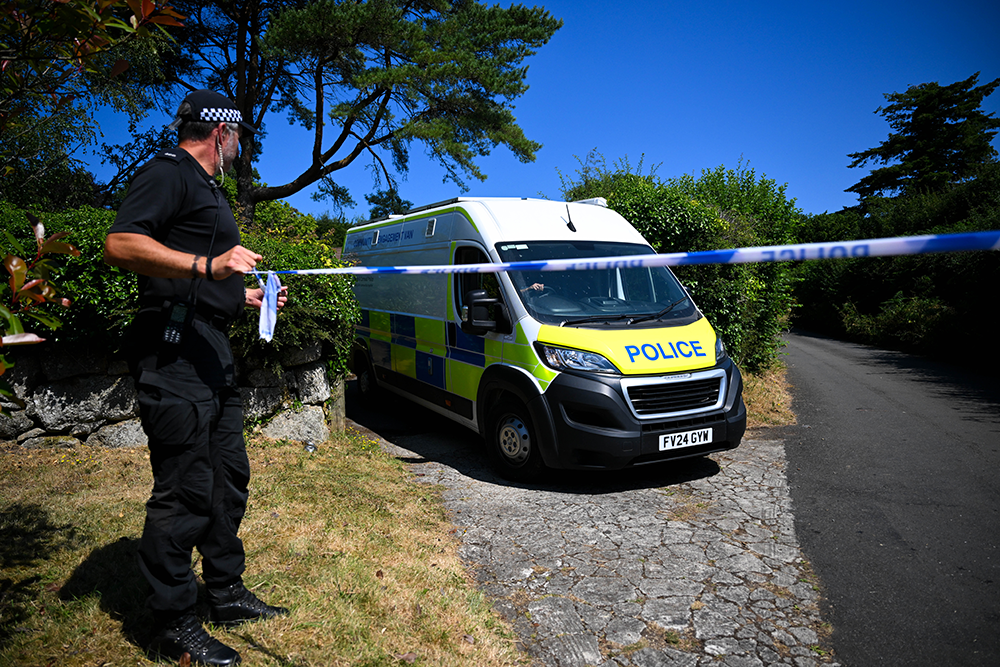
So it is with the cry, from politicians, for more steps to be taken to safeguard the personal security of politicians. The killing of Ann Widdecombe, like the deaths of Jo Cox and David Amess, has generated new demands for action, and legislation, to protect those in public life from risk and danger. The transparent nobility of Ann’s life and the grotesque tragedy of her death make it emotionally difficult to resist the call for strengthened perimeters around our politicians. But someone has to stand out against a tide which, unless resisted, will lead to increased public expenditure, weaker protections for the majority of citizens, further impairment of our democracy and the erosion of basic liberties. So I will.
To provide state protection for any individual requires at least ten trained police officers full time
The case I will make rests on logic. But let me throw some emotion into the mix to start with. For those who will, inevitably, accuse me of insensitivity, I was the prime target for the killer who went on to murder David Amess. The Islamist extremist Ali Harbi Ali hunted me for weeks. He was outside my home, armed with a blade and determined to kill, on six separate occasions. All this only became apparent after David was killed and Ali’s phone was in police hands. I grieve for David’s family’s loss and feel guilt to this day that he was killed because Ali failed to encounter me.
During my political career, my home address was advertised by loyalist paramilitaries as a target, my daughter was sent a birthday card telling her that I would be killed unless I altered government policy, I was set upon by violent anti-vax protestors outside my office, and had to be rescued by police from a ‘pro-Palestinian’ mob in Victoria Station. So I do know something about the climate of risk in which politicians operate.
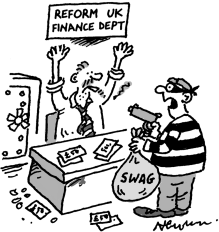
Which makes me naturally sympathetic to Nigel Farage’s concerns about personal safety and more relaxed than many about his welcoming money from the billionaire Christopher Harborne to provide security. He deserves protection. Which I understand is why he was offered the same level of security as the leader of the opposition. He is at liberty to augment that from private funds. But the case that some of his supporters, and others, have made goes beyond that. Wrongly.

To provide state protection for any individual requires at least ten trained police officers full time. All paid for by you. That’s significantly more than half a million pounds per year for each individual protected. How many people can we afford to extend that to? Every MP? Every member of the Scottish and Welsh governments? Every Metro Mayor?
Even with the net drawn as broadly as that – with costs of near to one billion pounds per annum – that would not extend to former politicians with high public profiles and controversial views, such as Ann.
The line has to be drawn somewhere. And it is currently drawn by the security experts of the Home Office team RAVEC, who have access to police and MI5 intelligence on genuine threats. In a world of finite resources, they have to prioritise, and it is better that those with access to real intelligence rather than those fuelled by righteous anger make those decisions.
Our MPs, in any case, do not go unprotected about their work. Parliament is a fortress. They have access to public funds to strengthen the security of their homes. Local police forces are given notice about their public movements and discreet monitoring of any danger points takes place.
Every moment, or pound, of state resource that is allocated to strengthening the already robust protection of politicians is capacity taken away from protecting the rest of us. And there are sections of our society that are under greater constant threat than most MPs – such as the Jewish community.
We can keep them, and indeed MPs and all of us, much safer if we tackle the threats to public order and safety at the root. Rather than waiting to beat back the crocodiles when they reach the boat, we can drain the swamp.
That does not mean yet further restrictions on social media. In the aftermath of David Amess’s death, and indeed Ann’s, much has been said about the need to police public discourse. I’m all in favour of greater civility, in person and online. But David wasn’t killed by someone enabled by Elon Musk; he was murdered by an individual driven by Islamist ideology. Using his death, and Ann’s, to further restrict open debate would be a defeat for democracy, not a strengthening of its defences.
The two most potent sources of political, and communal, violence are Islamists and the far-right. They provide the worldview, nurture the networks and create the supportive environment for the overwhelming majority of motivated and violent extremists. In government I outlined proposals to combat their work. I also endorsed the excellent study of political violence by the former Labour MP John Woodcock, now Lord Walney.
Those recommendations have lain for the most part neglected. The few which have been taken up, such as the measures against the criminally violent group Palestine Action, have since been denounced, even by sensible voices such as the Times. But these are the real threats to public order and safety which can be tackled by effective government action.
By contrast, we can never reduce to zero the threat from mentally unbalanced, or plain evil, individuals bent on destruction. Those on the right, above all, should know that no society can eliminate risk from human life and all attempts to do so inevitably involve escalating taxpayer costs, an extension of state power and the erosion of liberties. So let us grieve for Ann, but let us not see grief become another emotion which drives out reason.


Comments