Vincenzo Bellini realised early on that as titles go, Le teste rotonde ed i cavalieri (The Roundheads and the Cavaliers) doesn’t exactly trip off the tongue. He settled for I puritani instead, though he’d have been equally happy (or so he told friends) to name the whole opera after its lovestruck heroine Elvira. He admitted that the plot catches fire only after she loses her mind: the soprano who plays her has to be able to act, and she really has to be able to sing. ‘In opera, it is the singing that moves one to tears, that causes horror, that inspires death,’ as Bellini put it, and he practised what he preached.
So let’s dispense with preliminaries and say upfront that the main reason to see the Royal Opera’s new production of I puritani is Lisette Oropesa’s performance as Elvira. Covent Garden adores Oropesa, and rightly. The poise and sensitivity of her stage presence is matched by a voice of supple, endlessly nuanced sweetness. She’s a diva in the old, true sense, unrivalled in the way she balances a melody on its accompaniment, as well as the dewdrop freshness of her high notes and her ability to infuse a falling phrase with a hundred shades of quiet sorrow. At the Royal Opera, she’s been the most seductive and queenly of Alcinas, and her Violetta Valéry made skylarks jealous.

As Elvira – a role that is almost one enormous mad scene – it’s no great surprise that Oropesa walks away with the show. This wasn’t a performance that provoked spontaneous ovations (though the audience went wild at the curtain call); rather, it pulled the atmosphere in around it, creating a halo of concentrated silence. And no one could accuse Oropesa of upstaging her colleagues, either, because Ildebrando d’Arcangelo (Giorgio) and Andrzej Filonczyk (Riccardo) were both formidable. In fact the only shaky link (on the first night, at least) was Francesco Demuro as Arturo. Plenty of lyricism and ardour there, for sure, but Demuro has a lean, narrow-bore tenor which sounded close to breaking by the final scenes. The conducting is propulsive and glows with colour; a formidable house debut for Riccardo Frizza.
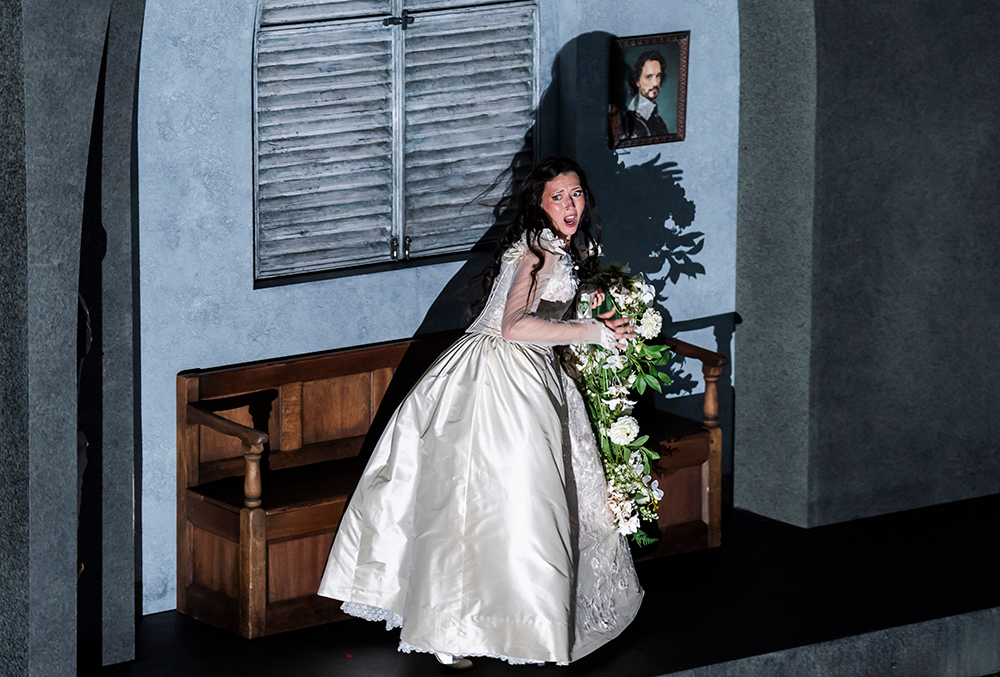
Nonetheless, it’s Oropesa who carries the night, with her tattered wedding dress and wilted bouquet. The more fragile her sound, the more compelling she becomes, though she’s dazzlingly passionate and brilliant when she needs to be, supplying a luminosity that was badly needed in Richard Jones’s drab new staging. Jones is usually a director of extremes: when he’s good, he’s extremely good and when he’s bad he’s maddening. Nothing had prepared me for a Jones production that was basically average – a passable semi-updating, with sets that resembled a BBC TV studio drama from the 1970s.
Still, with a cast like this, it did the job inoffensively enough. It was mostly OK, as long as you overlooked Jones’s determination to flatten Bellini’s complex and ambiguous Riccardo into a stock operatic villain. Why do directors do this – diminishing the artform, and pandering to its detractors? Jones’s gratuitous final gesture cheapened the whole drama and drew deserved boos on a night of musical triumph.
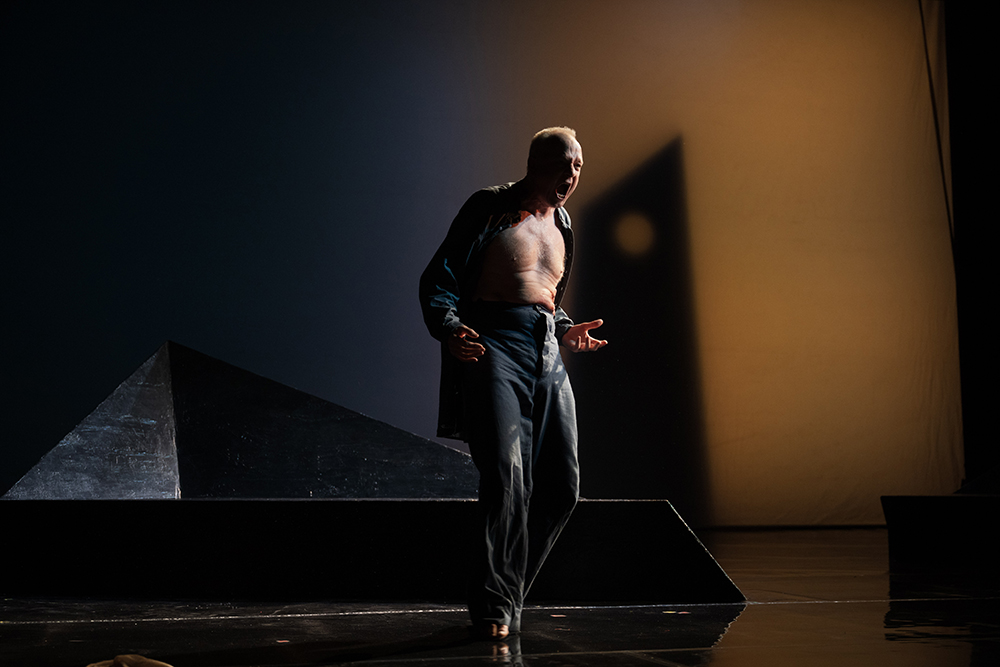
Interestingly, when Longborough Festival Opera premièred Carmen Jakobi’s production of Tristan und Isolde in 2015, its musical excellence was undermined by poor directorial decisions (one of them involved a simulated sex act between two dancers in body stockings). Miracle of miracles: reviews were read, lessons were learned and for the revival in 2017 Jakobi refocused it into an atmospheric and stunningly lit piece of scenic minimalism (Wieland Wagner with a hint of Zen), freeing the cast to deliver performances of volcanic intensity. With the great Anthony Negus in the pit, the result – in the confined space of LFO’s 500-seat theatre – was described by Michael Tanner as ‘one of the most exalting experiences I have had in the opera house’. And he’d seen a Tristan or two.
The main reason to see the Royal Opera’s new production of I puritani is Lisette Oropesa’s Elvira
The 2026 revival brings back Peter Wedd as a febrile, otherworldly Tristan, while Catharine Woodward, as Isolde, is his match both as enemy and lover. There was strength across the entire cast. Catherine Carby was an anguished Brangäne, Robert Hayward made a noble, heartbroken Kurwenal, and Alastair Miles released unexpected reserves of passion as King Marke. Wedd’s vocal attack is increasingly stentorian and Act Three was almost unbearably harrowing until Woodward returned, sounding fresher and even more ecstatic than before – face and voice transfigured in a rare Liebestod that made perfect dramatic and musical sense.
But it was the whole conception that really gripped you; the feeling that words, images and Negus’s soul-shaking conducting were all working upon each other to create the total and overwhelming drama that Wagner envisioned. LFO is famous for its Ring cycles but there’s a reason why serious Wagnerites go starry-eyed when you mention their Tristan.





Comments