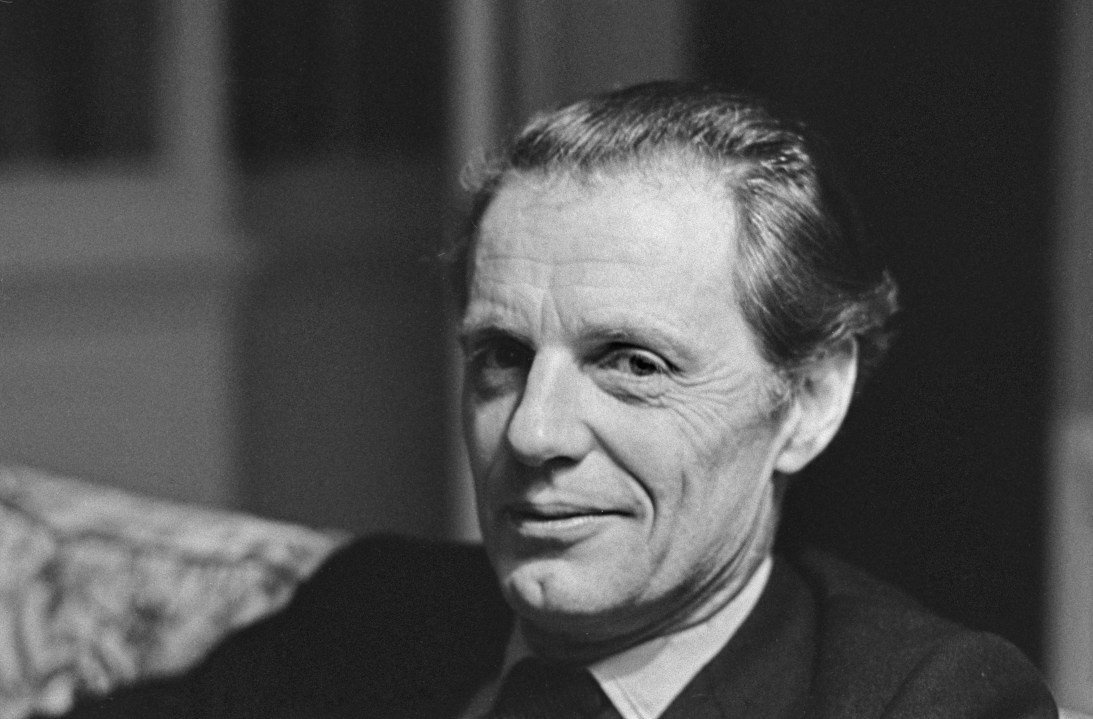
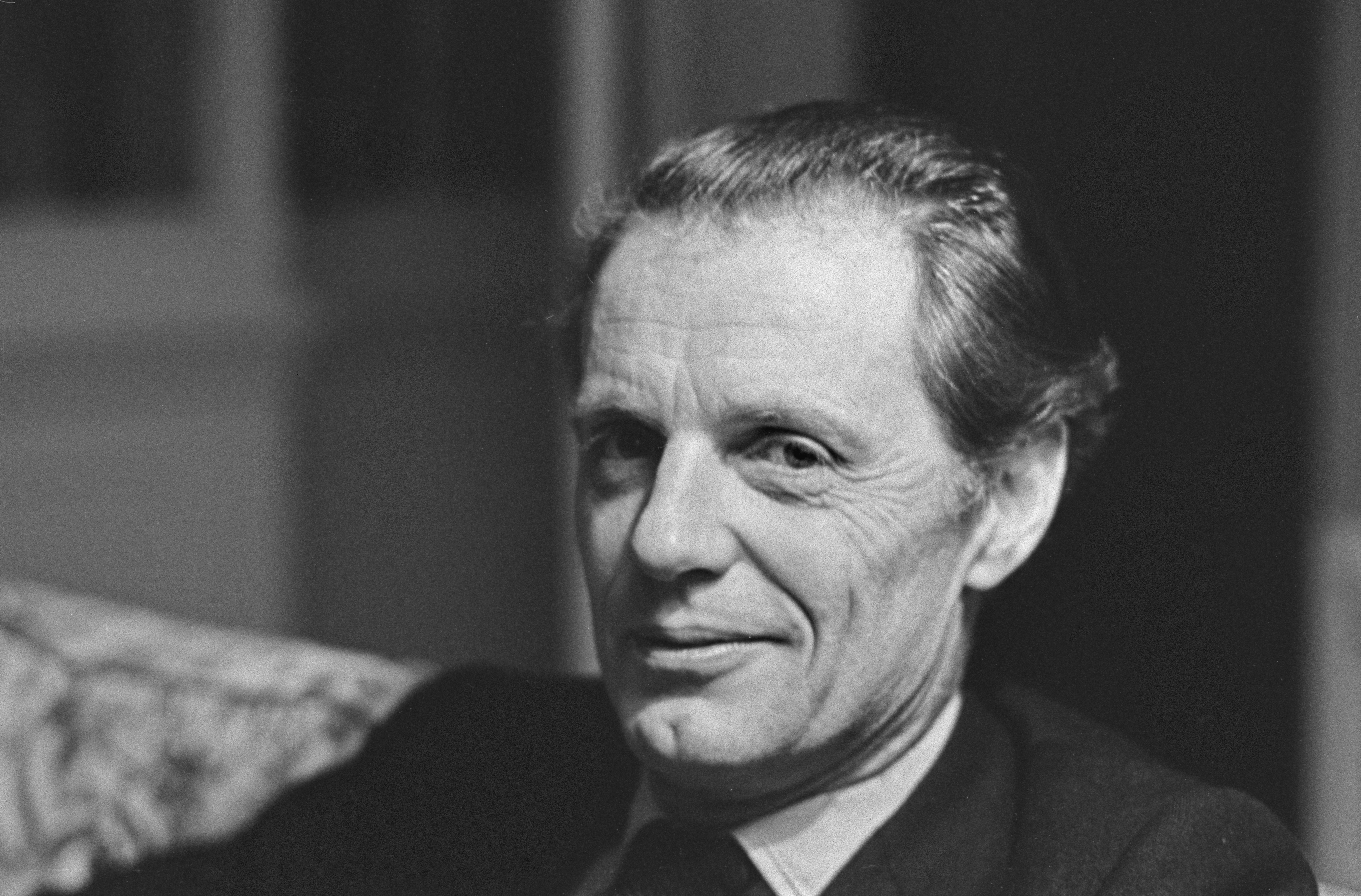
In late 1954, the proprietor of these august pages, Sir Angus Watson of Skippers Sardines fame, thought he was selling his magazine to the son of Sir John Gilmour, a Baldwin-era Home Secretary. He was not. It was another Gilmour baronet who, as luck would have it, at the age of twenty-eight became the new owner of The Spectator: Ian Gilmour, born on 8 July a century ago.
Under his unusually combined authority as editor and proprietor, the somnolent Spectator of the 1950s became a magazine with bite. The credo of Gilmourian spectatoralism was to entertain the reader, but also to serve those who ‘believe that the future of the world depends largely on individuals acting freely.’
As editor and proprietor, the somnolent Spectator of the 1950s became a magazine with bite
His tone was libertarian on social issues, iconoclastic, pro-European and vehemently anti-Suez. Although not a friend of Labour, Gilmour was sympathetic towards Hugh Gaitskell’s modernising efforts and targeted Macmillan’s government for its Edwardian pomposity and complacency. The editor’s close friend, Roy Jenkins, thought the magazine more interesting to the moderate left than the New Statesman.
In the late 50s, The Spectator crusaded in favour of the abolition of capital punishment, the decriminalisation of homosexuality and the end to theatre censorship. Gilmour also popularised Henry Fairlie’s coinage, “The Establishment”, ran the first cartoons (the inaugural one at Macmillan’s expense), and kept the literary front bright with inter alios Iris Murdoch, John Betjeman, Ted Hughes, and Patrick Leigh Fermor writing for the magazine. In 1959 he stepped down from the editorship, occupying himself with writing lengthier articles, including – according to the magazine’s magisterial official history penned by David Butterfield – the longest single piece in its history: 12,500 words on Franco’s Spain of all things (now that is a record to be broken).

Gilmour’s political philosophy rested largely on Burkean premises. He had read his Oakeshott and from him learned that successful societies rest both on continuity ‘as diffusion of power between past, present, and future’ and on consensus ‘as diffusion of power between the different legitimate interests of the present.’ For Gilmour the true Tory was akin to an architectural conservationist. Writing with intellectual clarity, he argued that consensus politics was in fact ‘a desire to keep party controversy within limits and a willingness to consider the convictions of opponents’, arguing in Bagehotian vein that in the Westminster system the winning party cannot ‘have carte blanche’ to do as its zealots might wish.
Of Cadogan blood, Gilmour was educated at Eton and Balliol, served in the Grenadiers and married into the Buccleuch dynasty. William Hague once called him ‘the most elegant’ of the wets and, in his aloof languor, he seemed like a re-incarnation of Arthur Balfour. But unlike the Edwardian statesman, he lacked the feline quality for political controversy and whilst ‘he could box, he could not punch.’ There was a circularity to it: Gilmour had anatomised Balfour for the LRB, finding him clever to small purpose, and posterity paid him in somewhat the same coin.
Still the proprietor, he carried his principles into the Commons, where he served from 1962 to 1992. He voted for all the Jenkinsite reforming measures of the ‘permissive society’. Then he served under Ted Heath and briefly led the MoD in the dying days of that administration. Although he was returned as Lord Privy Seal in Margaret Thatcher’s first cabinet, ‘the most divided Conservative cabinet ever’, according to Jim Prior, their symbiosis was an unhappy one and ended with the sacking of the suspect infidel in 1981. Gilmour dryly observed it was not a bad idea to ‘throw the occasional man overboard,’ whilst the government was ‘steering full speed ahead for the rocks.’
Whereas Mrs Thatcher thought that the party ‘must have an ideology’, Gilmour saw a Conservative ideology as nearly a contradictio in terminis. Hence, he thought Thatcherism was more Gladstonian Liberalism, conveniently overlooking Thatcher’s loyalty to family and flag, amongst other things.
The wets perhaps inadvertently served the government’s long-term interests. Monetarism, presciently dubbed by Gilmour, ‘the uncontrollable in pursuit of the indefinable’ was eventually abandoned, and the economy turned the corner. But by then his wing of the party was out and, having won the intellectual argument, they could not cash it in politically.
The end of Gilmour’s frontbench career was something of an intellectual liberation. He led a genial afterlife hosting elegant garden parties in Isleworth, where wets-in-exile, as well as the Gang of Four – and the Queen Mother – were frequent guests. Those parties were once aptly described as Jacobite gatherings in Hanoverian times: romantic but ineffectual.
His intellectual output was remarkable with well-received books on Byron and Shelley, as well as serious eighteenth-century history and political theory. Gilmour was at his best when he put pen to paper and that pen stayed sharp to the last: in 2005, two years before his death, he was skewering the young David Cameron as a Blairite who shared his ‘apparent dislike of verbs’. When he was elevated to the Lords by John Major he acerbically remarked that he had finally ‘solved his parking problem.’
Ian Gilmour was one of the few Conservative politicians who tried to define conservatism – he knew his Halifax, Hume, Disraeli, Hugh Cecil. He perhaps belonged to a different, more gracious age, his tradition of Conservatism already dying out in the 1970s. Yet he had also often stood ahead of his time, when he ushered the spirit of the Swinging Sixties in The Spectator’s pages in the late 1950s and again in 1969 when he made the case for elected mayors well before it became fashionable.
T. E. Utley once described himself as a lonely figure, ‘repelled by the rhetoric of the New Tory Right but inclined to support what they want to do, and sympathetic to the Burkean Conservatism of Gilmour but deeply apprehensive of the causes to which they apply it.’ Perhaps this is an apt epitaph to Gilmour’s life and career, seen from the other side. In the end, his most influential position remained the proprietorship of The Spectator and just for that, if not for anything else, he deserves our praise.




Comments