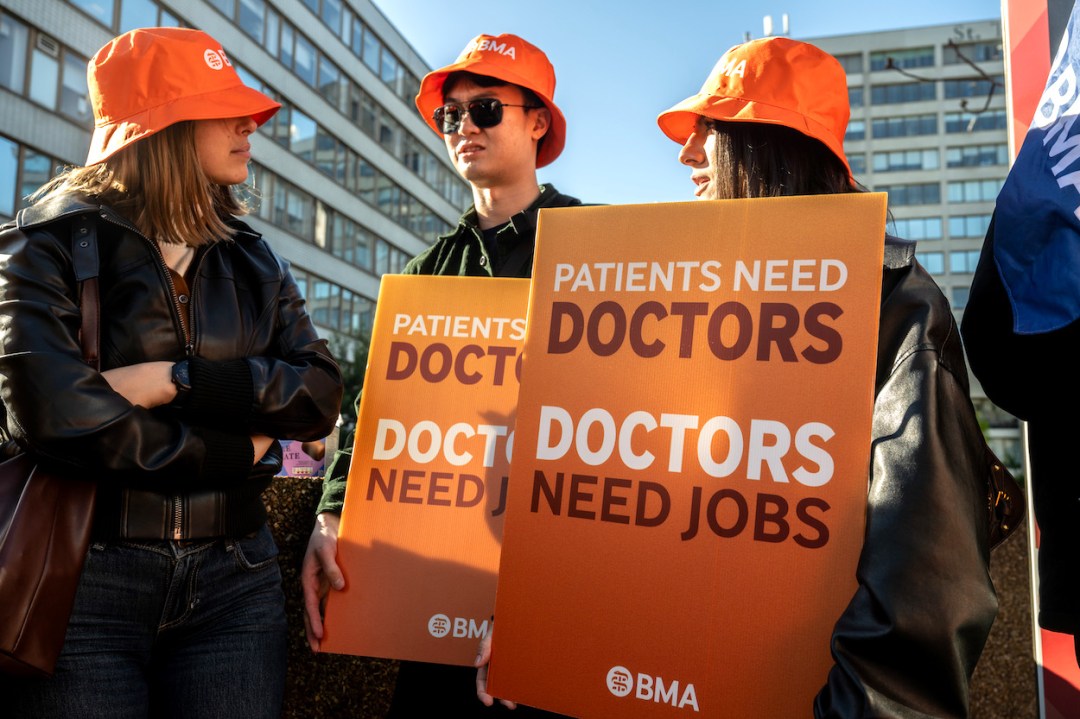
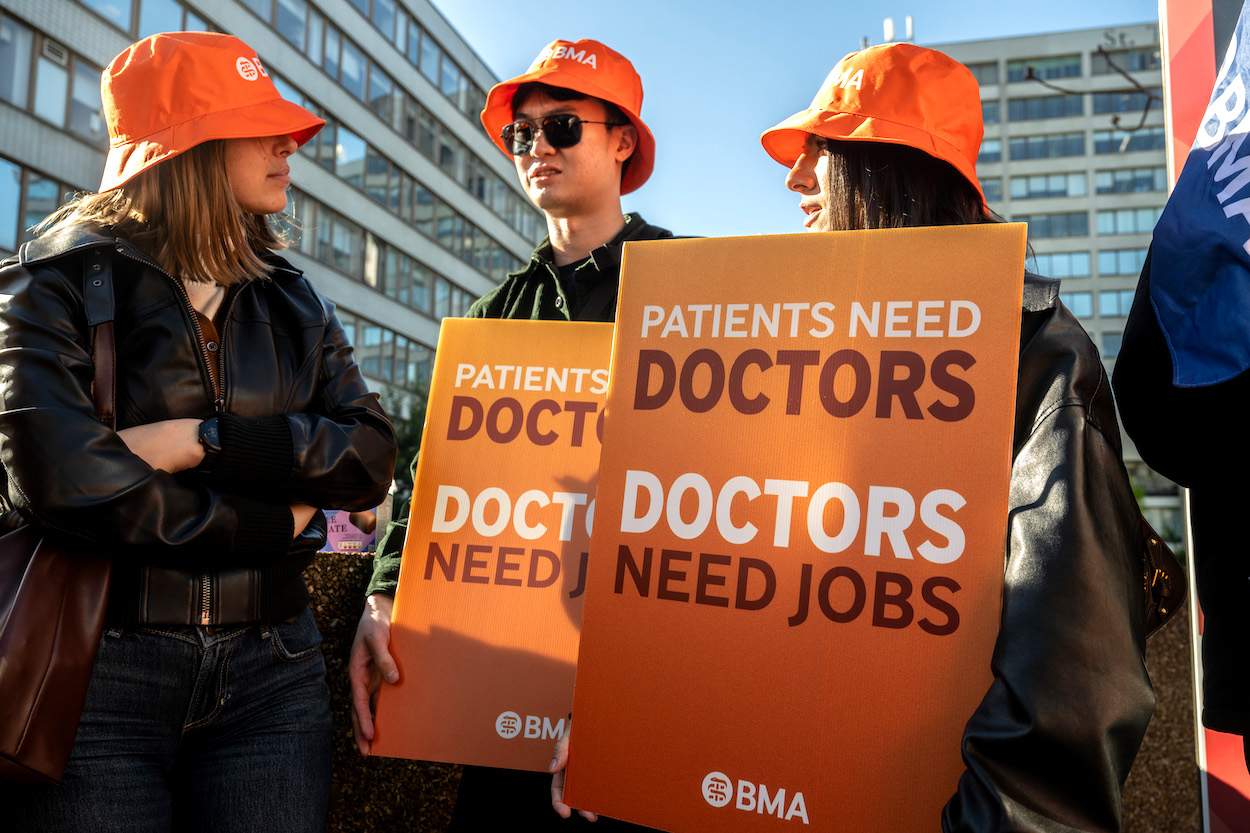
The BMA makes lots of vague demands for recognition and autonomy, control and civility – Madeline Grant, hearing similar words coming from Angela Rayner recently, called them generic, vibes-based slop. But what the BMA specifically wants is more money – for less work.
Wales is invoked as an exemplar; rarely a good sign in arguments not involving male-voice choirs or leeks. The BMA wants consultants’ top salary point immediately raised by £16,000, to match the Welsh, and to copy the contractual obligation there for doctors to get a fully-paid day and a half a week free of clinical duties. They want higher rates of pay for out of hours work, improvements in pensions, and the working week cut by five hours. Strike action to support these goals was backed by 76 per cent. ‘This is a clear message from consultants in England that they are not willing to tolerate the continued attack on their pay and professional value,’ said the BMA.
I resigned in disgust from that union in 2020, when it argued that covid meant schools shouldn’t re-open. I am therefore part of the problem. Because although the majority of those who voted backed industrial action, the bulk of the profession did not. Only 13,695 consultants voted for industrial action, out of roughly 55,000 working in England.
People should have the right to strike. Where you have a monopsony employer and workers have little freedom to choose another, that right is crucial. But it is reasonable that strikes occur only when the majority of the workforce feel strongly about them, and all the more so in essential public services. The BMA’s strike action has been voted for by only a quarter of the consultant body.
Under the law in force until February, this ballot would have failed: only 39.1 per cent of those eligible voted yes, just short of the old threshold for important public services. New legislation means the situation is about to get very much worse. In a ballot of specialist, associate specialist, and specialty doctors – those who aren’t quite juniors, but never finished a full consultant training – 90 per cent voted in favour of strike action, but only 43 per cent of BMA members turned out to vote. That ballot failed: it missed the legal turnout threshold – which the consultants cleared only by a whisker, at 51.5 per cent. When the remaining provisions of the Employment Rights Act come into force there will be no turnout threshold to miss.
Consultant pay really has been eroded over time – but societies change. Before the NHS there was one doctor for every 1,500 people. By 1976, one per 1,000; today, almost one per 300. As we get more common, might it not be right that our wages drop a bit towards the average? What doctors once earned does not automatically become their minimum wage in perpetuity.
Then there’s productivity. Why should doctors have their salaries insulated from the awful service they help deliver? Some of my colleagues work fiendishly hard; plenty more very much do not. But what matters for society is that the NHS overall now performs abysmally, delivering often dismal outcomes and always for ever more money. Doctors cannot pretend this headline disaster is none of their business. A profession cannot demand autonomy as proof of its authority, then plead powerlessness over the system it leads.
The government’s catastrophic handling of the junior doctor strikes is having its predictable effect – seniors have seen that walking out gets you a pay rise. At the moment the problems are in the medical profession: soon they’ll be everywhere. The government is making strikes easier just as unions learn that it always gives in.
Hefty pay rises for consultants could be a good idea if taxpayers bought something substantial in return. Eliminate jobs for life, link continued employment to improved productivity and clinical outcomes, and you could create a happier, richer workforce while providing taxpayers with serious value for money. Nothing like that is being contemplated. Instead, as the NHS gets ever more swollen and ever less effective, nobody talks of doing anything but more of the same.
Doctors are applying for the paperwork to leave at record rates
Figures last week from the General Medical Council show doctors are applying for the paperwork to leave at record rates. Applications are up 20 per cent on 2024, and double the rate of 2020 and 2021. For the BMA, this is evidence of serious grievance, and of holding a strong hand. Yet medical vacancy rates in Wales run at double England’s. The one place doctors are notably not rushing to is the BMA’s own exemplar.
We should be wary of regarding these latest strikes as peculiar to medicine. A culture where doctors strike without being in extremis, and where the government always gives in, while legislating to make strikes easier, is heading for disaster.
The remedy would be serious employment reform and even more serious reform of the NHS. What the government will deliver is vibes-based slop, followed by a fold. Those doctors deciding this is the moment to leave Britain may well have the right idea.





Comments