Provence
Straight from a weekend of helping a friend with chronic obstructive pulmonary disease, I drove to Nice airport to pick up my eldest daughter, her husband and four-year-old who were arriving for a holiday. I was late and hoping for a slight delay at border control so I could meet them in that most joyful of places: the arrivals hall, with its cast of reuniting families, friends, lovers and waggy-tailed dogs. But these days Nice airport, contrary to reported chaos elsewhere, is efficient and there are no queues coming in or leaving. My little granddaughter ran into my arms just as I was walking towards the terminal building.
A friend, American Cathy, lent us her big house on the other side of the village and a few days later my middle daughter and her wee ones were joining us for a long weekend. We were worried how she’d manage, flying alone with her three-year-old daughter, 13-month-old baby, suitcase, buggy and backpack. She did it, though. What a trooper.

Baby boy is huge and strong compared with my daughters when they were infants. Only a few kilos lighter than his sister, he dwarfs his wafer-thin mother. He’s a cheery soul with strawberry-blond hair, immense blue eyes and a comical demeanour. I caught him squatting to lift a boulder, then trying to push a cast-iron urn off the terrace wall. Next, this infant Hercules grabbed a seven-foot-high ornamental lamppost and shoved and pulled at it, bellowing as he did so. The shouting was so loud and relentless that my eldest daughter, who’s a bit deaf, sometimes ‘forgot’ to wear her hearing aid. Changing his nappy was like wrestling an alligator. The children and I raced up and down the village square and around the fountain. According to my eldest granddaughter, Granny is a ‘hundred-seventy-five-forty, silly billy’.
All too soon the weekend was over and it was time to take the three of them back to the airport. As we exited the motorway and joined the last roundabout there was an accident two cars in front of us. ‘Mum, you should go and help…’
My heart sank. I’ve got little to offer a trauma scene; my nursing career ended a long time ago and was mostly general, psychiatric and community-based. But I got out of the car and ran over. A young man lay on the tarmac. He was conscious but pale and trembling with shock and pain. Blood seeped through his cotton trousers from his left knee. Close by, his smashed motorbike was leaking oil. A few feet away was a white van with its front left side bashed in and bumper hanging off. Someone called an ambulance and I tried to keep the man calm and still while we waited for help, which, given the proximity to the airport, didn’t take long. A few minutes later the ambulance arrived and I left.
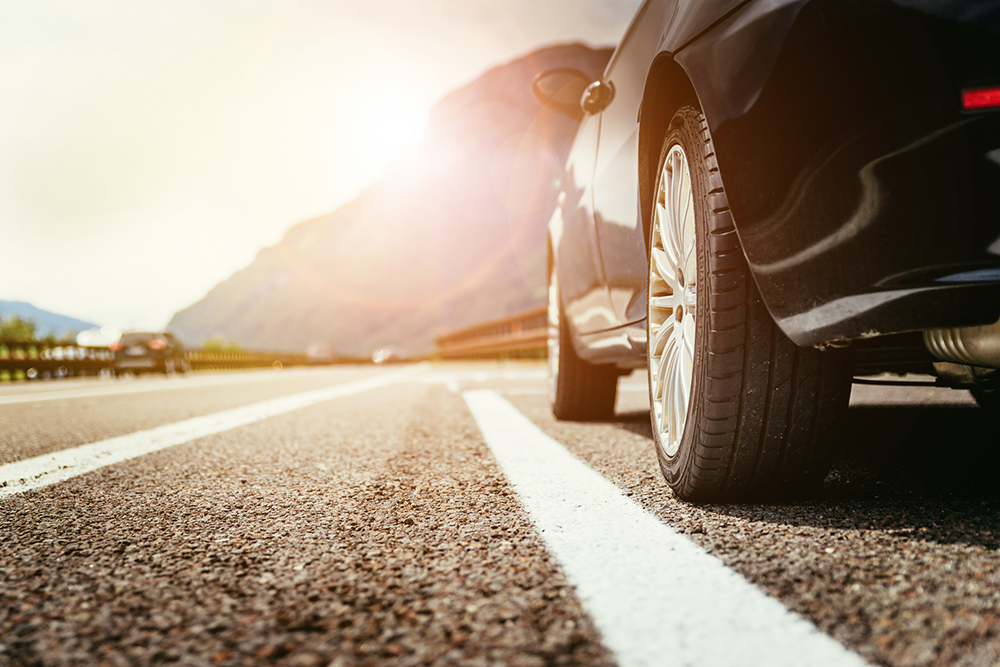
Following sad goodbyes at the airport, I headed back on to the A8. Despite the baby wipes my daughter gave me, my hands were still sticky and smelt of blood. That – and the smell of tyres, hot tarmac and motorbike – reminded me of another accident. In 1982, when I was a first-year student nurse, I used to help friends by looking after their young sons, Timmy, seven, and Jem, three. One summer’s day I took them for a walk to the park. While we waited to cross a busy dual carriageway, a motorcyclist lost control and smacked into the side of a moving bus. Both he and his motorbike disappeared. The boys looked up at me agog: ‘Where’s he gone?’ ‘He’s under the bus, I need to help.’ Not wanting them to see anything unpleasant, I made the boys promise to hold hands and not speak to any strangers – and told them to walk the short distance home themselves. When they got there, they informed their bemused parents that Treena was under a bus.
He was conscious but pale and trembling with shock and pain. Blood seeped through his cotton trousers
The bus was low to the ground but, crawling flat, I made it to the motorcyclist, who must have been pleased he’d invested in a decent helmet and full leathers. He was remarkably chipper. He told me his name was John, that he could move his arms and legs and that the only pain he had was in his neck and shoulder. I told him not to move his head. ‘I cannae anyway, I’m stuck.’ A crowd gathered and we could hear an ambulance approaching. None of the ambulance men was small enough to get under the bus so, as we waited for a lifting truck, I stayed where I was and administered the pain-relieving gas entonox. The next day I found out that John’s injuries had been minor. Lucky man.
The week following the accident I was in school and found myself summoned to see the head of nursing, the terrifying Miss Pearson. Our entire class had tipped into the Craig Dhu pub the previous Friday during a lunchtime break from our studies and got spectacularly drunk on three small drinks each (those were the days). I, one of the ringleaders, was expecting a row. But no. An ambulance man had written to Miss Pearson and a rare smile almost lit up her stern face.



Comments