Last week, it was announced after much speculation that migrants would be housed in former military sites across the country; namely, RAF Barnham, MoD Bicester and RAF Linton-on-Ouse.
I live in the nearest town near to RAF Barnham, Thetford, and on Sunday went along to a protest there about the accommodation plan. I have my own concerns about the move, given I live here with my wife and daughter. But I’m also a relatively new arrival to the area and so mainly went to hear from people who have been here for a longer time.
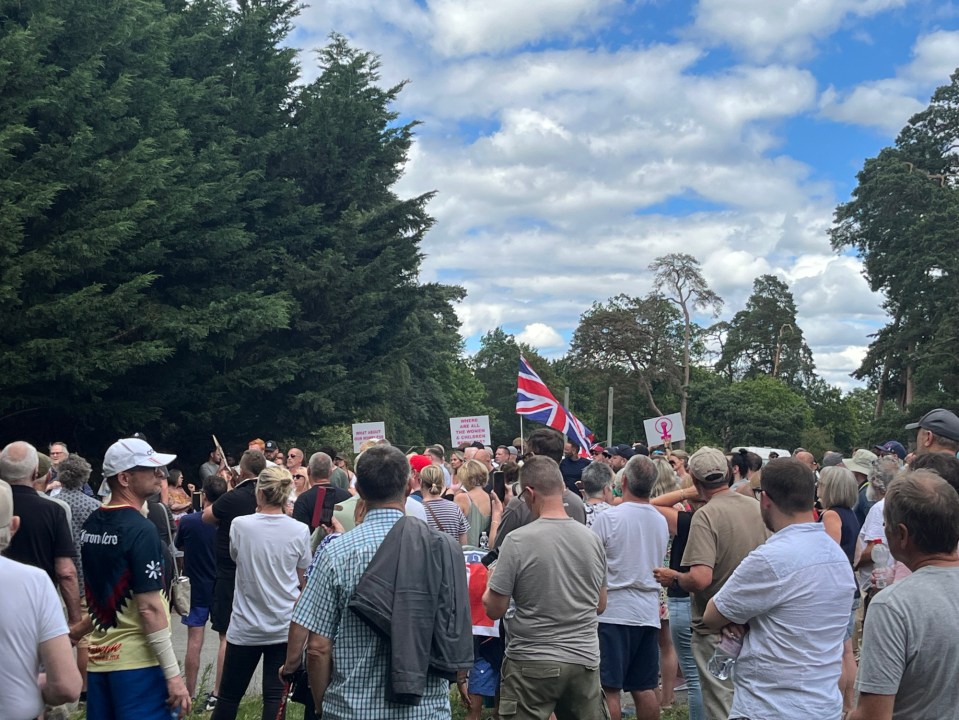
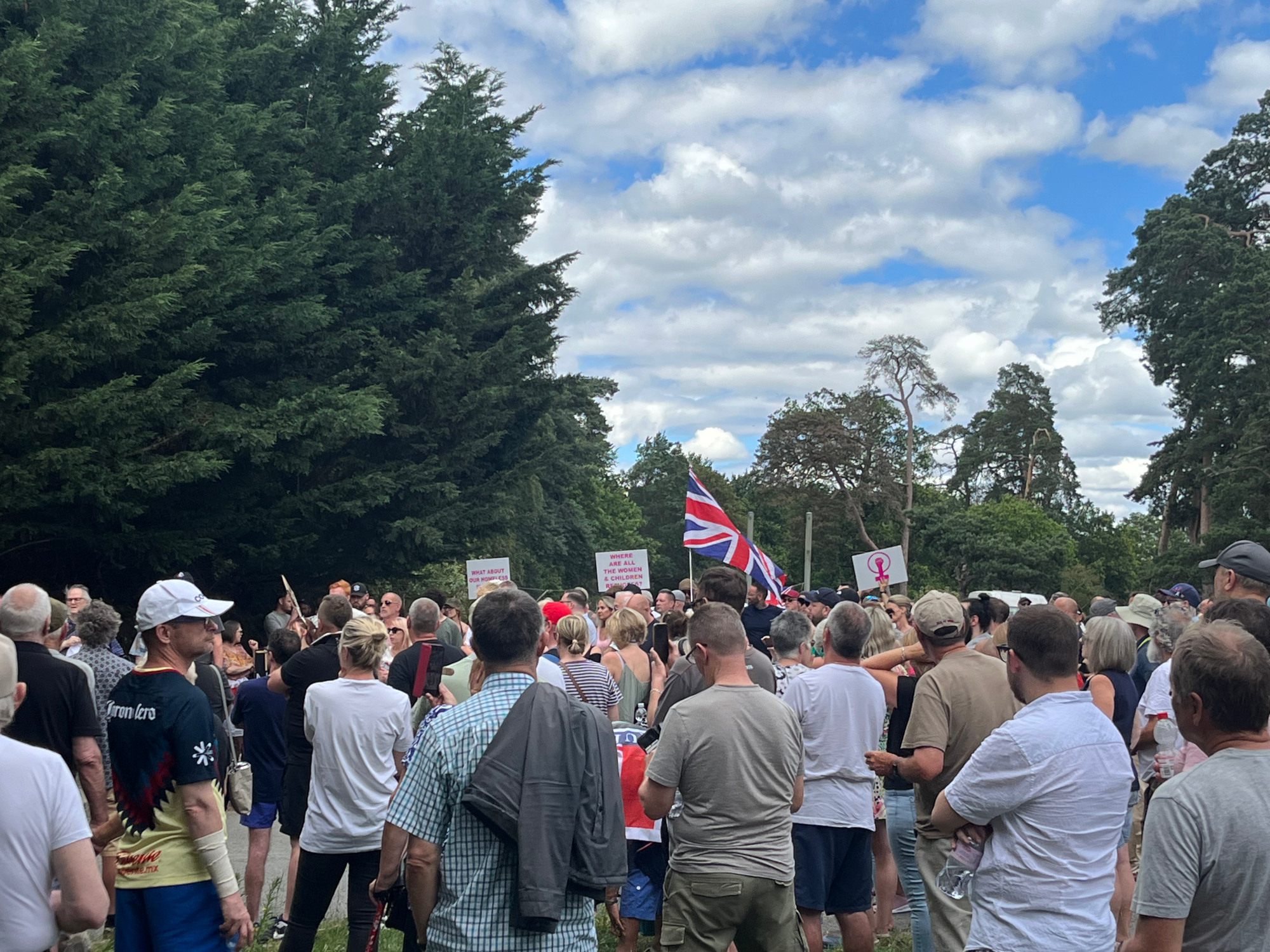
Some flew Union Jacks, some had homemade placards, but most were just there as a desperate plea for someone in Whitehall to take notice
Plans to use the base for asylum seekers had been rumoured on local forums for weeks before the announcement, as blacked out buses arrived and activity on the site increased. For a base that normally only sees police or cadet training, it was obvious to residents that something was going on. People sought answers from local MPs such as Terry Jermy, but in the end our politicians seemed just as surprised as everyone else when the announcement was finally made about RAF Barnham.
Barnham itself is a sleepy Norfolk village, with old thatched cottages, a medieval church and a primary school. With around 600 residents, the village is not equipped for the influx of what is likely to be around 1,200 people. Thetford, by contrast, is much larger, and as the nearest town to RAF Branham, its concerned residents made up the bulk of the protestors.
I arrived at the protest to sees columns of cars parked up the embankments on both sides of the road, as police drove past filming protestors and their registration plates. I was initially concerned that a strong police presence may lead to clashes with the protestors. But in the end only two police liaison officers were actually deployed, until they were joined by one other police officer who came to redirect traffic.

On reaching the gates of the base, the mood of the protestors was somewhat cheerful, as friends greeted one another. And yet all was tinged with a flat sadness that such a protest was even needed. The crowd did fizzle down as the hot afternoon wore on, but I estimate around 300 to 400 people turned up at its peak.
In their speeches, the message from residents was clear. They were concerned for the safety of local women and children, they fear that police will not protect citizens because of their ‘two-tier’ training, they believe that locals have been ignored and not consulted, and they wanted to know if the local primary school had been considered by the Home Office when making its decision.
Speech after speech cited other places where migrants have been let loose into the local community, such as Braintree in Essex, and the subsequent crimes that have taken place in these areas. Speakers discussed the rapes, assaults, grooming, stalking, love-bombing, pregnancies designed to acquire legal status to remain, and the stabbing of Rhiannon Whyte in Walsall.
They repeatedly stressed that the site would primarily house young men rather than families, and argued that many would come from cultures with different attitudes towards women, violence and freedom. I saw anger on the faces of the men present, as people told stories about what had happened to other people’s daughters in other areas. I heard the shouts of women, worried for their own and their children’s safety, as they begged for the plans to be reversed. The anger was palpable, the air became electrified, and yet peace remained the order of the day.
One poignant moment was when a resident asked all the men to step forward, to form a community WhatsApp group, and to add their wives and children. The aim being, that if any of them were in trouble, a group of local men could arrive to move any would-be assailants on. The need for such actions to be non-violent was clearly stated.
This moment particularly spoke to me because as a father and husband, I too would do anything to protect my family. The fact that people felt they had reached a point where the police could not be sufficiently relied upon was an admirable but troubling sign of just how deeply trust has broken.
Two Suffolk councillors also spoke. One said he had received almost no information about the asylum plan from the civil service, which admitted it had not considered the nearby primary school in its decision-making – something met with a wave of dismayed shouts.
It would have been easier to listen to all this if I thought the protestors were just fascist bigots. But they weren’t; they were ordinary people with real stories. They weren’t masked skinheads, covered in Nazi tattoos and shouting racist slogans. These were ordinary people, young and old, and from all walks of life. Children, women, ex-servicemen, tradies, retirees, and cashiers.
Some flew Union Jacks, some had homemade placards, but most were just there as a desperate plea for someone in Whitehall to take notice.
And so, as I walked away from the protest one thing stuck with me. These are patient people, but they are being pushed to their limit. They just want to have their voices heard.






Comments