Delhi was hot, noisy and chaotic. As always. I’ve never liked the place. I pour with sweat, get grumpy and scratchy, and just want to go home.
What I do like, though, is Delhi’s Imperial Hotel. It’s everything that the surrounding city isn’t, being cool, quiet and calm. I can cope with Delhi if I can stay here, thank you very much, largely because of its wonderful Hardinge Bar, surely the finest in town. I mean, have you ever tried its Imperial Saffron Negroni? It’s an absolute belter. And the eponymous Hardinge, made from whisky and marmalade, is a corker too.
Sadly, I wasn’t in the Imperial long enough to do too much damage to the cocktail list. I was here simply to regroup before heading north. I was off to Ladakh, the so-called crown of India, right at the top of the country in the foothills of the Himalayas, sandwiched between Kashmir and Tibet.
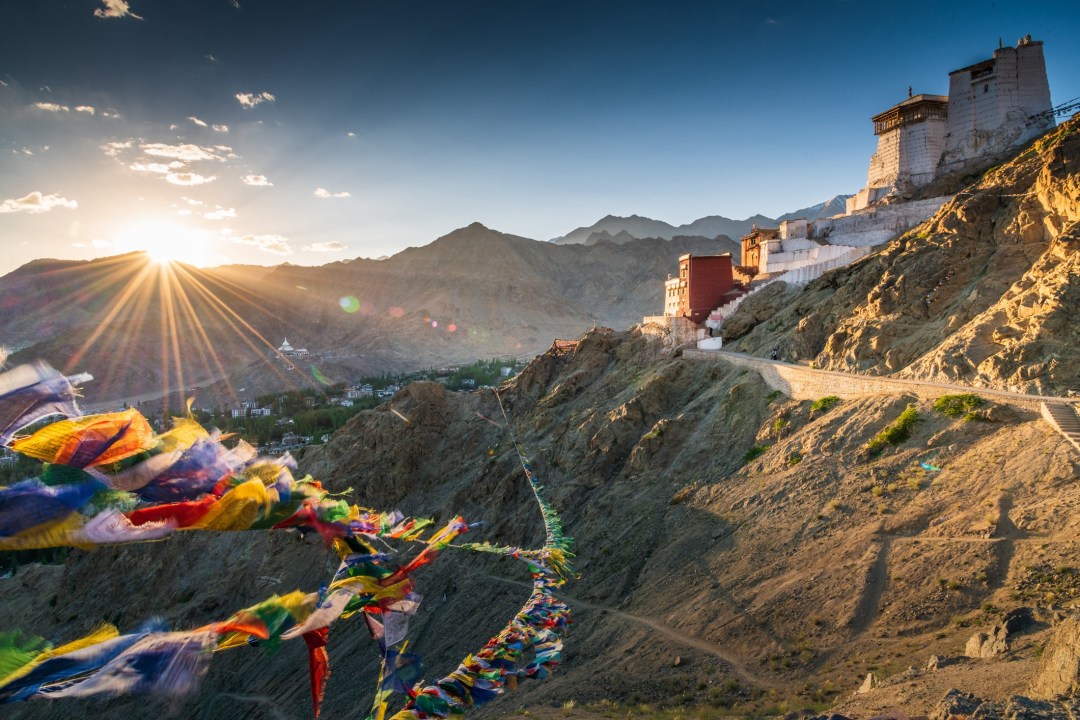
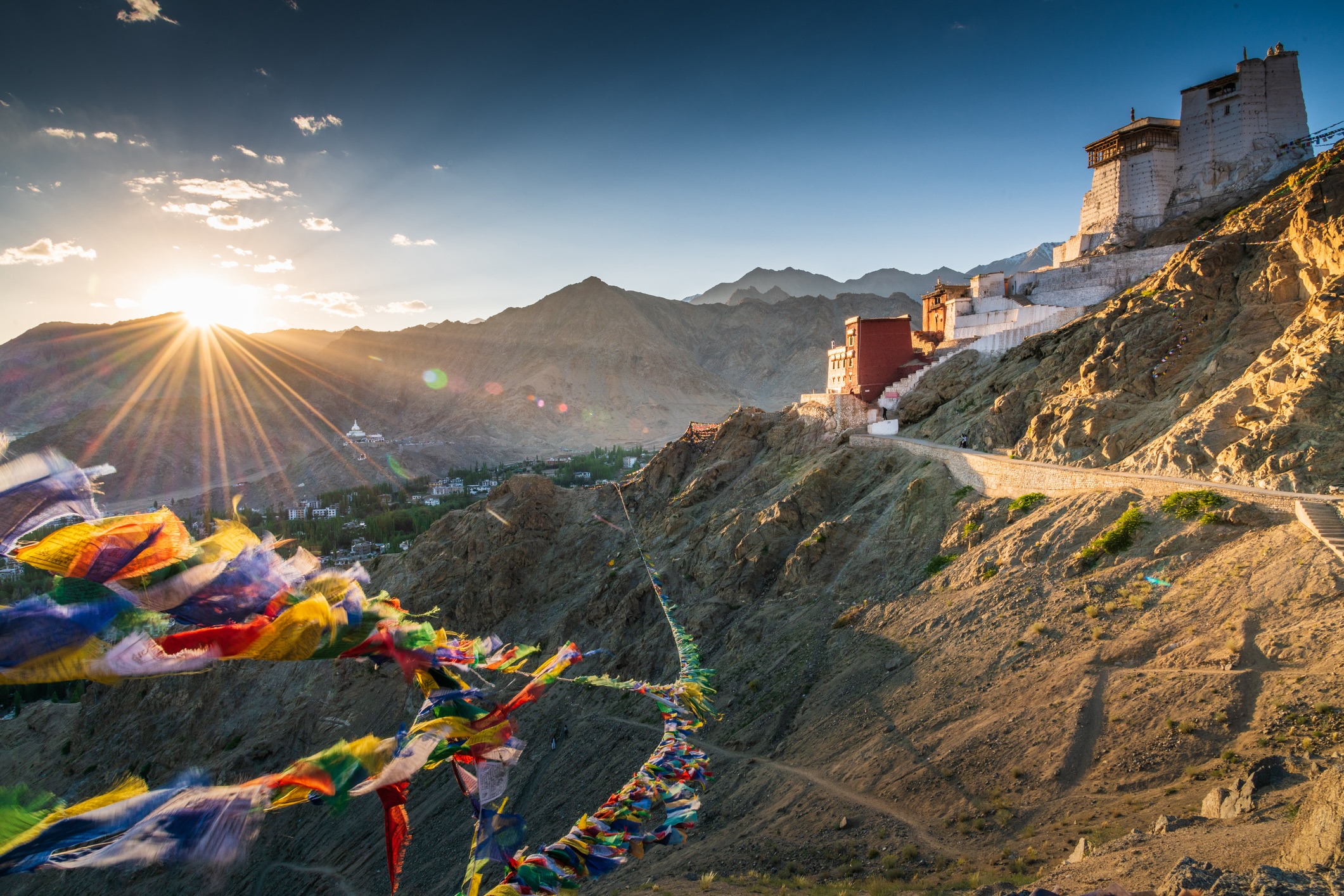
This mountain desert was opened to visitors 50 years ago and became a union territory in 2019. The name (pronounced ‘le-dark’, BTW, and not, as I’d thought, ‘le-dack’) is a combination of la, meaning many, and dakh, meaning high passes. It’s a region of snowcapped mountains, rock-strewn fells and plateaus, verdant valleys, pale blue rivers, glacial lakes, poplar trees, apricot orchards, remote villages, Buddhist stupas, prayer wheels, prayer flags and strikingly situated ancient monasteries.
I flew to Leh, the capital, our plane making an alarmingly sharp turn between the mountains before landing in a cloud of dust, metres from a vast army camp. It’s 3,500 metres above sea level here, which takes some getting used to. Indeed, I got a throbbing headache within minutes of arriving – and, no, not from too many saffron negronis the night before, thank you, but from the altitude.
I was a guest of Shakti Himalaya, which specialises in bespoke trips for the inquisitive, slightly intrepid but luxury-loving and, yes, well-heeled traveller, and which, instead of hotels, billets its punters in simple village houses, albeit in extreme comfort. Slumming it I was not.
The government is keen for foreigners to visit Ladakh and Leh airport is undergoing major expansion. All the main roads in the area are brand new and I assumed they’d been built for the expected tourists. But, no, they’re here thanks to what locals call ‘our friendly neighbours’ (Pakistan and China, to save you getting out the atlas) and to facilitate the swift movement of troops based in the scores of enormous local army camps.
As we sped from Leh to the village of Nimoo, I became transfixed by the large signs that lined these pristine highways: ‘Take Heed, Don’t Speed!’ said one. ‘Driving Faster Can Cause Disaster!’ said another. ‘Feel The Curves, Don’t Hug Them!’ said a third.
It’s a region of snowcapped mountains, rock-strewn fells and plateaus and strikingly situated ancient monasteries
And, yes, there are others too. ‘Donate Blood, But Not On The Road!’ ‘Don’t Be Silly In The Hilly!’ ‘If You Sleep, Your Family Will Weep!’ I’d love to work in whichever department of India’s Ministry of Road Transport & Highways that comes up with these.
My crib in Nimoo was simplicity itself, constructed of mudbricks and wood. The rooms were extremely well accoutred, though, and I wanted for nothing. I even had my own private chef.
There were piles of neat cowpats drying outside (for insulation and fuel) and jaunty, multicoloured prayer flags fluttering above the tiny, whitewashed roof terrace. There was a river below and mountains behind and, apart from the occasional bark of a dog, moo of a cow, rustle of trees and flags and gentle hum from Highway NH1 – the old Silk Route – it was deliciously peaceful.
Despite being more than a little outside my comfort zone, the next few days were an eye-opening joy. With the delightful Pujan as my guide, I hiked between villages, picnicked in apricot orchards, cycled from the remote village of Ney to the nearby Basgo (pedalling one mile up and freewheeling three miles down), went rafting on the Zanskar River, consulted both the local oracle (‘As we grow old, so we get pains… You must be compassionate and wary of the troubles in the world…’) and the local Amchi or healer (‘You are too gassy…’).
I tried yoga, I listened to monks chant and I discovered that – I think I’ve got this right – of the 84,000 poisons in me, the three most damaging are ignorance, hatred and desire.
I ate like a king on the simplest but tastiest of food and, in the second house I stayed in, was taught how to rustle up chicken and apricot curry, mutton and lentils, and pumpkin curry.
And just you wait until you try my now signature soup made from big, fat, juicy tomatoes, garlic, chilli, coriander, green and black cardamom, cloves, thyme, onion and fennel.
Best of all, I discovered a village called Brandy Nala, the name of which inspired my now signature cocktail. Come over and try it sometime.






Comments