
Baroness Cass has long been hailed as a figure who restored sense to the battle over child transition. Her report on NHS gender identity services, The Cass Review, led to the puberty blocker ban and the closure of the Tavistock gender clinic.
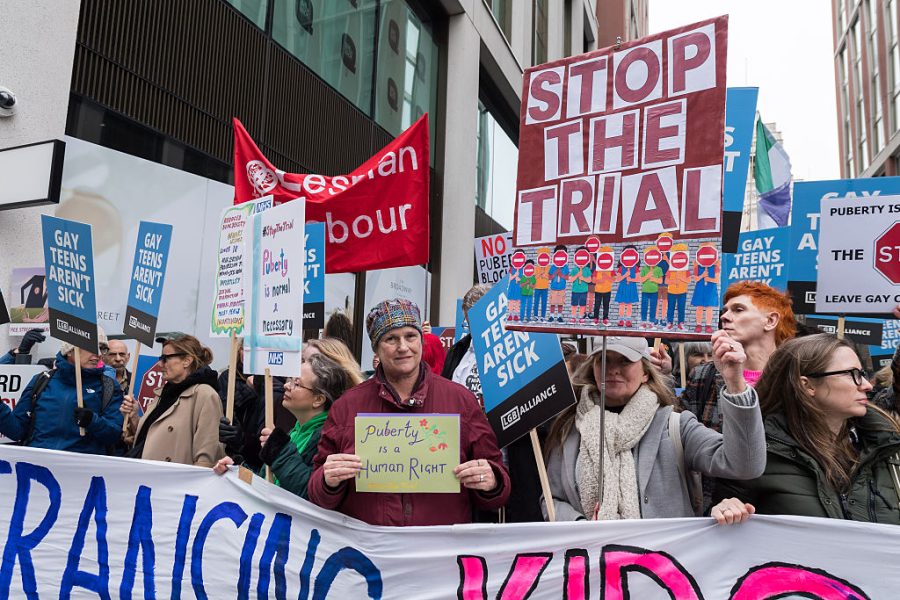
But her work has also contributed to one of the most dangerous, unnecessary medical trials proposed in recent history. On 1 August, researchers at King’s College London will begin recruiting children as young as 11 to a clinical trial ‘that will explore how puberty-suppressing hormones impact the physical, social and emotional wellbeing of young people with gender incongruence’.
Participants judged to possess a ‘good understanding of the intervention and its possible benefits and risks’ will be prescribed gonadotropin-releasing hormone analogues – drugs initially developed to treat advanced prostate cancer but now used off label to chemically castrate sex offenders and stop puberty in gender-questioning children.
One has to assume that the researchers who devised this study have never actually met an 11-year-old. Otherwise, it is hard to imagine how they have concluded that someone so young is able to provide informed consent for a lifetime of fertility problems, the inability to achieve sexual function or osteoporosis, all possible side effects.
Despite the fact these drugs have been routinely prescribed for more than 30 years, we do not really know what they do
We are putting these children at risk of irreversible physical and cognitive problems in part because a trial was recommended in The Cass Review. On Tuesday, Baroness Cass argued that ‘some of the hype about risks have been exaggerated in that we genuinely don’t know if there are harms’ and that the trial is ‘essential’ to answer the question of ‘whether these drugs are helpful or not’.
Baroness Cass is correct. Despite the fact these drugs have been routinely prescribed for more than 30 years, we do not really know what they do. Several observational studies have found that puberty suppression is associated with reduced bone mineral density accrual, particularly in the lumbar spine. But there remains insufficient information about the long-term consequences of puberty blocker use in gender-questioning children.

This dearth of evidence is no accident. As Baroness Cass observes in her own review, it is because gender services treating children globally have failed to investigate long-term outcomes.
The first NHS study into ‘early pubertal suppression in a carefully selected group of adolescents with gender identity disorders’ began in 2011. The study yielded so little that, 15 years on, almost nothing meaningful has been learned.
9,000 young people have already been through the Gender Identity Development Service (Gids) and roughly 2,000 progressed to adult services. Knowing what happened to these children is vital. But as Baroness Cass noted in her review, when she sought further information:
The Review received a letter from NHS England stating that, despite efforts to encourage the participation of NHS gender clinics, the necessary cooperation had not been forthcoming.
Data on the effects of puberty blockers has been withheld from researchers. An attempted ‘quantitative data linkage study’, intended to strengthen the evidence base surrounding different forms of support and intervention for gender-questioning children, was frustrated by NHS clinics. This is why The Cass Review recommended that:
NHS England, working with the DHSC, should direct the gender clinics to participate in the data linkage study within the lifetime of the current statutory instrument.
The statutory instrument in question is a carve-out in the Gender Recognition Act that permits researchers investigating long-term outcomes to handle information relating to individuals with a Gender Recognition Certificate, something that would otherwise be unlawful.
But no progress on linking patient data has been made. The Health Secretary, James Murray, was asked about the study on Tuesday and provided no timeline for when the NHS would deliver the information. He stated that ‘the government’s clear expectation is that all relevant organisations will provide the data required’ to complete the study, but there is still no legislation compelling adult gender clinics to share it.
Baroness Cass knows this. She has experienced first-hand the reluctance of NHS clinics to provide information about the outcomes of patients who have already received these drugs. So why, without any progress made on investigating existing patient data, is she prepared to endorse the government’s plan to recruit 226 more children to find out if puberty blockers really are dangerous?
This is a game of Russian roulette. And a completely unnecessary game at that. If ministers forced the NHS to produce data, there would be no need for another clinical trial.
Children participating in the King’s PATHWAYS trial will receive regular brain scans to investigate whether the medication they are prescribed limits cognitive function. This is because clinicians know that animal research has found the drugs to impair long-term spatial memory, stress responses and social behaviour. These effects could not be reversed in sheep. We must now wait to find out if the same permanently life-altering consequences appear in humans.
If puberty blockers are safe – which I highly doubt – researchers say they may come with long-term benefits such as ‘psychological adjustment’ or ‘better alignment of body shape with gender’. If they are harmful, King’s researchers acknowledge that they might impact ‘bone health, possible effects on brain development and sexual health’. On that risk-benefit analysis, it is difficult to understand why the trial is proceeding at all – or why Baroness Cass supports it.






Comments