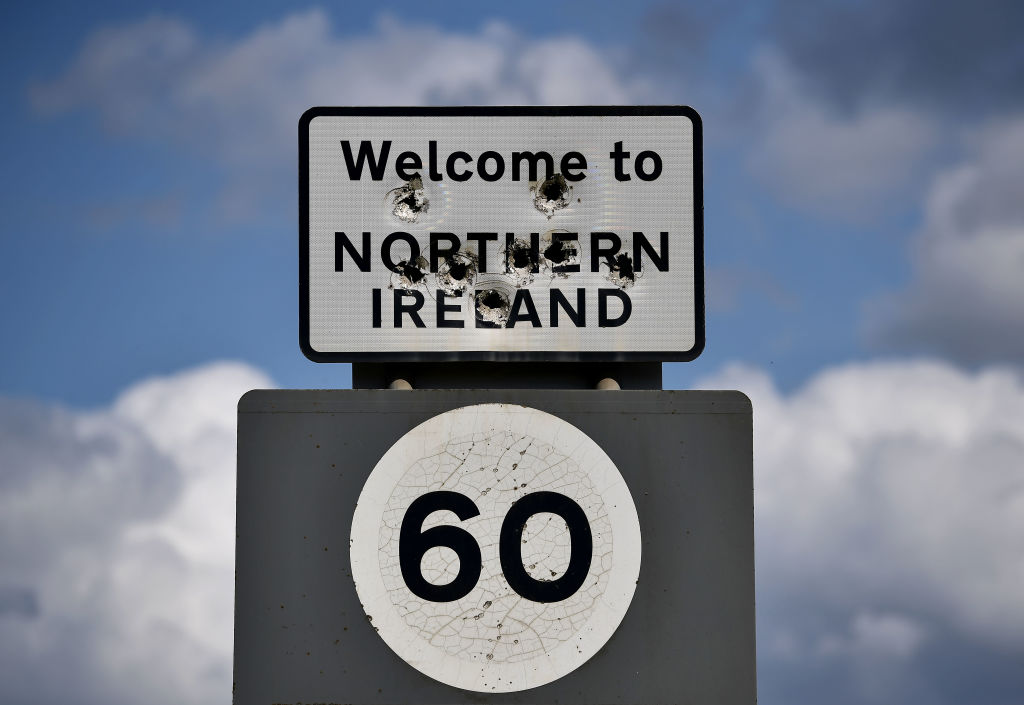
In the decade since the vote to leave the European Union, arguably no issue has consumed more energy, column inches, political capital and careers than how to solve the problem of Northern Ireland.
It was on that narrow, jagged border between North and South that the substantive skirmishes took place between the UK and EU on what their future relationship would look like. While Michel Barnier and Lord Frost arguing the toss over the finer points of agri-food regulation may lack the lustre of the Battle of the Boyne or the romantic connotations of 1916, it was no less significant a moment in Northern Ireland’s history.
While unionism has been a loser of Brexit, the seeds of that defeat were not sown in Belfast but in Whitehall, particularly in the Northern Ireland Office, Foreign Office and of course, Downing Street
The unequivocal losers in this affair have been those who value Northern Ireland’s status and position in the UK. This decade has seen disaster stacked upon disaster. Unionism now plays second fiddle to nationalism at Stormont and, courtesy of the Windsor Framework, a sea border segregates Northern Ireland from the rest of the UK economy.
It is very easy to blame the DUP for this. As Brexit supporters, they had their brief moment in the sun in Westminster with their confidence and supply agreement with the Conservatives following the 2017 general election. But this amounted to nothing as Theresa May and her successors traded away Northern Ireland’s equality of citizenship within the United Kingdom.
While unionism has been a loser of Brexit, the seeds of that defeat were not sown in Belfast but in Whitehall, particularly in the Northern Ireland Office, Foreign Office and of course, Downing Street.
The 2024 Windsor Framework should be viewed as the endpoint of a longer process of capitulation by the British state. The starting gun was fired in 1985 when Margaret Thatcher gave the Irish Republic a ‘consultative role’ in the affairs of Northern Ireland through the Anglo-Irish Agreement.

However, the Brexit period took this to new heights. The total acceptance of the Irish nationalist narrative that there needed to be ‘no hard border’ between Northern Ireland and the Republic by British civil servants and politicians should be viewed as moment of profound shame in the history of British statecraft.
The Irish government, especially when it was led by the hysterical Leo Varadkar, invoked the threat of a return to the ‘dark days of the past’ if even a camera was installed along the border. Both the rest of the EU and the UK fell for this and accepted that framing of events. From that moment on, the outcome of the negotiations was pre-determined.
The Starmer government has pursued closer alignment with the EU on certain issues, giving rise to hope in certain quarters of unionism that over time the more pernicious elements of the sea border will fade away. It would be a mistake though to suggest that this comes from some latent unionist zeal within government. They still will not call out the bad faith in Dublin and Brussels which led us here.
Keir Starmer’s likely replacement by Andy Burnham is unlikely to result in any volte face either. Burnham is never shy to invoke his Scouse Irish Catholic roots. It was notable that his victory in Makerfield was enthusiastically cheered by the former SDLP leader Colum Eastwood; it was widely reported last year that Eastwood was in a relationship with Louise Haigh, one of Burnham’s key allies.
It is the assumed wisdom that Brexit has made Northern Ireland’s exit from the UK a formality. Irish nationalists have spent the past decade talking – largely amongst themselves – about the need for a conversation on this. Blueprints and white papers appear almost weekly from the cottage industry which has sprung up to will a ‘New Ireland’ into existence.
The polling landscape remains by and large unhelpful to their cause, with most showing that the pro-UK side still has the edge. Indeed, the Institute of Irish Studies at Liverpool University’s most recent study, published earlier this month, found that support in Northern Ireland for a united Ireland has fallen to a ten-year low. Some 61 per cent of respondents would vote to remain in the UK.
A decade on from the vote to leave the EU, Northern Ireland exists in a state of suspended constitutional animation. Effectively abandoned by its nominal government in London and still unattainable for those in Dublin who desire it, local politicians continue to act out the parts assigned to them almost at birth. Brexit may have changed many things in this part of the UK, but fundamentally, everything remains intractably the same.



Comments