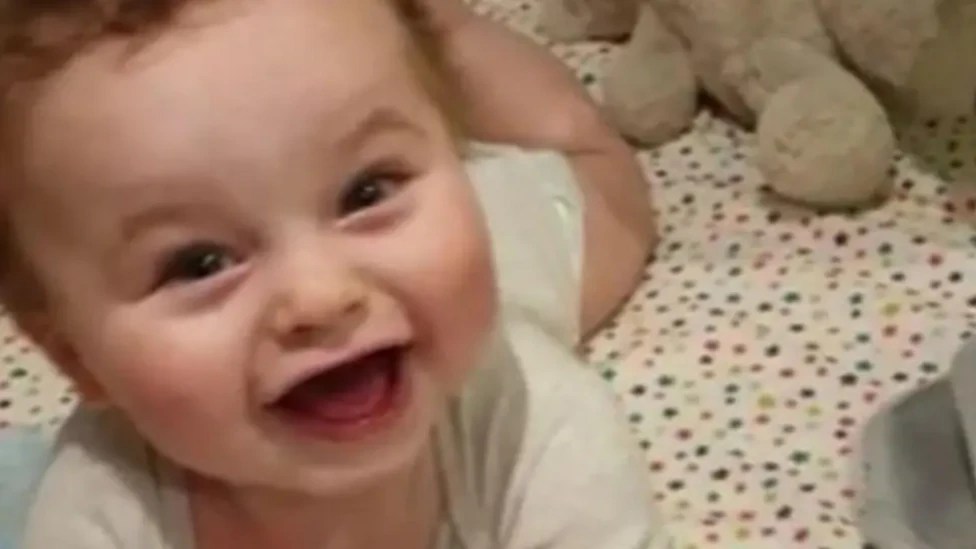
The video released on Thursday of Preston Davey smiling up from his highchair is difficult to watch. It captures the unguarded happiness of a baby who has no reason yet to distrust the world. Knowing what happened to him afterwards, you find yourself wanting to reach into the screen and lift him up to safety.
A baby who had already experienced more upheaval than most of us will in a lifetime was failed in the worst possible way
I won’t repeat the details of Preston’s death. They’re too horrific. Suffice to say that a baby who had already experienced more upheaval than most of us will in a lifetime was failed in the worst possible way.
Cases like this inevitably prompt calls for tighter regulation and more safeguards. Yet Jamie Varley – who will spend the rest of his life in prison for killing and abusing Preston – had already passed through a system designed to scrutinise every aspect of his life. Before adopting Preston he was a teacher, a head of year and was even involved in safeguarding. He had spent years convincing colleagues, parents and other professionals that he was someone who could be trusted around children.
It’s tempting to imagine that one additional form, one extra interview or another training course would have exposed him. But in over 20 years of fostering I’ve learned that some people are exceptionally skilled at concealing who they really are.
The adoption assessment is already a robust process. Applicants are questioned about their finances, health, relationships, childhoods and motivations. Their homes are inspected. Ex-partners are quizzed. Referees are visited and interviewed. Many prospective adopters decide the scrutiny is simply too much and withdraw. The uncomfortable truth is that no assessment process can guarantee that every dangerous individual will be identified.

What struck me most about the details emerging this week was something else entirely: the role of Preston’s foster carer, Sandra Cooper. She reported being prevented from seeing Preston after he left her care. When she was eventually allowed a visit, she found him pale-faced and tearful, not the contented, smiley baby he’d been through the nine months in her care.
Sandra had cared for Preston from birth. She knew his cries, his routines and the small quirks that would signal he was out of sorts. She knew him better than anyone else involved in the case. And yet when she raised concerns, they appear to have been dismissed.
At first glance that seems like an obvious failure. But having moved numerous babies and children on to adoptive families myself, I know how emotionally charged these transitions can be.
For a baby Preston’s age, the move usually takes place gradually over around ten days. During this time, foster carers are preparing to lose a child they love. Adopters are anxious to establish themselves as parents, and may never even have held a baby before. Social workers are trying to navigate the fears and expectations of both sides.
The reality is that concerns are frequently raised during this period. Foster carers worry adopters are struggling. Adopters worry foster carers are reluctant to let go. Social workers spend a great deal of time reassuring everyone involved.
I know this because I have been on the receiving end of those reassurances myself. After caring for two siblings for almost three years, I was prevented from seeing them after they moved to their adoptive family. Their adopters wanted a clean break. They felt it was the only way the children would be able to move on. I understood their reasoning. I also found it deeply upsetting.
I worried. I feared the worst. I requested an unannounced welfare check and was reassured that the children were safe and well, albeit grieving and still pleading to ‘go home’.
That experience is one reason I can understand how concerns about Preston might initially have been interpreted as part of an emotional adjustment rather than evidence that something was seriously wrong.
But it is also why foster carers should be listened to. Foster carers are heavily invested in the children they care for. Sometimes that means they worry unnecessarily. Sometimes it means they’re struggling to let go. Yet that same emotional investment is precisely what makes their instincts so valuable.
The moment you collect a newborn from hospital, social workers remind you that the baby is not yours. You try to remember it. But the way we’re loved as children impacts our whole life. Every child deserves to be cherished, and most foster carers cannot help loving the children placed in their care. That attachment allows them to notice tiny changes that would mean little to anyone else.
Most social workers work extraordinarily hard and with the best of intentions. But there remains a tendency in some parts of the profession to treat foster carers as overly emotional amateurs rather than people with valuable expertise. We are often excluded from meetings held to discuss children’s futures, because only ‘professionals’ are invited. Foster carers who challenge professional opinion can find themselves written off as difficult or resistant.
The inquiry will establish precisely what happened in Preston’s case. But the question of why the concerns raised by the person who knew him best were not treated with greater urgency might well emerge as one of the most critical failings.
Preston needed the safe and loving home that every child deserves. It is a tragedy that he did not find it. Yet amid a week of appalling news, it’s worth remembering that for every monster capable of harming a child, there are thousands more who would gladly break their own hearts to keep one safe.
Sandra Cooper was one of those people. She gave Preston a start in life filled with safety, warmth and love. It helps to remember that. And perhaps we need to learn to trust in that instinct more.





Comments