A great literary character, like a gemstone, has many facets. Sherlock Holmes looks different depending on where the light hits him: reasoning machine or bohemian creative, misogynist or white knight, disciplined professional or (in Dr. Watson’s words) “self-poisoner by cocaine and tobacco.” Film adaptations, of which there are no end, pick and choose their angles.
Purists rush to tell us which onscreen Holmeses are valid and which travesty Arthur Conan Doyle’s creation. Occasionally the purists themselves betray Holmes, who had more going on than they recall. As for me, I’m purer than the purists. But when it comes to onscreen Sherlocks, I’m one big soft spot.
Even by my liberal standards, Amazon’s recent streaming series Young Sherlock fails. It gives us a puppy Sherlock who can’t possibly grow up into the great sleuthhound. Worse, it is apologetic about the scientific methods Doyle’s Holmes employed and the optimistic age he embodied. A look at the long line of screen Sherlocks shows that there are many ways of succeeding in the role. Repudiating the great detective’s heroism as a tool of empire isn’t one of them.
Young Sherlock has given its hero an ideological update: this is a postcolonial Holmes
Loosely based on a series of prequels by Andrew Lane, Young Sherlock has our teen protagonist (Hero Fiennes Tiffin) sent up to Oxford. Intrigue ensues upon the matriculation of a foreign student, a Chinese princess with precious artifacts, serious martial-arts skills and a hidden grievance. Young Sherlock is a Guy Ritchie joint, or wants to be. Two episodes were directed by Ritchie, and the other six are done in his style – which means lots of fistfights and running in slow motion. Jokes about Sherlock’s inability to land a punch seems like a sop to purists but haven’t stopped them from condemning the fight scenes as action-movie trash. The true Holmes, critics claim, is a paragon of “serene rationality,” a cerebral cortex in an armchair. This objection makes sense only if you’ve never actually read Doyle’s stories. They are full of action: steamboat chases, daring rescues, animal attacks, struggles to the death on precipices above waterfalls. Though played over the years by a Who’s Who of stately character actors, Holmes was written as a physical as well as a cognitive freak. He unbends a fireplace poker with his bare hands in “The Speckled Band,” outruns his companions while chasing down the hound of the Baskervilles, and uses mixed martial arts to dump Moriarty into the Reichenbach Falls. We learn in The Sign of the Four that he once moonlighted at the prize fights and threw away a promising career as a boxer. Young Sherlock errs in giving us not a Sherlock who throws punches, but a Sherlock who can’t land one.
Ritchie’s earlier Sherlock Holmes, for Warner Bros., showed Holmes, played by a ripped Robert Downey Jr., resorting to kung fu during a bareknuckle boxing match. Though derided as pure dumb Hollywood, the scene was perfectly in line with the source material. Prior to Downey Jr., Jeremy Brett, star of the long-running Granada TV series (1984-94) and still the purists’ favorite, had been lauded as a refreshingly physical Holmes. It is true that Brett did his own stunts and was given to leaping over stiles to show off the character’s nervous energy, but he perhaps did not come up to the extraordinary athleticism of Doyle’s original. His victory in a fistfight in “The Solitary Cyclist” is not terribly convincing. It verges on camp, like many aspects of Brett’s beloved but mannered performance.
Brett does brilliantly with Holmes’s brainy side, and of course the ideal screen Holmes convincingly embodies cognitive as well as physical heroism. A simple template for revealing the detective’s thought process is contained in Doyle’s stories, where it is one of their most dependable pleasures: Holmes tosses off a deduction, the amazed Watson demands an explanation and Holmes, with theatrical impatience, walks him (and us) through it.

These dialogues translate well to the screen and are staples of classic treatments such as the Brett series and the 14 movies starring Basil Rathbone (1939-46). Recent adaptations tend to layer on visual ingenuity. The thought process of Downey Jr.’s Holmes, or of Benedict Cumberbatch’s Sherlock in the BBC’s initially excellent, increasingly ridiculous contemporary-set series (2010-17), is illustrated with zooms and cuts and flashbacks and CGI. The frenetic results bespeak a jumpier, edgier Holmes, one who accords with neurodivergent accounts of genius.
Either the verbal or the visual approach will work. But some approach must be taken. In Young Sherlock, Fiennes Tiffin’s brain impresses about as much as his fists, though blame on this point is shared with the screenwriters. This Sherlock stumbles across clues and happens upon conclusions. Never has a screen Holmes done less to show his work.
Young Sherlock seems actively embarrassed by Holmes’s method of “observation and deduction,” which boils down to reasoning about probabilities based on evidence obtained through the senses – the scientific method, in short. In Young Sherlock, science is a dark art. Empiricism is a tool of imperialism: minerals are expropriated from non-western lands, at the cost of indigenous lives, for use in chemical weaponry. Oxford researchers get rich from defense contracts. All scientists are evil, not least the scientist who bequeathed Sherlock his empiricist bent (slight as it is): his father, Silas (Hero’s uncle Joseph Fiennes). Silas sinisterly gasses butterflies to death, then does the same to a man. When Silas gives Sherlock a fancy microscope, it plays as a moment of temptation. To pursue his vocation virtuously, the young detective will surely need to swear off such cruelties as instruments and experiments. Don’t trouble yourself about how he’ll be getting from hypothesis to conclusion.
Amid its sumptuous late-Victorian production design, Young Sherlock has given its hero an ideological update: this is a postcolonial Holmes, which means a post-rational Holmes. Doyle’s detective was a product of imperial Britain. In his stories, civilization thrives to the extent that Holmes can bring the light of English rationality to darkest Dartmoor and defend innocent Britons from blowpipe darts and Indian swamp adders. The world has changed since His Last Bow (1917), but for Holmes to be a hero we still must believe in British empiricism if not British imperialism: the smart man’s burden, if not the white’s.
Believing in both was easy, evidently, in 1985, when the movies were not yet downstream of postcolonial theory. The villain in Barry Levinson’s Young Sherlock Holmes (no relation to the Amazon series) is an Anglo-Egyptian man with a grievance against the British Army, which despoiled a pyramid in his home village. His cult of Osiris-worshippers has infiltrated London and abducted five young ladies for use in ritual sacrifices. The film tips its hat to much of the Doyle canon, as well as the then-recent adventure film Indiana Jones and the Temple of Doom, but singularly recalls The Sign of the Four and its backstory involving the Indian Mutiny of 1857. As school-age Sherlock, Nicholas Rowe is clever and angular and dignified, if incongruously girl-crazy.
Aloofness from women is one trait of the great detective Fiennes Tiffin embodies effortlessly, not to say lifelessly. When he gets date-raped by a Chinese princess, it is revenge, I suppose, for the sins of his father, and perhaps also for the Opium Wars. That is the extent of this young Sherlock’s amorous entanglements, and of his drug use – notably, since addiction has been a trendy emphasis of late. Accordingly, the diagnostician at the center of Fox’s House (2004-12), a medical-detective drama with a healthy streak of homage to Holmes, is a Vicodin addict. The Holmes of CBS’s New York-set Elementary (2012-19) is in recovery, aided by Watson, his sober companion. Cumberbatch’s Sherlock has a drug habit that flares up whenever the screenwriters lack other sources of drama. Downey Jr.’s Holmes goes fairly easy on the drug motif, given the actor’s well-known struggles with addiction.
Holmes was the original bourgeois bohemian, socially dubious in his profession, connections and habits
All this adds up to more emphasis than Doyle likely intended. Purists always accept cocaine use as canon, though it is less consistently attested than Holmes’s athleticism. Doyle distanced his hero from cocaine injections after The Adventures of Sherlock Holmes (1892), as the stigma around the drug increased. By The Return (1905), Holmes is no longer using, nor does Watson remark on his sobriety. Doyle had shelved the issue.
He made many such revisions. Holmes was the original bourgeois bohemian, socially dubious in his profession, connections and habits but necessary to the establishment and finally at peace with it. How bohemian was too bohemian? Doyle gave different answers at different times. The queer hero of Billy Wilder’s The Private Life of Sherlock Holmes (1970) can be easily justified by the decadent touches of the first two novels and the cross-dressing of Irene Adler. (It can’t really be justified by the performance of Robert Stephens, who lost a great deal of weight to play Holmes and seems depleted by the effort.)
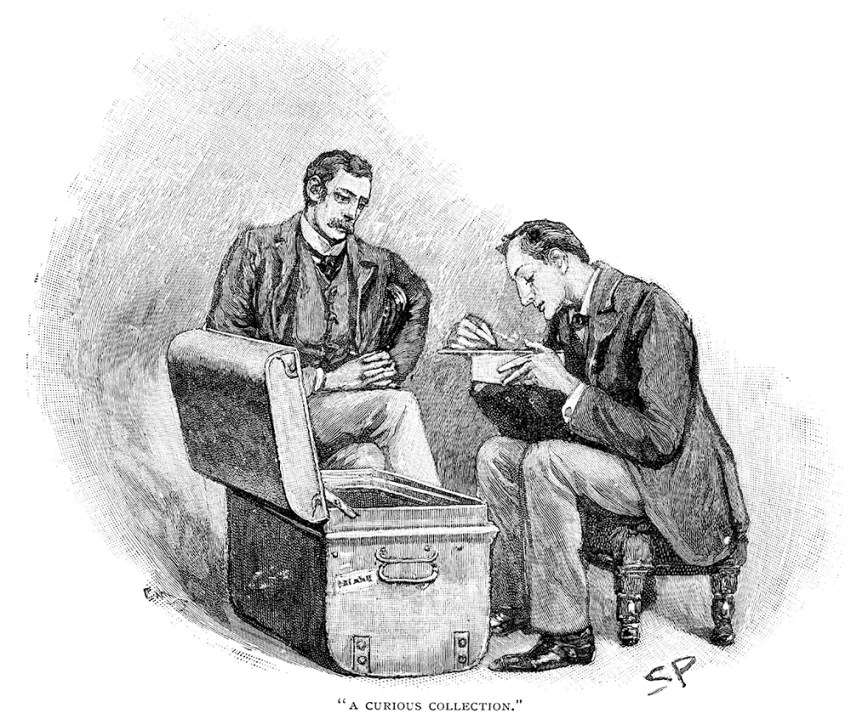
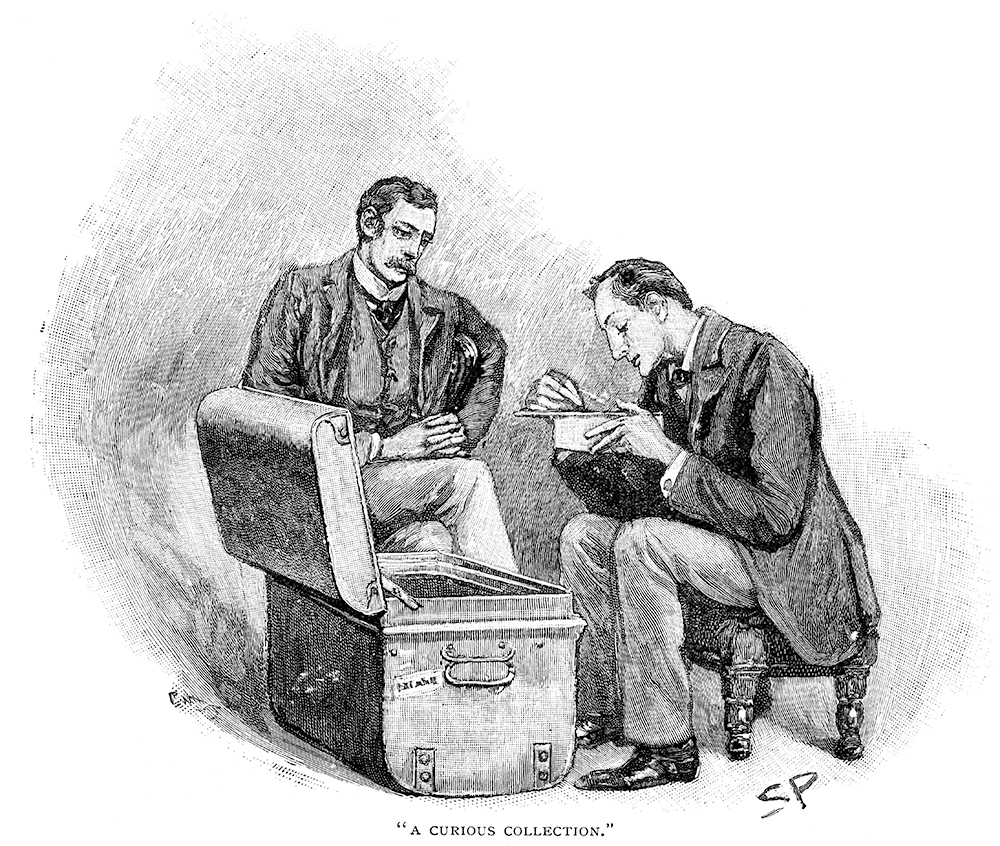
An asexual Holmes can be justified by most everything else in the stories. Even Holmes’s appearance shifts, as the outré figure of the first two novels becomes distinguished by “catlike neatness of dress,” perhaps in response to Sidney Paget’s elegant illustrations for the Strand Magazine.
As he and his author aged, Holmes joined the side he was already on. In the final story, he is hunting German spies on the eve of World War One. He anticipates that a “better, stronger land” will emerge from the war. It is not his canniest prediction, but it shows where his heart is.
Imperial Britain’s good and bad points can be tallied. One point in its favor is that it bequeathed us this immortal character – one who can take a lot of revisionism, but on the evidence of Young Sherlock, can’t survive being recast as a postimperial post-empiricist. Post-point might be closer to the mark.





Comments