
Christopher Howse has narrated this article for you to listen to.
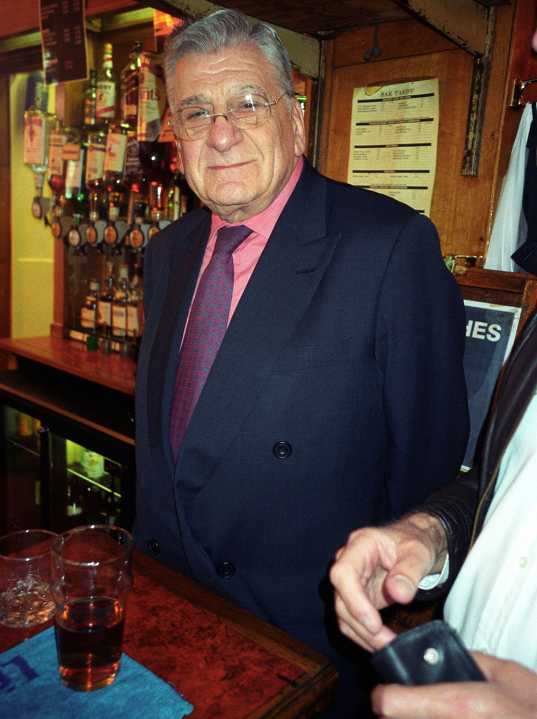
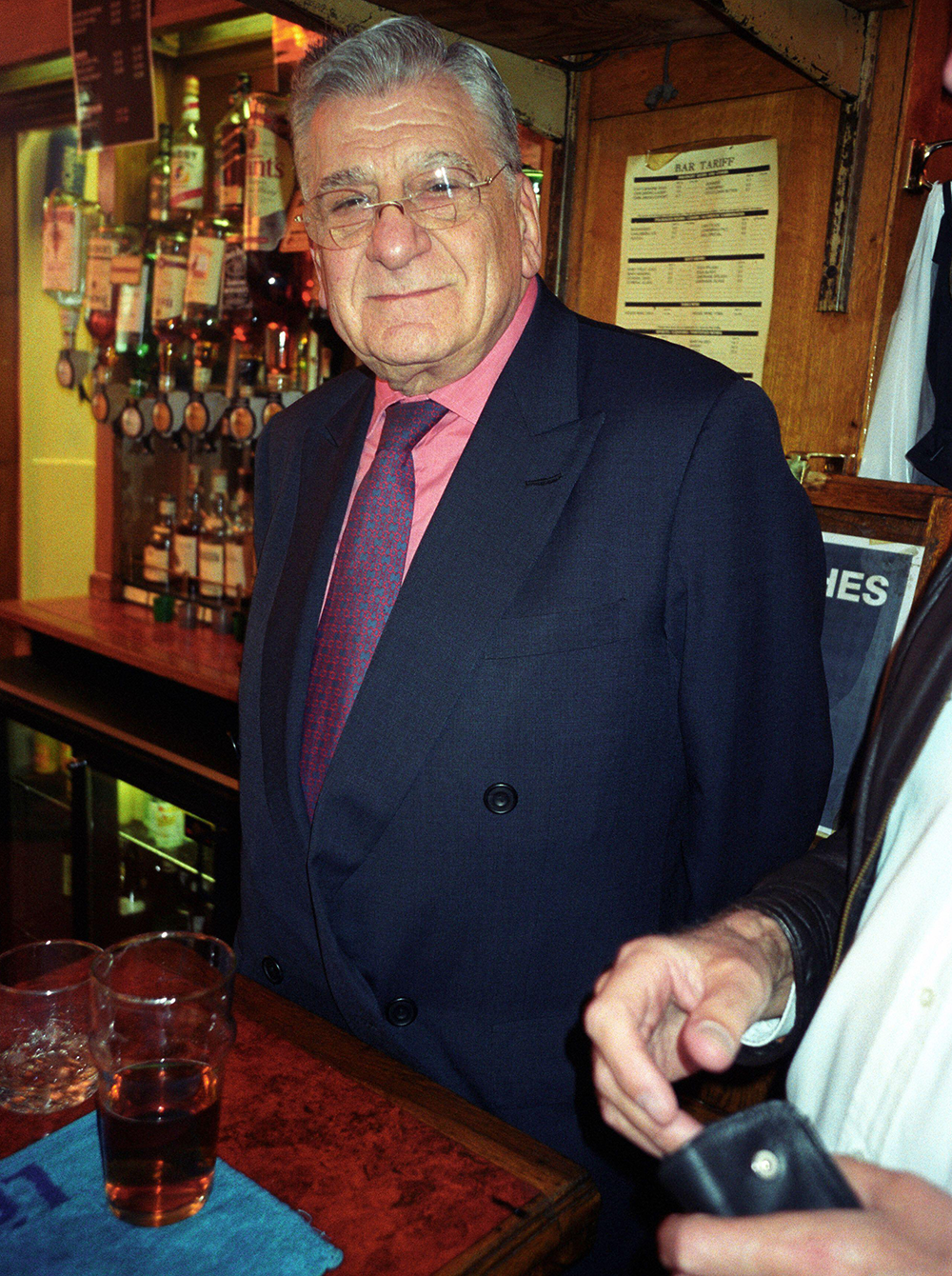
Norman Balon, who has died at the age of 99, missed the point when he defined himself as ‘London’s rudest landlord’. There, I think, he mingled self-publicity and self-defence. People didn’t go to the Coach and Horses, Soho, to be shouted at by him; they shouted at each other quite enough. Really he was the actor-manager of a twice-daily claustrophobic, drunken extemporisation in his pub which embodied bohemianism and self-destruction in the last two decades of the 20th century.
Remember that 40 years ago the Coach was thick with cigarette smoke, that many customers were drunk daily, at lunchtime, and that no one was fearful of what they said. Things were not then as they are now.

The Spectator contributed a lot to Norman’s decades of celebrity. Through the thousand Low Life columns that Jeffrey Bernard wrote, starting in 1975, he had some claim to inventing Norman. For his part, Norman believed he had made Jeffrey famous by giving him a stage, which came literally true when Peter O’Toole starred in the West End play Jeffrey Bernard Is Unwell, from 1989.
Richard Ingrams, as editor of Private Eye, was guilty of bringing together Norman and Jeffrey. The Private Eye staff had lunch daily at the Coach, at the table near the gas fire and the lavatories. This was a lower-key affair than the fortnightly lunches at which the famous were tempted to sing for their steak and chips. Those were upstairs in the pub, in the Balon family’s former dining room, which felt like an abandoned house in a war zone.
Norman had been at the pub for 40 years when Low Life collided with something in the air in the 1980s to make the Coach, night after night, as crowded as an Underground train.
He had left technical college aged 16 on 3 February 1943, when his father signed a tenancy agreement on the pub. A detail I can never forget from Norman’s memories of their first night was their finding 22 mice in the beer slop bucket. There was also the little trouble of wartime bombing.
Michael Heath based his cartoon strip in Private Eye, The Regulars, on the monstrous populace of the Coach, who played out a tragicomic soap-opera there. It was comic most days, and always ended in tragedy, divorce, sickness, poverty and death.
But had it not been for writers like Jeffrey Bernard or Daniel Farson (Soho in the Fifties, 1987), Norman’s little Soho world would have passed away unseen by any but its participants – the usual suspects, Elizabeth Smart, John Heath-Stubbs, John Hurt, Francis Bacon, Diana Lambert, Frank Auerbach, Bruce Bernard, Mick Tobin, Sandy Fawkes, Rupert Shrive, Stephen Fothergill, Bookshop Billy, Brian the Burglar and the uncredited throng of students from St Martin’s School of Art.
Norman’s volatile but forgiving nature came out after the police swooped on Jeffrey Bernard one lunchtime in 1986 for making an illegal book on the races shown on television. Outside Vine Street police station, where they had taken Jeffrey, I found Norman fearing he’d lose his licence. He said: ‘Jeff Bernard’s a cunt; he’s stitched me up for life.’ But by 6.30 p.m., when we were all back in the Coach, Norman bought Jeffrey a drink.
They remained friends to the end, Norman concealing his own emotions by regular references to Jeffrey as a ‘bastard’. He took lobster salads to him at his flat off Berwick Street; he prowled hospital wards, loudly commenting on Jeffrey’s fellow patients. He declared that some other Soho character would replace Jeffrey in his pub after his death in 1997, but he knew in his heart that the supply was running low.
When I went to talk to Norman in 2019, 13 years after his retirement, he told me something serious: ‘You might not believe it. I don’t know and don’t care. But I tried to stop people drinking too much. I had a very big income from the pub, so it didn’t cost me anything to try to look after people.’
Norman bought half a house in Golders Green. He went to theatrical first nights, had his suits tailor-made and his shirts initialled N.B. on the breast. He had retained his hair (cut once a week) and was tall, but he was stooped and did not wear his expensive clothes to advantage.
People didn’t go to the Coach and Horses to be shouted at by him; they shouted at each other quite enough
Norman’s prosperity went with an appetite for the makeshift and awkward. This was seen in the ritual of emptying the cigarette machine on the wall near the lavatories. Once it was unlocked, he pulled off the whole front section between outstretched arms, lugging its weight to a nearby table to rest it on the black Formica surface.
Inside, the machine was almost entirely of wood. No electricity featured. Columns of cigarettes towered above drawers released by coins in the slot. Strings and pulleys wove up and down. There was a lot to go wrong.
Norman would empty the coin drawer on to the table and sit down to count money into little plastic bags for the bank. Sometimes the phone rang or the barman announced that a barrel in the cellar needed changing, and he would lose count.
The machine was more trouble than it was worth, but Norman assumed that, because success was difficult, difficult things should be embraced at all costs. Anyway, his strange career at the Coach would never have flowered but for his failure in 1961 with Balon’s Grill, a swanky restaurant in Baker Street.
Bits of crockery and cutlery from the venture turned up in the Coach decades later, among them the forks regularly secreted by Norman’s forgetful aged mother in her handbag. I still have some at home. I shall remember Norman as I eat my scrambled egg.




Comments