
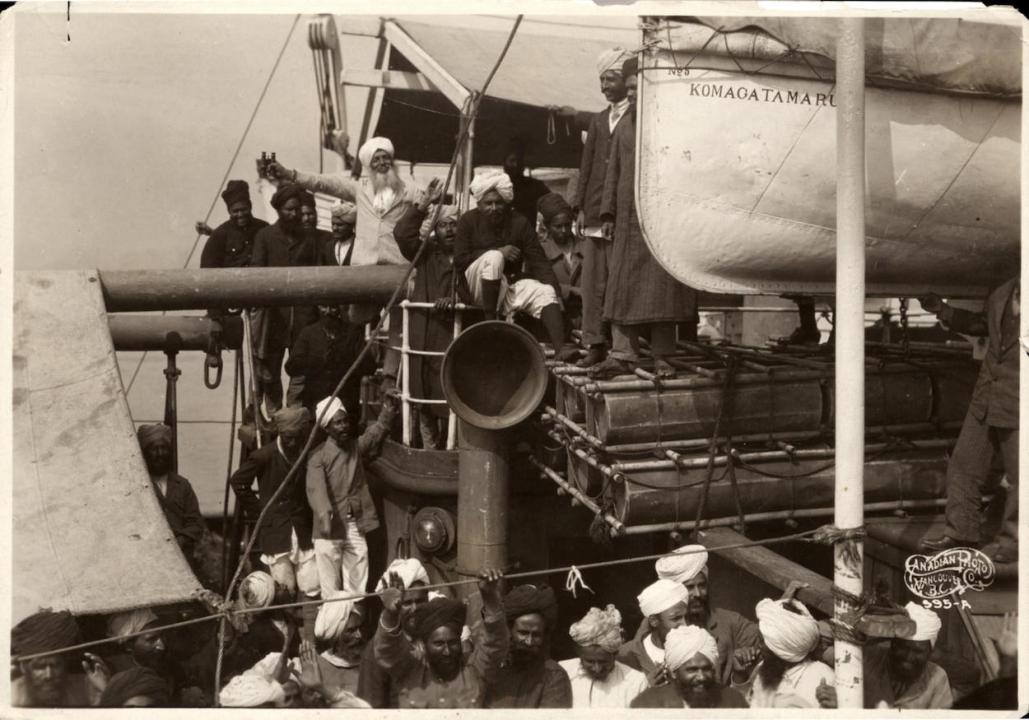
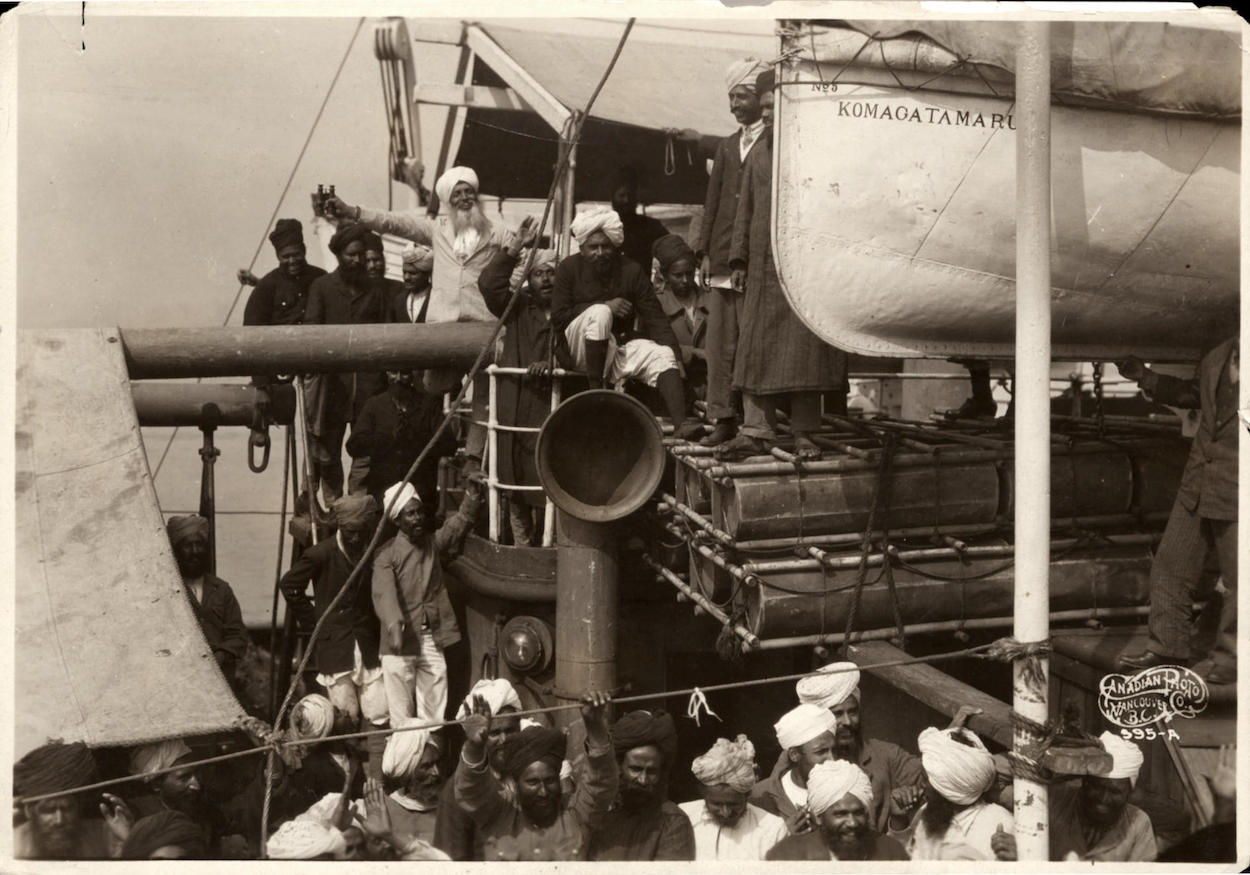
Another day, another act of national self-abasement from the Canadian government.
On 23 May, it was all about the Komagata Maru incident, ‘a moment where Canada failed to uphold our values, with horrific consequences’, according to Canadian prime minister Mark Carney. Pierre Poilievre chimed in, calling it ‘a dark and shameful chapter in our history and a painful injustice’.

The official version is as follows: on 23 May 1914, 376 passengers of the SS Komagata Maru arrived in Vancouver, hoping for a better life. But because of racist Canadian immigration policy, most were denied entry. They waited for two months in the harbour with limited access to food, water and medical care, but were eventually forced to leave. On returning to India, many – to Canada’s eternal shame – were imprisoned or killed.
That’s the official version. What really happened is far more complex.
The story begins long before, in 1857 with the Indian Mutiny, when native troops in the British army in India mutinied and a bloody, though unsuccessful, war of rebellion ensued.
In the early 1900s, Punjabis living in California and British Columbia took inspiration from this event to form the revolutionary Ghadar (meaning ‘mutiny’) Movement, which explicitly sought the violent overthrow of British rule in India. Their slogan was, ‘What is our name? Mutiny. What is our work? Mutiny.’
The gathering of insurrectionist Indian militants on Canadian shores presented a security threat to the British Empire, of which Canada was still a part. Separately, the Canadian government, under Wilfrid Laurier, was concerned about accepting a high volume of Asian immigrants. Laurier’s concerns, as he stated on several occasions and as his successor Robert Borden confirmed, were chiefly economic: he believed they would be willing to work for lower wages, which would bring about ‘competition with our own labour’ and ‘disturb economic conditions.’
Canada proceeded to establish two laws effectively restricting immigration from India. One was the continuous journey rule, which applied to all immigrants: only those arriving directly from their native land, without stops, would be allowed to land in Canada, as the government wanted to be able to send anyone turned away at the border back to their land of nationality on the same ship. At the time there were, however, no non-stop passages available from India.
The other law required all Asians to arrive in possession of $200, a significantly larger sum than that required of other would-be residents.
That’s when the Socialist Party of Canada got involved. They decided to collaborate with the revolutionary Ghadar Movement in order to mount a legal challenge to the ‘continuous journey’ law.
The Ghadar Movement recruited 370 men, two women and four children, and chartered the steamship Komagata Maru, which stopped in Yokohama, Japan (thus violating the continuous passage regulation) before departing for Vancouver.
The time chosen, spring of 1914, was no accident. As the world teetered on the edge of war, the Ghadar Movement thought the moment was ripe to regroup insurrectionary forces in overseas communities, and allied with Germany, launch a new mutiny and destroy Britain’s hold on the country. Under the circumstances, it is hard to see how the Canadian government – now headed by Robert Borden – could have viewed the voyage of the Komagata Maru as anything other than a security threat.
On the ship’s arrival in port on 23 May, 1914, the authorities refused to allow the Komagata Maru to dock, citing the continuous journey regulation. A two-month standoff followed.
It is said now that because Canada refused to allow them to land, the ship ran out of food and water. But it seems fairer to lay first blame for any humanitarian distress at the feet of the trip’s organisers. They intended from the outset to use the passengers as pawns in a risky political manoeuvre. Did they hope to use inadequate provisioning as leverage against the Canadian government?
In any case, a Ghadarite shore committee soon brought relief supplies and more money to extend the charter of the ship, which remained in the harbour for two months. The Socialist Party of Canada funded their legal defence, but the courts upheld the continuous journey regulation. The 22 passengers who were already Canadian residents were allowed to disembark (of these, one would shoot an immigration officer in a courthouse some days later, an act glorified in the 2025 film Guru Nanak Jahaz, funded, you will be surprised to learn, by the government of Canada).
On their return to India, a riot broke out with police
Still the Komagata Maru refused to leave. In mid-July, a tugboat was sent to pilot them out of the harbour; the passengers fought it off by hurling chunks of coal, firebricks and scrap metal. At this point Prime Minister Borden stepped in, sending a Navy ship and a cabinet minister to negotiate a peaceful departure. Canada provisioned the ship for the return journey. On 23 July, the Komagata Maru was escorted out to sea.
On their return to India, a riot broke out with police (regrettably, but unsurprisingly, given the openly violent nature of the Ghadar movement) and 20 passengers were shot.
The entire situation was a manufactured crisis, intended to force Canada to change its immigration law – as if access to Canada were a human right, to be guaranteed to every person in the world on a strictly equal footing.
But access to Canada is not a human right. It is a privilege. For the leaders of Canada’s two biggest political parties to play along with a narrative that pretends otherwise, is a sign that something has gone deeply wrong.




Comments