


William Atkinson has narrated this article for you to listen to.
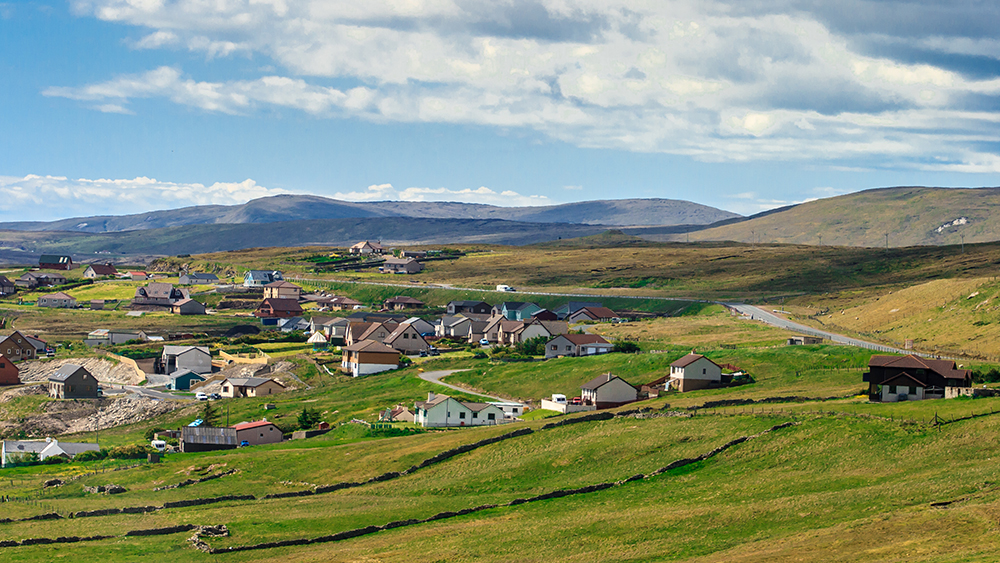
The Shetland Islands
The SNP have had better weeks. It’s strange to think that it was only this month that the party won a staggering fifth term in office, despite independence being no closer, and a record of failure on everything from education to drug deaths.
Perhaps the most remarkable result for the SNP leader John Swinney was the election of Hannah Mary Goodlad in the Shetland Islands. Since 1950, this was the first time these islands had voted for someone other than the Liberals or Lib Dems. Goodlad triumphed after a vigorous campaign featuring windswept social media videos and three visits from Swinney; before her election, she ran an outdoor sauna business.
But who cares about the Shetland Islands, that funny bit at the top of Scotland they put in weather reports, despite only one bloke and two sheep living there? In fact, the population is about 23,000, and some290,000 sheep.
Well, the result piqued my interest enough that I endured the 13-hour ferry to Lerwick. My only reference points for Scottish islands were films. Either Shetland would be like Local Hero, and I would fall hopelessly in love, or it would be like The Wicker Man. Either way, a large part of me didn’t expect to come home.
Shetland is 50 miles north of Orkney – the island with which, for parliamentary purposes, it has been twinned – and 130 miles north of the mainland. It’s on the same latitude as Anchorage and St Petersburg. About 450 million years ago Shetland was around the equator; through the vagaries of continental drift it has ended up atop the UK. Since then, it has been colonised by the Picts, the Vikings and finally in 1469 – as a dowry from a cash-poor King of Norway to his counterpart across the North Sea – Scotland.
It’s not Britain, whatever the weather girls say. Or Scotland, as the SNP hope. The high street has a Specsavers and a Superdrug. You can eat Scampi Fries in the pubs and watch Bargain Hunt on your hotel telly. But I saw more Norwegian flags than Saltires.
For the Greeks and Romans, Shetland was Thule: the northernmost island, at the world’s end, a land of frozen seas and midnight sun. Beyond was only the Ice Wall, and then Hyperborea – a sunny utopia where age and death did not exist.
The Thule Bar met my expectations: ruddy–faced locals with impenetrable accents and a slight smell of fish. But although, while sipping my Belhaven Best, I thought I heard the landlord request a local to ‘dannae fuck a sheep’, I couldn’t engage Deep Shetland. The locals brushed off my pleading looks. Despairing, I took myself on to the Lounge Bar, another of Lerwick’s three pubs. The barmaid – who looked worryingly like Britt Ekland – encouraged me to buy a round for the locals. Thank God she did, since a couple of pints of Tennent’s brought forth the colour I needed.
Do the locals feel British? ‘Not British. Not Scottish. Just Shetland.’ You had to remember, one told me, Shetland was colonised by the Scots ‘only a few centuries ago’. ‘Before that,’ he announced, close to tears, ‘we were Vikings.’ Do you still resent Edinburgh? Do you still feel oppressed? ‘Well, maybe the older generations.’ He asked for a G&T.
What about more recent history? Do locals know Goodlad? ‘Hannah? Aye, every-one knows her. She runs the sauna!’ Why had people voted for her? Was there a growing interest in Scottish independence? ‘Oh no. We just like Hannah. She was all I could see on my TikTok for weeks.’
Both Holyrood and Westminster seem very far away and very unimportant. Did they wish Shetland itself was independent? ‘Eh, we thought about that in the 1970s. But then they found the oil.’ I was offered a kebab. Declining both that and a trip to the island’s nightclub, I struggled to get much more out of the Shetlanders. I was alone at the end of the world.
Well, not quite. Embarrassingly, most of the people I met were English. The hotel manager was from Clapham; on a bus to the northernmost chippie, the scenery was spoilt by two Scousers talking about Mo Salah. All the public-facing jobs are done by newcomers; the real Shetlanders are away catching fish and drilling for oil. Politics really doesn’t matter to them; for decades, they only voted Lib Dem out of habit.
Looking out to sea from the Jarlshof – a remarkable set of ruins ranging from 4,000-year-old neolithic dwellings to a medieval manor house – you couldn’t help but realise that Shetlanders have been doing the same things for millennia, whoever has had nominal sovereignty. For now, they like Goodlad (and her sauna). But they will be out at the world’s end, fishing and drinking, long after the SNP soap opera is finally over. I left them to it.


Comments