
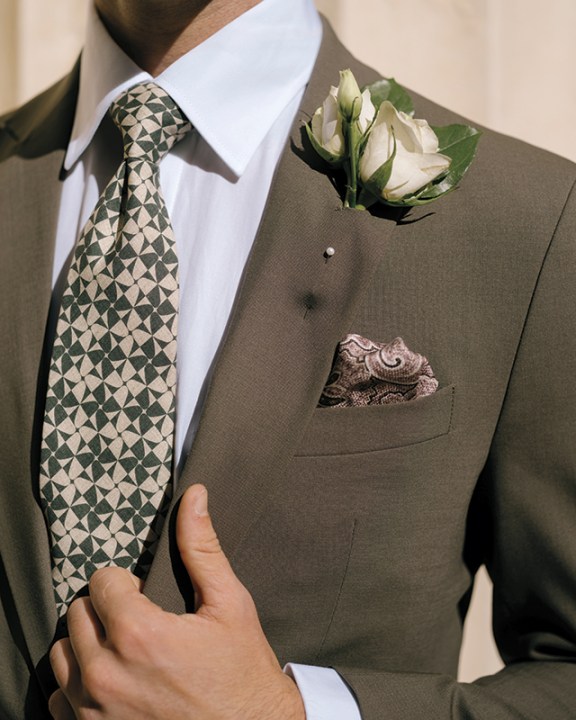
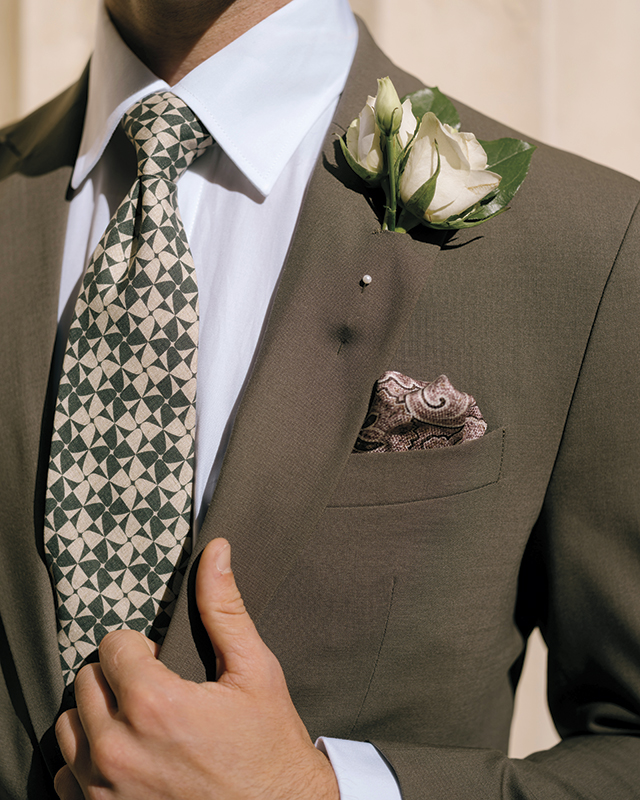
Oliver Spencer, designer and founder of London-based luxury formalwear brand Favourbrook, has a few thoughts about summer style. For a start, he is unimpressed by the type of men who turn up at the races squeezed into “tight suits” and seeming to want to look like an extra from Peaky Blinders. He is equally dismissive of the long reign of beige discretion. “We’re all a little bored of that ‘quiet luxury,’” he says. “No thanks. No more.”
For Spencer, the answer is obvious. Summer should be fun, fancy, colorful, and, above all, joyful. He dislikes the idea of “occasionwear” altogether. For the black tie, white tie, bow ties, linen suits, and other paraphernalia of the British summer season – that long run of events that practically demands effort – he prefers a simpler phrase: “I would just call it partywear.”
‘You’ve got to have a blazer and tie, but you dance around that a bit. Add your character to it’
That idea of joy takes us back, inevitably, to Four Weddings and a Funeral. See how Hugh Grant, in the most formal clothes possible – white tie, tails – looks slightly messy, careworn: that is the point. Spencer’s own preference is for “trousers in general” to be “high-cut, pleated, with a slightly looser fit… more like an Oxford bag.” In other words: room to move. “No more skinny trousers.”
Dress up, yes. But also loosen up. That is the British way. Because the season demands it. When those “stiffies” (as thick-card wedding invitations are known in Britain) start landing through the post box – thunk, thunk, thunk – comfort and ease become as important as formality, especially in the heat.
The point, as Spencer sees it, is not to abandon the rules, but to play within them. “They all have their own codes,” he says – Ascot’s morning suit, Henley’s striped blazer, Wimbledon’s blazer and tie – but “English dress codes basically come within brackets: slightly be creative.” At Wimbledon, for instance, “you’ve got to have a blazer and tie, but you dance around that a bit. Add your character to it.” And in the heat, practicality matters too: if you are wearing black tie, “make sure it’s lightweight so you don’t get too hot.”
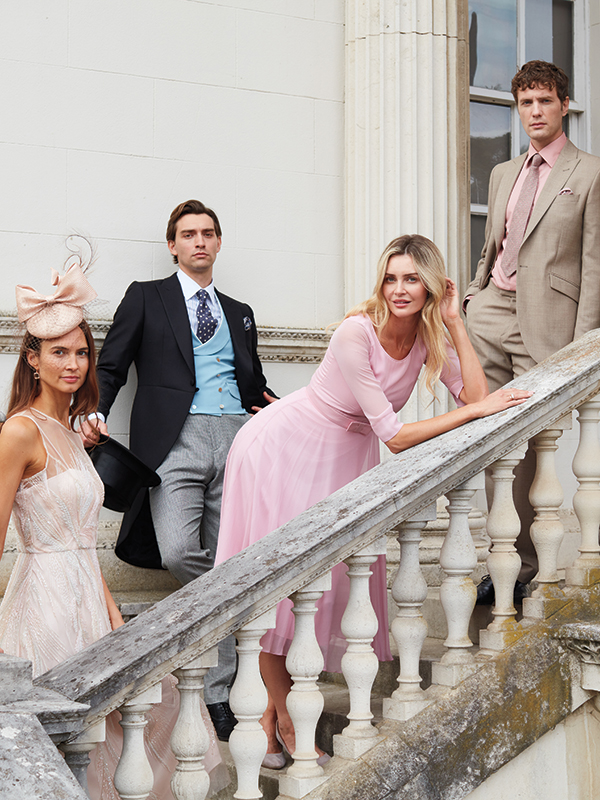
Seen that way, British summer style is less about rigid correctness than about reading the room. Goodwood, Spencer says, is the place to “wear a bright-colored suit, look amazing.” Ascot is “quite stiff,” with its morning-coat orthodoxy intact. Henley calls for the striped blazer; Wimbledon for a blazer and tie, albeit with scope to “dance around that a bit.” The charm lies precisely in those gradations: each occasion has its own script, but none requires you to look embalmed in it. The trick is to honor the code without becoming enslaved by it.
What unites these events is theater. “All of them are mainline dress-up events,” Spencer says. “These events are about getting dressed.” Which is to say: not just following the code, but enjoying it. That, perhaps, is why he has so little patience for the bloodless good taste that has dominated menswear. Summer, especially, should not feel apologetic. “We want color and we want lots of things going on,” he says. In hard times, he argues, we do not retreat into caution; we dress up. “People want to feel good when things are tough.”






Comments