
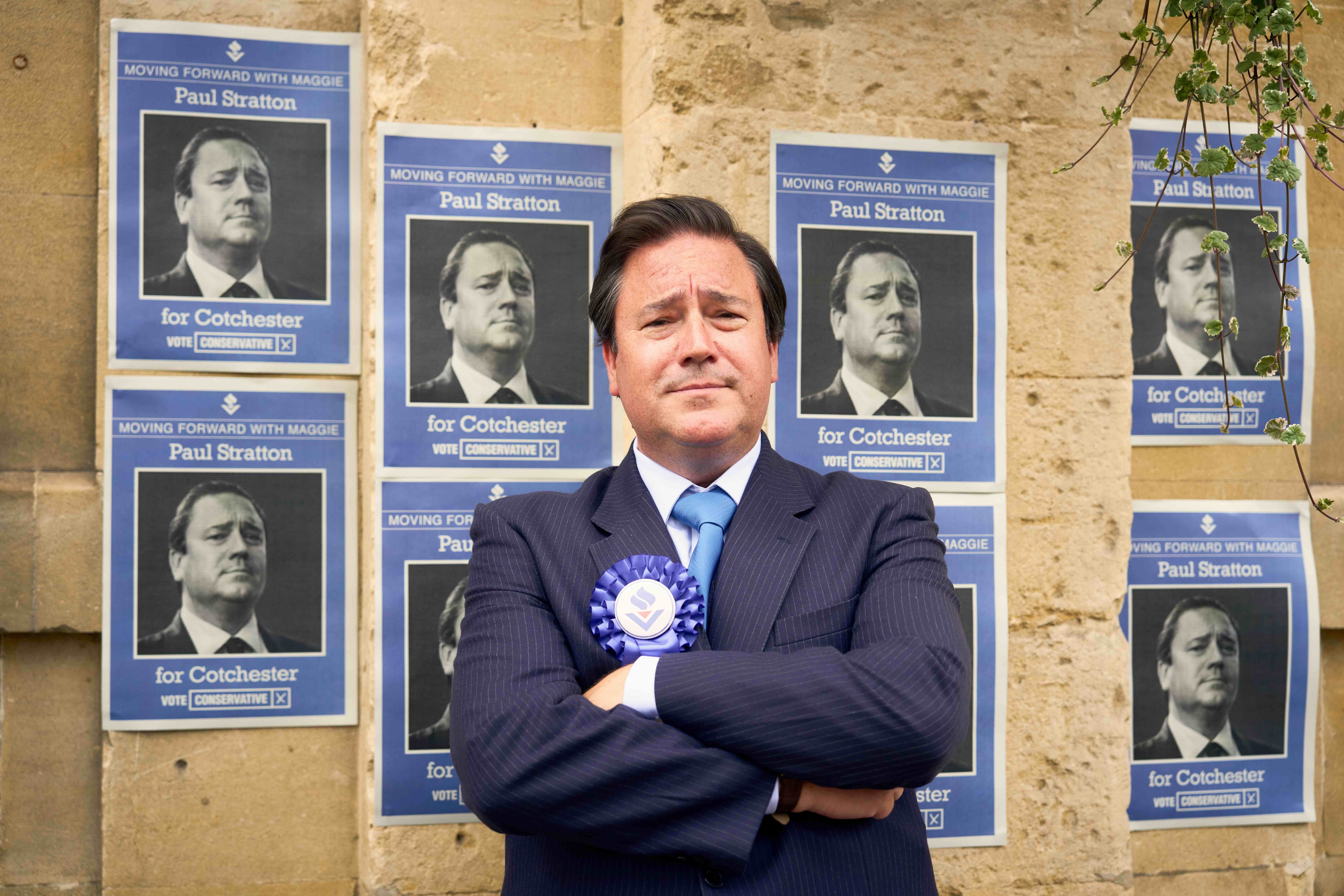
Today, Rivals returns for a second series on Disney+. The first series was that rarest of phenomena: an adaptation that didn’t hate its source material. Sure, the producers decided to cram the plot with more subtle-as-a-sledgehammer politics than appears in the actual book, but you could tell they revered Jilly Cooper and the world of Rutshire and wanted to do it justice. Cooper executively produced the first series but must have been away on some days (I can’t see her let a well-heeled huntswoman pronounce the Beaufort hunt ‘Boh-fore’ rather than ‘Boh-fuht’, particularly when a major scene in the book hinges on the pronunciation of ‘Belvoir’). It remains to be seen whether her watchful eye continued for the second series, and whether Disney+ will cash in on the ‘Rutshire cinematic universe’, creating Rupert Campbell-Black figurines (with retractable appendage), or worse still, defanging her.

By rights, Rivals shouldn’t be as popular as it is. It’s set in one of the least fashionable eras (when I borrowed my father’s lurid 1980s ski jacket, he recoiled at the idea I thought it cool), and its lead character (and sex symbol) is a minister in Thatcher’s government. Yet somehow, we’ve managed to reach the requisite distance for it all to seem glamorous and prelapsarian. Money and sex are aspirational rather than evil, a Buck’s Fizz antidote to our soulless calorie-counting world where every interaction is fraught with fear of repercussions. No one gets cancelled in Rutshire, or pilloried using a slew of terms created by TikTok psychologists (Rupert Campbell-Black would be a breadcrumbing, avoidant, walking red flag). They just earn the reputation of being a ‘total shit’. In Rivals you can grope someone and then fall hopelessly in love with them, and the two aren’t necessarily incompatible.
As with every period series, knowing nods to the era are made every few seconds. By knowing nods, I mean grabbing you by the ears and yelling ‘can you tell it’s the 1980s?’ At one party they dance to ‘The Birdie Song’ and ‘Karma Chameleon’ is sung acapella, while a chat show intro sees Rod and Emu to the sound of Chas and Dave singing ‘Rabbit’. Equally, I do wish writers would cut down on the incessant Jimmy Savile references: it all feels so tired and overplayed, the TV equivalent of having Hamlet smoking a joint with Rosencrantz and Guildenstern. Yet there are many moments where you go ‘hang on, why can’t we have that?’ It remains particularly scandalous that Concorde hasn’t been brought back, let alone air hostesses carrying large goblets of prawn cocktail.
Much of the allure of Rivals is how much rougher-edged the world is. You can be fat and hairy and still be attractive or call something ‘retarded’ and chain-smoke among children and not be a bad person. I’m reminded of an advert for the divorce app Amicable, which mocks the idea of ‘staying together for the kids’. Yet sometimes muddling through things imperfectly is the best option: the chronically over-examined and over-prescribed life is not worth living. There are parts of the world that never forgot this: the hunting world in particular. As Jilly Cooper knew best, hunting people ‘kick on’.
As Jilly Cooper knew best, hunting people ‘kick on’
Last week I went to Oslo Court Restaurant, the north London institution where you still begin with crudités and melba toast, and which remains one of the few places in the UK where food is sufficiently salted. When your main comes, a cadre of waiters circles your table, each holding a silver dish and ladling on creamed spinach and cauliflower gratin like a grandmother concerned you’re not eating enough. If you don’t resemble Monty Python’s Mr Creosote when you leave, you’ve failed. As a guest on Desert Island Discs, Clarissa Dickson-Wright states she’d ‘rather eat a cream cake than take Prozac’, and that she’s ‘quite certain that the increase in antidepressants is directly relatable to the decrease in eating [animal] fat’. I think Clarissa had a point.
What Rivals and Oslo Court Restaurant both do is bare essential truths we tend to forget: the more butter, salt and sugar you have in a meal the better it tastes; the more money, power and charm you have, the more people want to have sex with you. Importantly, you can be a total shit as long as you’re commensurately good-looking, even if we like to pretend otherwise.


Comments