What does Monte Carlo conjure up? A glamorous casino where fortunes can be won and lost, but mostly lost? Men in evening dress at baccarat tables with beautiful women standing by? A tax haven for the glitzy rich on the Cote d’Azur? Fabulous Belle Epoque buildings? A refuge for Edwardian English invalids to escape the cold? Grace Kelly? The Grand Prix?

It was here that Max de Winter met the girl who became the second Mrs de Winter at the beginning of Daphne du Maurier’s Rebecca. ‘What do you think of Monte Carlo, or don’t you think of it at all?’ he asked her. ‘I said something obvious and idiotic about the place being artificial,’ she recalled.
Well, she was bang on. I’ve just been in Monte Carlo for the first time and artificial is about the size of it. Mind you, I can take artificiality so long as it seems glamorous and glittering and fun. Monte Carlo nowadays has all the appearance of absurd amounts of wealth but very little in the way of glamour. I had thought of it as a place where the rich and disaffected, or the desperate, could lose money in style. You can lose the money all right, but in a dispiriting way.
The main casino building still looks terrifically imposing – the architects included Charles Garnier, who did the Paris Opera House. Inside it’s all opulence – marble pillars, murals of nymphs in diaphanous undress – and massive crystal chandeliers. Indeed, if you keep your eyes above ground level, it’s lavish in the old style.
But below that, God it’s terrible. There are people clustered in the Salle Europe around a few roulette and blackjack tables presided over by bored-looking croupiers in dinner jackets. Some punters could have been lifted from the departures lounge at Gatwick. The girls did their best with long sheath dresses, channeling Melania Trump; many were sitting by themselves hugging satin handbags. There was a hen party with a girl in a veil. The men didn’t even try: there were some in trainers, one in a T-shirt and durag, who was chucking tokens on the board with abandon. None looked like he was having a good time.
It was worse in the next salon and the one after which were filled with slot machines – the saddest way to lose money. They were spectacular rooms or would have been if it weren’t for the simply enormous light-emitting machines with images of Chinese empresses, dragons and a Sphinx, banks upon banks of them. There, sad-looking women who had work done on their faces sat miserably in front of the terminals. I mean, if you’re going to lose money, at least do it in company. There was, granted, a private room, where a few tables were positioned away from public view, but that didn’t breathe Casino Royale either.
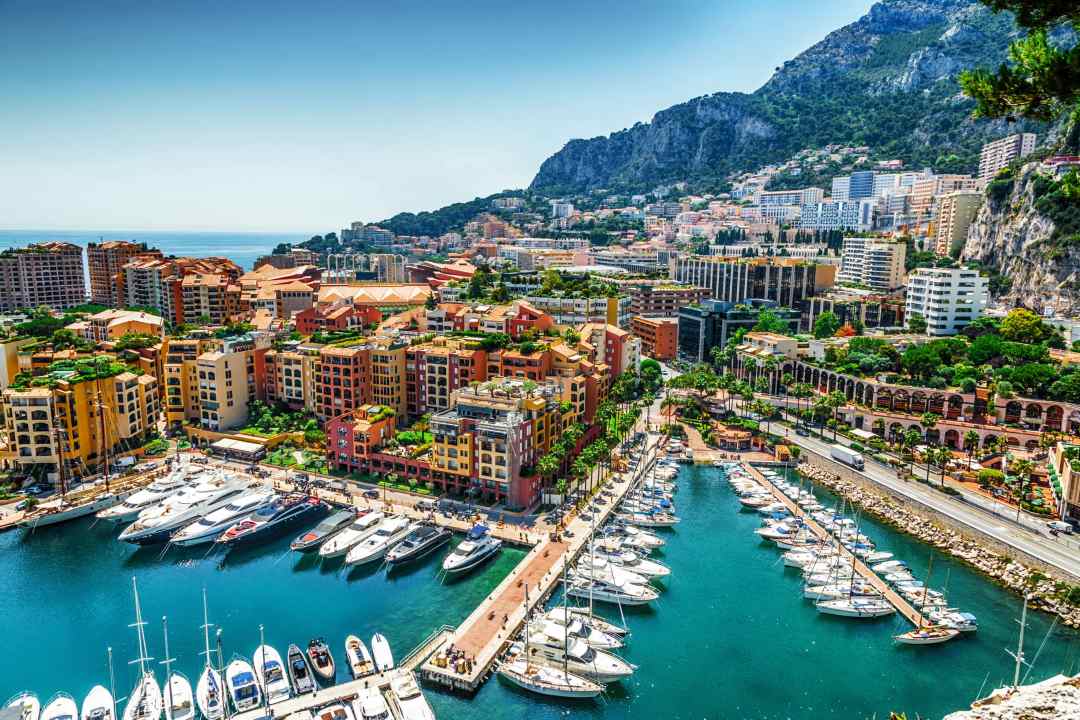
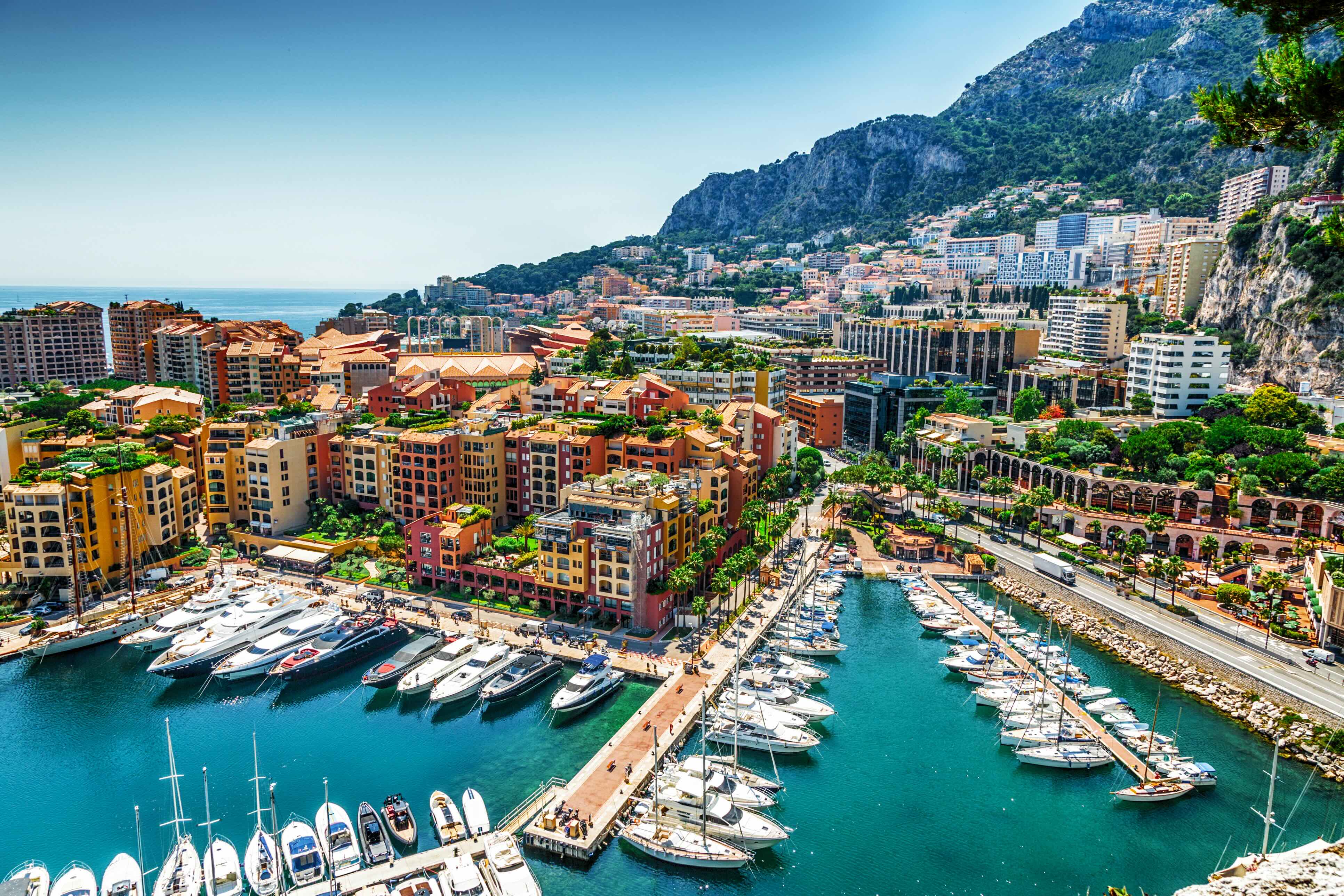
Outside the building, there was a line of Ferraris (but don’t trust me on racing cars) on display, including one that looked as if it was already splattered with mud – the car equivalent of distressed jeans – and others in vile colours. People stood reverently in front of them or parted to make way for a sports car in lurid yellow to enter Casino Square, for this is where petrolheads come to play. The Grand Prix is imminent, and the streets are lined with crash barriers that often ignore pedestrian crossings. And if yachts are your thing, there are lots on the front: millions of pounds each, and vulgar to a vessel.
How about the azure sea then? The actual beach is stony, and there are barriers which take the brunt of any rough sea to create the equivalent of a swimming pool. Not that there were any swimmers when I was in. On the bright side, you really could swim with the fishes – nice grey ones with stripes. Yet it does feel safe. The old town is charming, and there’s a nice little market, though the shops are, depressingly, standard European chains. The cathedral and the palace are perched on the high rock and the cliffs above the town make you see why it was so attractive as a destination in the first place.
Naturally, there are some very grand hotels indeed. I was staying at the Hotel Metropole – a press trip, you understand (dirty work, etc.) – which was a very congenial refuge from the hurly burly outside. And it was here that I found the true compensation of a tax haven, namely a simply marvellous restaurant, Les Ambassadeurs, where I had what may have been the best meal of my life. The bread trolley featured 19 different kinds – bliss. I lost track of the courses, but I still remember the silky lobster ravioli and a cylinder of French caviar around sea bream which was sublime. The floating island was a mountain of poached meringue bobbing about on a sea of custard but by then I was defeated. I got to meet the chef, Christophe Cussac, and I practically curtsied.
It’s as good a place as any to watch the rich; the table next to us featured elderly residents who were genuinely stylish and impossibly courteous, in the fashion of an earlier generation. But even they had the look of exiles. The hostess, who resembled Sophia Loren in old age, took a kindly interest in my daughter and brought her some chocolates from her feast. She declaimed sadly: ‘I live here! I had to move here from my own country! But here I am NOTHING.’ And she drank more wine.
It’s not often that I feel sorry for very thin, very rich, very beautiful people, but I felt sorry for her. Monte Carlo is a place that people escape to, or are drawn to, by a reputation for impossible glamour and tax exemptions. Alas, it still has wealth but, unlike the elegant lady, it has lost whatever charm it possessed.


Comments