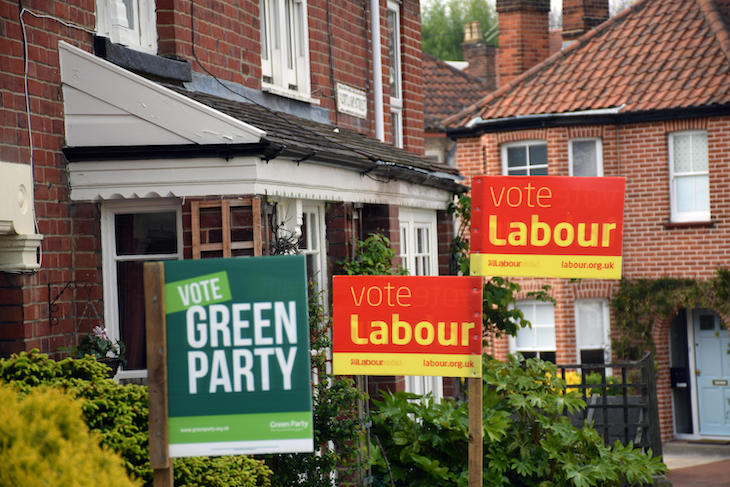
One of the biggest shocks of the local elections was the result of the Lewisham mayoral race and council elections, where the Greens emerged victorious. For the first time in the 24 years since the position was created, Lewisham has a mayor who is not from Labour. This result has wide-ranging implications for Labour far beyond south London.
Many black voters are not necessarily becoming Green radicals or Conservatives. Some are simply disengaging
It is difficult to fully describe what has taken place. As someone born and raised in Lewisham, this was not something I could ever have imagined growing up. I remember speaking to a local politician a little over a decade ago who jokingly remarked that Labour could field a monkey as its parliamentary candidate and still win. At the time, it felt unquestionably true. Lewisham was one of those boroughs where Labour dominance felt culturally embedded, not merely political.
The mayoral by-election just two years was comfortably won by Labour with over half the vote share. On Friday, the Greens achieved a +24 per cent point swing to topple Labour. So, what has changed in just two years? Some of the immediate commentary has attributed the swing to a range of factors: Gaza, Green momentum under Zack Polanski, Labour incompetence, low turnout, or broader national dissatisfaction. All of these explanations are plausible. But I think the result reveals something deeper about the changing social and moral ecology of inner London.
This was not simply a transfer of votes. A gradual shift has been taking place for some time. The old Labour coalition, sustained by inherited loyalty, ethnic solidarity, trade union memory and working-class identity, is weakening. In its place, a highly-networked graduate civic class increasingly dominates inner London through local institutions, social coordination and cultural influence.
Many black voters are not necessarily becoming Green radicals or Conservatives. Some are simply disengaging. More broadly, there has always been a lower level of civic attachment within parts of the black community. What historically motivated older generations to turn out for Labour was the sense that the party symbolised dignity, opportunity and protection at a time when race remained a far more tangible social barrier. But this does not automatically translate into the activist progressivism that has emerged in recent years. Many Caribbean and African elders are churchgoing and still hold socially conservative moral instincts and ethics. A growing tension has emerged here, contributing to political fatigue and distance from the contemporary progressive left.
Meanwhile, younger generations formed within progressive higher education environments often possess a very different moral and political outlook, sometimes feeling that Labour itself is not radical enough. The emotional bond between Labour and sections of black London is therefore weaker than it once was. Politics is no longer inherited automatically.
The decline of trade union households, alongside the broader transformation of the economic and social landscape, has also contributed to the fragmentation of the old Labour coalition. Traditional white working-class communities no longer possess the same institutional cohesion or political centrality they once did.
As a result, inner London Labour has increasingly come to rely on a soft-left public sector and graduate-professional base, one that is far more electorally fluid and vulnerable to being captured by the Greens, Liberal Democrats and, in some cases, even the Conservatives.
However, it is the rise of the graduate civic class that has really shifted the dynamics over the past decade. A young urban progressive demographic has emerged that is socially coordinated, institutionally embedded, civically active and physically present in local life.
Over the last few years, I have found myself watching non-league football on Saturdays and, somewhat surprisingly, the most vocal and passionate supporters are often not traditional working-class communities but members of this group. They attend local events, inhabit pubs and cafés, volunteer, and organise both online and offline. This is not merely ideological. It is infrastructural. The Greens did not simply win votes. They inherited a living civic ecosystem.
Lewisham is likely a preview of wider changes across inner London
Lewisham today is not the same Lewisham it was in 2006. This emerging civic class tends to consist of hybrid workers, downwardly mobile renters, public sector and NGO professionals, and cultural workers with rising educational capital. Despite often possessing weaker long-term rootedness, there is typically a much higher level of civic participation within this demographic. They understand the mechanics of local influence extremely well.
Old Labour power still depended on churches, ethnic minority patronage networks, unions and forms of local institutional loyalty, all of which have gradually weakened over time. In contrast, the graduate civic class increasingly sets the moral tone of inner London because it dominates the spaces where civic meaning is now produced.
Lewisham is likely a preview of wider changes across inner London, as we also saw in the Hackney mayoral election, and perhaps urban Britain more broadly. Not because everyone is becoming Green, but because one class remains highly organised and civically embedded, while older political loyalties continue to fade. Although the manifestations differ, we are seeing this pattern emerge across the country. Reform is capitalising on the discontent of the post-industrial working class, while Muslim independents are galvanising highly localised support networks. Labour can no longer rely on institutional loyalty alone. In modern cities, power increasingly belongs not to the largest demographic group, but to the people most capable of inhabiting, organising and shaping civic life.





Comments