
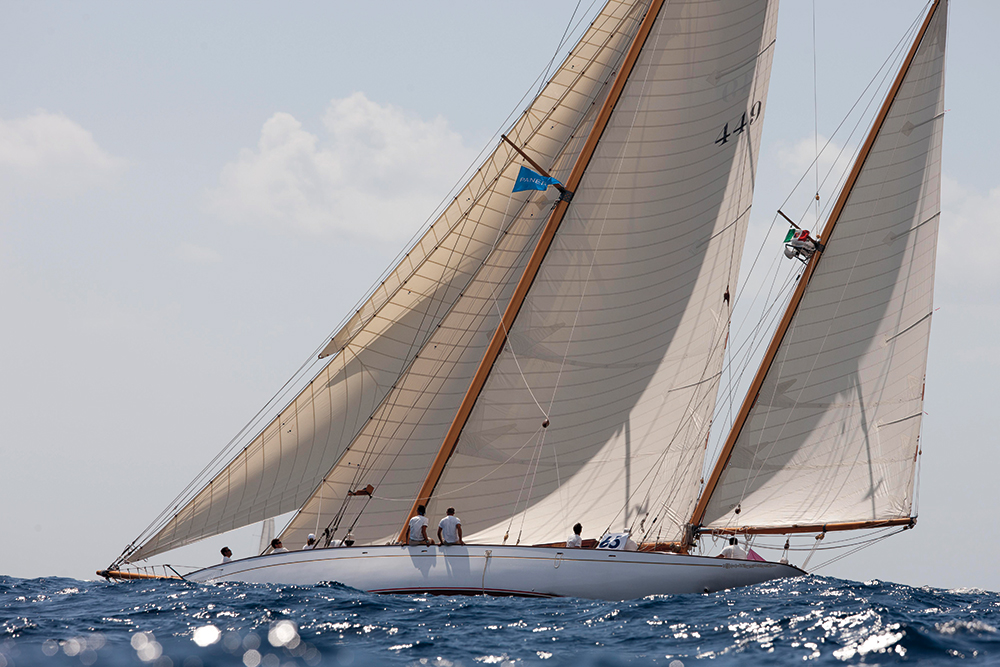
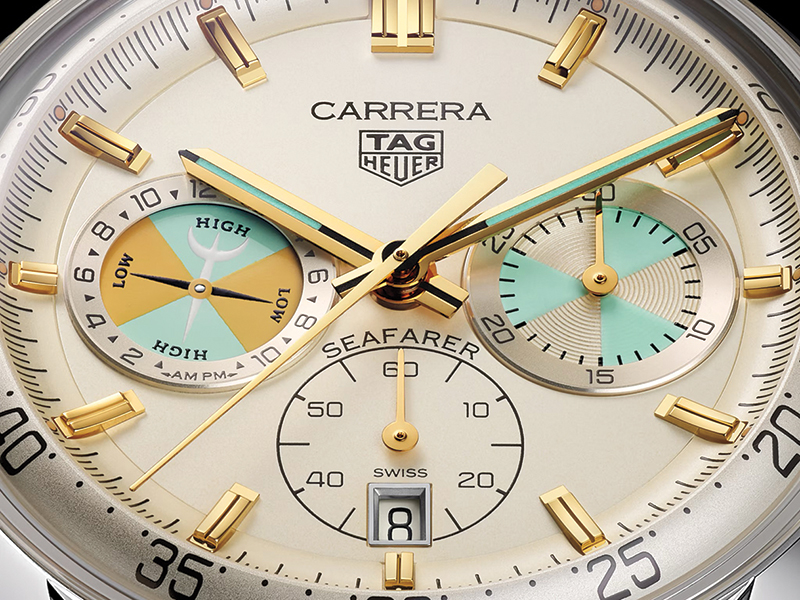
There is something faintly absurd about a modern sailor checking the tide on a mechanical wristwatch before leaving the dock. It’s a defiant act of Luddism. Whether it is TAG Heuer’s new Seafarer – a revival of a sun-bleached Abercrombie & Fitch regatta chronograph – or IWC’s technical Portugieser Yacht Club Moon & Tide, the implication is that the information cannot be found on the GPS already blinking somewhere on the boat.
The comedy sharpens when you remember that sailing, at the top end, has long since escaped the romance of canvas and teak. Today’s elite yachts are machines for people who find the wind a nuisance best managed by an algorithm. Foils hum with the clinical efficiency of a private equity firm’s server room. The America’s Cup boats skim across the water at speeds that would have horrified their designers’ grandfathers. And yet luxury watch brands continue to treat sailing as one of their most emotionally loaded arenas.
The marriage of timekeeping and the sea begins with John Harrison, whose 18th-century marine chronometers solved the longitude problem and made global navigation possible. For two centuries, accurate time meant survival. But that necessity has been obsolete for longer than most watch brands care to admit. What remains is something closer to ritual.
In an age of digital precision, a mechanical watch has no practical role at sea
When Rolex aligned itself with the New York Yacht Club in 1958, it was not responding to a technical demand, it was choosing its crowd. Sailing offered something few sports could: money without fuss, competition without show, and a set who looked suspiciously like future customers. Over decades Rolex turned races and regattas into floating showrooms. The Yacht-Master II, with its programmable regatta countdown and unapologetic bulk, is there less as a tool than a marketing statement. If it survives this, it can survive anything. Including a weekend on the Chesapeake.
Other brands learned different lessons. Omega has folded sailing neatly into its broader marine story, treating it as a surface-level cousin to diving and deep-sea exploration. America’s Cup regular Emirates Team New Zealand fits that worldview perfectly: same water, different problems. The watches did not suddenly become essential sailing instruments; the brand simply widened the horizon of where a Seamaster could plausibly belong.
Ulysse Nardin, by contrast, did not need to create a narrative. Marine chronometers, naval supply contracts, and a long institutional memory of the sea gave its modern offshore partnerships a sense of continuity. Even its experiments with recycled fishing nets as case material feel less like greenwashing and more like an old supplier adapting to new realities.
Then there are the brands that understand sailing primarily as theater. Panerai plays a clever double game, restoring the 1936 William Fife ketch Eilean to compete in classic regattas while backing Luna Rossa’s America’s Cup campaigns. One hand on patina, the other on carbon fiber. Hublot prefers the language of modern extremity, maintaining a dialogue with three-time Vendée Globe sailor Alan Roura during his expeditions and teasing new launches with the regularity of a metronome.
At the sharper end still, Richard Mille treats sailing as a material skunkworks. Historic yachts in the Richard Mille Cup sit comfortably alongside record-chasing projects like its all-female Jules Verne Trophy attempt. The message is twofold and echoes RM’s own philosophy: obsession is omnipresent, and materials are constantly upgraded.
The most telling development of the current season, however, is not speed but nostalgia dressed as function. The previously mentioned tide indicator is a magnificent anachronism. Sure, TAG Heuer’s Seafarer looks wonderful, its colors pitched somewhere between Palm Beach and Nantucket. The humor lies in imagining a hipster financier checking the tide in Portofino from a glass-walled office in Manhattan. The problem no longer exists but the pleasure clearly does.
All of this will crest at the next America’s Cup in Naples in 2027. With Louis Vuitton as title partner and Omega as official timekeeper, the AC75s will fly across the water while the real contest plays out more discreetly on the wrist. Tudor returns with Alinghi Red Bull Racing, its Pelagos FXD signaling a preference for matte utility over vintage charm. Omega and Panerai will join the lineup with their teams and a new series of timepieces to talk about.
Sailing suits watch brands because it resists mass consumption. It is technical, ruinously expensive, and mildly exclusionary. In an age of digital precision, a mechanical watch has no practical role at sea. Which is precisely why they remain there. It is a comforting, if rather expensive, delusion that as long as we have a mechanical tide indicator on the wrist, we haven’t fully given in to the algorithms.
Looks good on paper
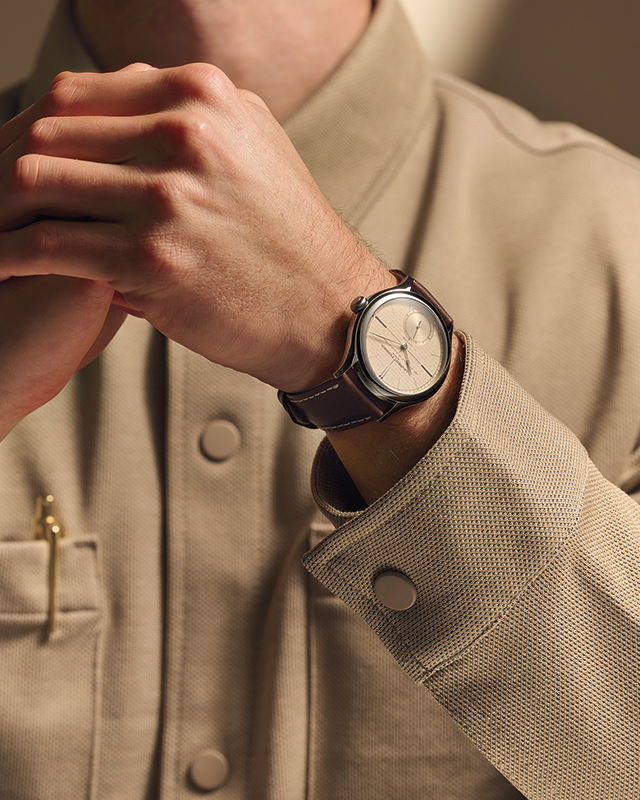
In 1776, the Declaration of Independence was a treasonous scrap of parchment drafted by men who expected to be hanged for it. Two hundred and fifty years later, a watchmaker from Switzerland – a profession and a country known to favor the quiet life – has rendered that revolutionary passion into the Laurent Ferrier Classic Origin 250.
There is a delicious irony in the translation. The 13 colonies that led the War of Independence replace the numerals on the minute track in a blood-red shade, while the universal quest for liberty has been miniaturized on a creamy opaline dial. Printed in a barely-there tone-on-tone shade, it’s a subtle reminder of what was fought for.
This is Jeffersonian democracy for the collector who prefers the corner office to the barricades. A 25-piece limited edition suggests that the pursuit of happiness is best achieved via private allocation.
Available only on the US market, priced at $44,000 without tax; laurentferrier.ch





Comments