On Tuesday, the Department for Culture, Media and Sport approved the sale of my employers, the Telegraph Group, to Axel Springer. Three years of hiatus are almost at an end. Numerous candidates – some good, most bad – came forward but, until now, none succeeded in navigating the pitfalls. We escaped the toils of the Barclays’ debts, the threat of foreign state ownership and private equity, the danger of Chinese influence and much more. As a semi-spectator of proceedings, I have been profoundly impressed by the sangfroid of our editor, Chris Evans, and his team as they have ridden storm after storm. And now we are to be owned by Germans. If that possibility had even been raised in the last century, there would have been outcry (imagine the reaction of Margaret Thatcher). But nowadays the British middle classes drive Audis with positive pride. I suspect we shall be able to feel similar confidence about a paper owned from Berlin. When Britain was in the EU, we feared the spread of German power. After Brexit, that anxiety has died down. My theory is that, precisely because the Germans know that British public opinion might be difficult, they have a unique incentive to be careful owners.
However, I would have been much more worried about the Springer purchase if I had not become acquainted with its CEO, Mathias Döpfner in the 1990s. He is unusual, not only because he is 6ft 7in tall, but because he combines German thoroughness with a British love of freedom of speech and thought. His papers have always been the German titles least susceptible to the suffocating Euro-consensus. He was kind enough to say when we first met how much he liked the Telegraph; in 2004, when Conrad Black sold up, he tried to buy it but was outbid by the Barclays. In his letter to our staff this week, Döpfner sets out what the company calls the Essentials which have governed all its titles for 60 years:
1. We stand for freedom, freedom of expression, the rule of law, and democracy.
2. We support the right of Israel to exist and oppose all forms of anti-Semitism.
3. We advocate the transatlantic alliance between the United States and Europe.
4. We uphold the principles of a free-market economy.
5. We reject political and religious extremism, as well as all forms of discrimination.
When I first read these principles in the 1990s, I thought them good but almost banal. In the Trump/Putin/Xi/Khamenei era, it feels as if they need the most urgent reiteration.
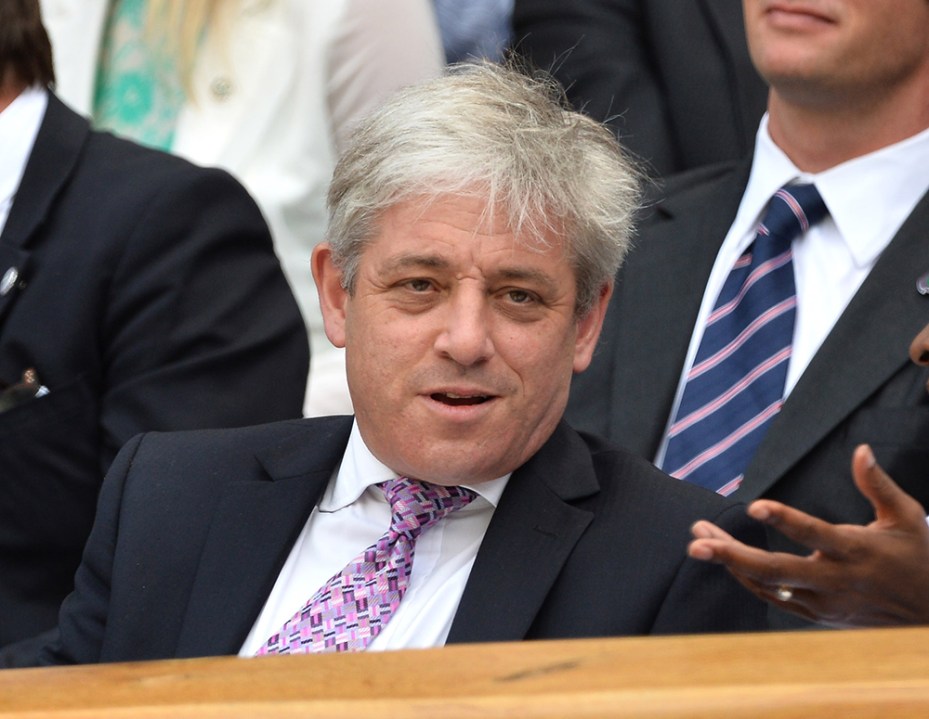
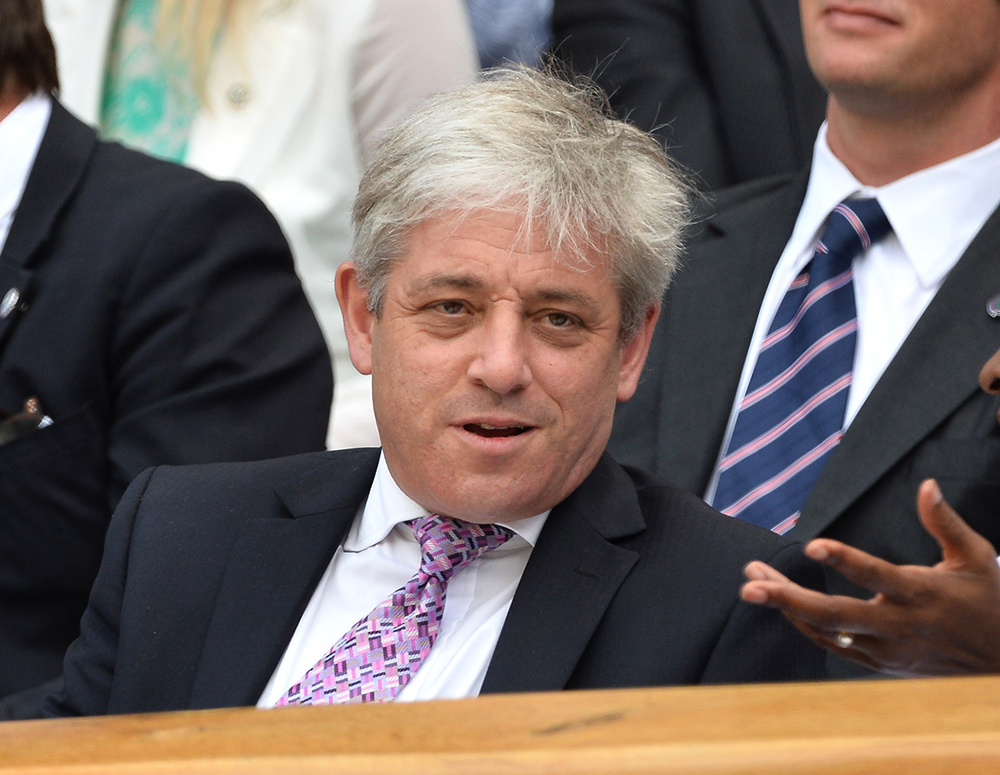
Seeking a silver lining in the ever-darkening global clouds, I found myself reflecting early this week how nice it is that we no longer have to think about John Bercow, former speaker of the House of Commons. The thought had scarcely formed, however, before I saw a clip of a recent speech by Mr Bercow addressing a group of Iranians. He said: ‘This guy is now in his mid-sixties, I have to say to him… mate, you are deluded. In political terms, you are off your chump!’ No, this was not John Bercow, 63, addressing his own reflection in the mirror. His target was Reza Pahlavi, son of the late Shah, who has ambitions to return home. What was Mr Bercow’s motive in this outburst? Perhaps he has a sneaking sympathy for – even envy of – Mohammad-Bahger Ghalibaf, currently almost the last man standing in the Iranian regime and, yes, speaker of the Iranian parliament.
Despite behaviour which people often call ‘medieval’ (an insult to the Middle Ages, I always think), the Iranian regime is clever at propaganda. Its recent effort on TikTok, only one minute 48 seconds long, captures the idiom. Trump and his associates are turned into Lego characters, backed by a rap song. It shows – so quick you almost miss some of it – Trump under orders from orthodox Jews, Trump in chains led by Netanyahu and Trump chasing little girls to the words: ‘Your government is run by paedophiles.’ You see the police boot on the head of a George Floyd character, a man weeping because he can’t pay his medical bills, young people in Red Square and beneath the Eiffel Tower hurling away their iPhones in disgust when they see the ‘filth’ enacted by ‘the Epstein regime’, Trump and co bowing down before the god Baal, and Trump himself weeping and naked as he takes a ruler to measure his inadequate penis (‘tiny hands, tiny everything’). It is both utterly repulsive and rather mesmerising.
The government is reportedly insisting that the intelligence services will not be exempted from the ‘Duty of Candour’ imposed by what is known as the Hillsborough Law. Security chiefs will not be able to block their officers from having to give evidence in disaster inquiries etc. The official name for what people call MI6 is the Secret Intelligence Service (SIS). Any service in which a duty of candour is paramount in law cannot guarantee its secrecy, so perhaps SIS should now be renamed IS – though that might, for other reasons, be confusing.
I have written elsewhere about the waste of spirit, money and time involved for those sole traders forced to enter the new Making Tax Digital programme and therefore file tax information five times a year rather than once. It is worth adding that it is planned to get worse. The £50,000 minimum annual sum will drop to £30,000 in a year’s time and to £20,000 in 2028. ‘Are not two sparrows sold for a farthing? And one of them shall not fall on the ground without your Father,’ says Jesus (Matthew 10.29). Now HMRC is adopting that all-seeing role, less benevolently.
Three words which make you feel you’d rather not listen to the music thus advertised: ‘immersive’, ‘soundscape’, ‘curated’. All heard in a single trailer for Night Tracks on Radio 3 last week.



Comments