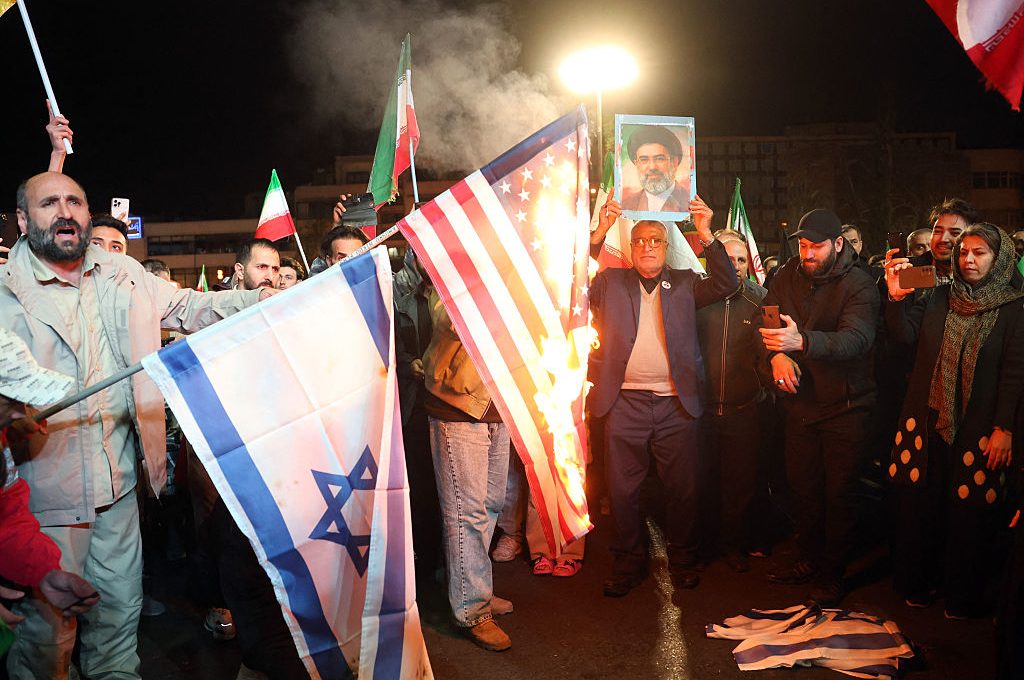
The abrupt announcement of a two-week ceasefire in the war between the US, Israel and Iran resolves none of the issues which caused the conflict. Beyond an agreement to cease attacks, the arrangements that will hold during the two-week period appear themselves unclear. Each side in the last hours seemed to commit to different versions of the ceasefire in key areas.
Iran remains an aggressive and dangerous power, with the ambition of expelling the US from the region, dominating the Gulf states and destroying Israel
From Israel’s point of view, the bottom line is clear. The Iranian regime has been significantly weakened in its capacities in a number of key areas. At the same time, the regime has not been destroyed or even severely damaged in its continued ability to rule Iran. Its intentions remain unchanged, despite the changing of the guard at the summit after the removal of a number of key leaders. This means that whether or not fighting resumes after the current ceasefire, the enemy has been weakened, and the long war is set to continue.
Regarding the precise details of the ceasefire, Pakistani Prime Minister Shehbaz Sharif said that the deal, brokered by Islamabad, applied “everywhere, including Lebanon.” Such an interpretation would not be to Israel’s liking. A key objective from Jerusalem’s point of view throughout has been to separate the Lebanese front from any larger US-led arrangement with Iran.
Israel believes that the Lebanese Hezbollah made a severe error in choosing to enter the war on March 4, after the killing of Iranian Supreme Leader Ali Khamenei. It wants to use the opportunity to establish a buffer zone north of the border, to put the residents of Israel’s northern border communities out of range of Hezbollah’s anti-tank missiles and free of the constant danger of an October 7-style ground incursion. This process is not yet completed and five IDF divisions are currently in Lebanon engaged against Hezbollah south of the Litani river.
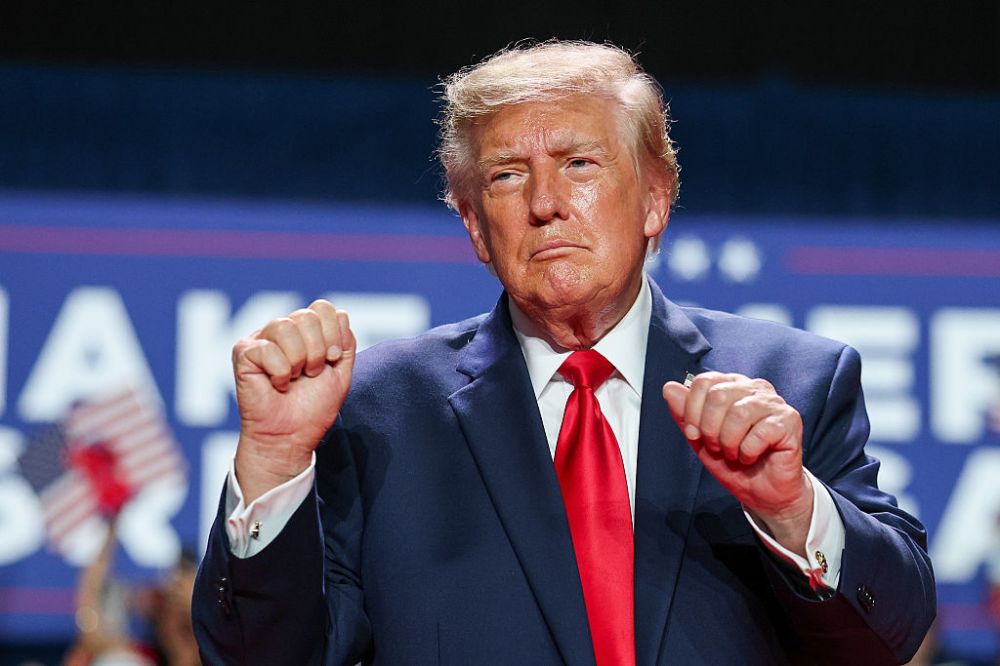
From Israel’s point of view, indeed, a lull in operations against Iran with Lebanon still an active front would enable air power to be deployed in greater force against Hezbollah. A statement from the Israeli Prime Minister’s Office quickly clarified that from Israel’s point of view, the ceasefire does not extend to Lebanon. Rather, it applies only to strikes against Iran. President Donald Trump, for his part, did not mention Lebanon in his statement announcing the 14-day ceasefire. Iran responded to the Israel PM’s office statement by declaring that “Strikes in (Lebanon) will lead to the resumption of fighting on all fronts.” US pressure could oblige Israel to desist from further advances in Lebanon.
It remains to be seen in the days ahead if such pressure will be applied. Even if it is, a de facto Israeli buffer zone appears set to remain on Lebanese soil.
There was a similar ambiguity regarding the transit of ships though the Strait of Hormuz during the ceasefire period. Iran made a significant concession in agreeing to any form to a temporary ceasefire, which it had previously explicitly ruled out. But the establishment of a de facto Iranian “toll booth” at Hormuz represents the main Iranian achievement in the course of the war (beyond simple regime survival).
Iranian foreign minister Abbas Aragchi made clear that passage through the strait will continue to be allowed only with the permission of Tehran’s armed forces, and subject to transit fees determined by and imposed by Iran. The Strait, according to Iranian statements, will reopen, and Iran, in coordination with Oman, will charge transit fees.
If this indeed proves to be the arrangement moving forward, it is difficult to see how the US administration can present the ceasefire as a clear achievement. After all, prior to the war, Iran did not have the ability to impose costs on ships passing through this international waterway. Trump, in his statement, did not appear to contradict the details supplied by Aragchi. The President wrote only that there would be a “complete, immediate and safe opening” of the strait.
Iranian gains in Hormuz, if they prove durable, are of strategic significance. This affects the global economy, but not the Israeli interest. Israeli oil imports don’t transit Hormuz.
The war has failed to significantly address the nuclear issue. Iran remains in possession of its 445 kg of uranium enriched to 60 percent. This would enable it to assemble (or seek to assemble) ten nuclear devices within a matter of months, according to an IAEA yardstick. It is almost certainly not accurate that the entirety of this stockpile is buried under the remains of the Fordow facility. Some of it is likely to be elsewhere, in the Isfahan or Natanz areas. Hopefully, US and Israeli intelligence knows where. In this regard, the latest round of fighting changes little. It remains to be seen if the new, de facto IRGC-led regime of Ahmad Vahidi and those around him will adopt a different view on this matter to the previous clerical leadership of Ali Khamenei.
Iran’s ballistic missile capacities have been severely damaged in the course of the war, yet Iran has continued to fire at targets in the Gulf and Israel. In any case, for as long as the regime survives, Iran possesses the native capacities to rebuild in this area, and will do so. Repair and replenishment will take time. This fits into the familiar Israeli rubric of “mowing the lawn.”
Finally, Iran’s proxy array has not been significantly damaged by the war. Hamas is licking its wounds in the 47 percent of Gaza it retains. The Houthis and the Iraqi Shia militias played a limited role in this round and their positions in Yemen and Iraq respectively have not changed as a result. Lebanese Hezbollah has been materially damaged significantly, but not strategically. It remains the dominant player within Lebanon.
As of now, therefore, for all the considerable sound and fury brought forth over the last five weeks, nothing has been resolved. Changes in south Lebanon and in the status of Hormuz are of potential significance. If they become institutionalized, they will represent significant gains for Israel and for Iran, respectively. But even gains of this kind are incremental advances, not game changers.
The essential components of the regional strategic picture remain in place. Iran remains an aggressive and dangerous power, with the ambition of expelling the US from the region, dominating the Gulf states and destroying Israel. The US, Israel and the Gulf states remain determined to resist Iranian ambitions. As of now, the events of the last five weeks represent a round in this ongoing struggle. Israel and the US have demonstrated their vast conventional military advantage over the Iranians. They have also not yet demonstrated the capacity to turn that advantage into a strategy able to bring the struggle to a successful strategic conclusion by toppling the Tehran regime – the only way that this will end.






Comments