The first time I took a ride in a Waymo was in 2024. It was summer in San Francisco, and my wife and I had spent several weeks watching these curious, sensor-laden Jaguar I-Paces gliding– driverless – up and down the city’s famous slopes. Intrigued, we downloaded the app, summoned one and climbed in.

It was the stuff of sci-fi. The car knew my name and displayed our route on a screen as we traced through traffic. Uncannily, the wheel still turned; phantom hands steering us into every corner. My wife was slightly perturbed; I loved every self-driving second.
But what struck me most wasn’t the technology, but how little fuss these all-electric cars were causing. Northern California may be a tech Mecca, yet locals seemed remarkably unfazed by the autonomous Jaguars prowling their streets. Before we arrived, I hadn’t even realised that such ‘robo-taxis’ were real, let alone already on the roads.
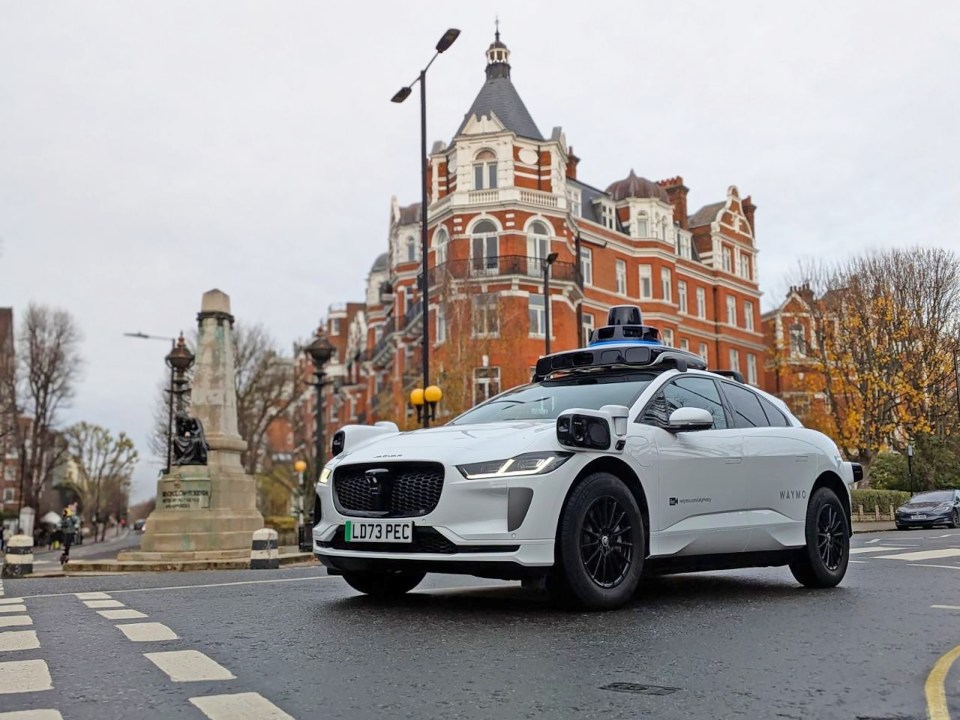
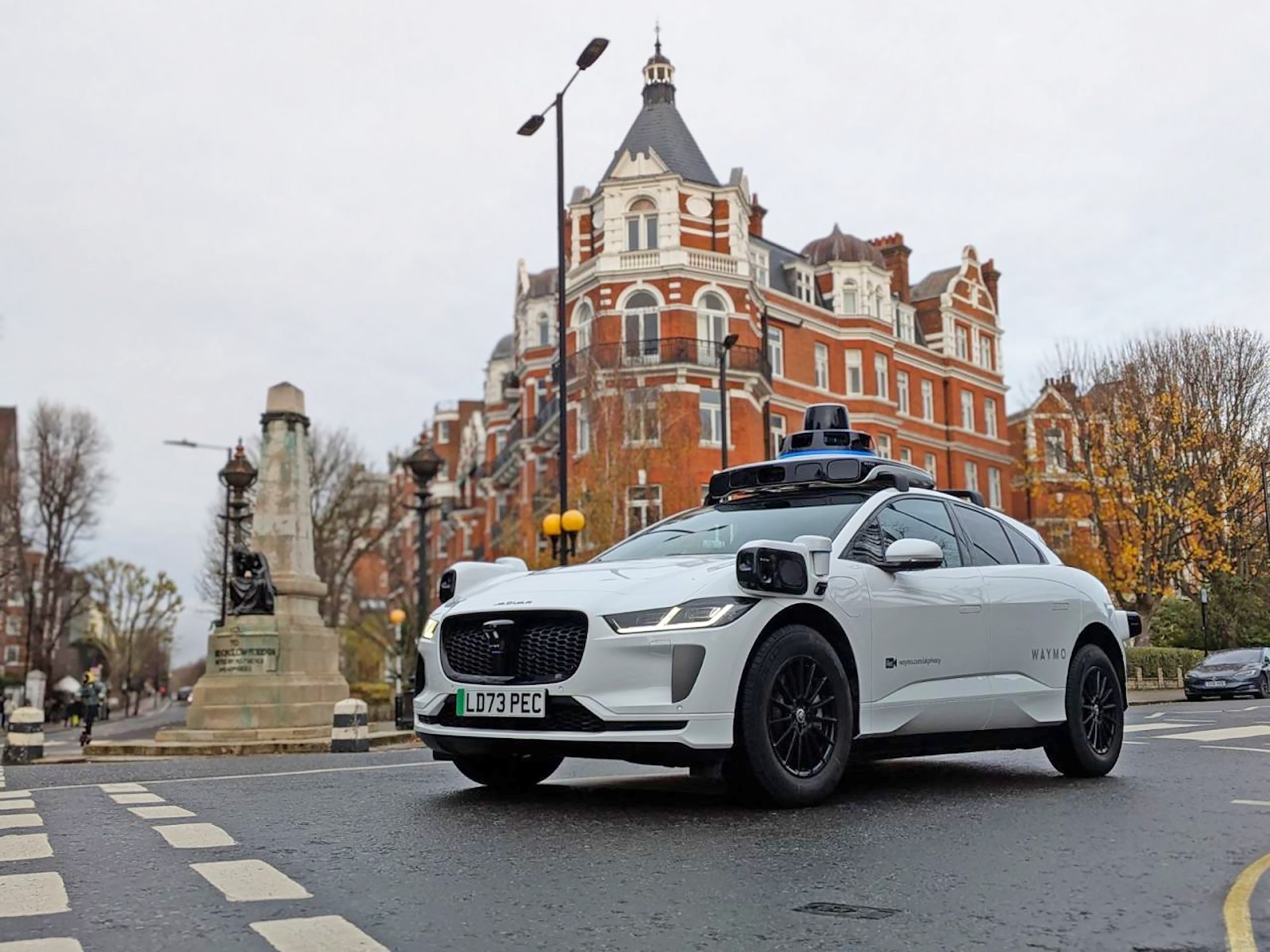
Imagine my surprise, then, when another Waymo rolled past me last week – in Kensington. There it went, a tablet-toting safety driver in the passenger seat, the same elaborate sensor array perched atop the I-Pace like some absurd robotic top hat. Testing, perhaps? A trial run? And, more to the point, how had these cars slipped by me a second time? In a city where every Lime launch or smart scooter rollout gets run through the media mill, how was Waymo not front-page news?
I asked Ethan Teicher, a spokesperson for Waymo, who revealed that the self-driving cars will begin ‘serving’ London later this year. Currently, the fleet is being tested across 100 square miles of the city (reportedly 19 of the capital’s 32 boroughs, including Hackney, Wandsworth and, indeed, Kensington and Chelsea). In the US, Waymo has introduced Hyundai Ioniq 5 models. London’s fleet, however, will be exclusively Jaguars.
‘Our left-hand-drive Jaguar I-Pace vehicles,’ clarifies Teicher, ‘which meet all applicable US safety standards, are permitted for use in the UK. We’ll consider future vehicle platforms as the London fleet expands.’
They’ll need to – the I-Pace was discontinued in 2024. But that’s not the biggest problem I have about Waymo’s London launch. Even the legal side seems cut-and-dried; the Automated Vehicle Act passed in 2024. It’s the logistics that will cause wrinkles. Because, when I took that ride in San Francisco, it was on straight roads, through clean corners – the same forgiving grid system found in other Waymo cities, like Phoenix and Dallas.
Will Waymo’s programming be able to handle a rush-hour Hyde Park Corner roundabout?
London, by contrast, is a labyrinth. It’s a twisting, winding warren of streets built over centuries – long before cars, and certainly long before robots. Will Waymo’s programming be able to handle a rush-hour Hyde Park Corner roundabout? Or the lane-hoppers and horn honks of the Hanger Lane Gyratory?
Teicher, perhaps predictably, says yes. Waymo cars use sensors including cameras, radar and lidar. Nicole Gavel, the brand’s head of business development, has described them as possessing a ‘superhuman level of perception’. And, currently, safety drivers such as the one I saw are on board for test runs, helping the cars ‘learn’ London-specific traffic patterns and pedestrian behaviours – erratic as they may be.
‘Alongside our more than 200 million fully autonomous miles on public roads,’ says Teicher, ‘[the London testing] makes the Waymo Driver the world’s most experienced driver. Our technology is involved in 92 per cent fewer crashes that cause serious or fatal injuries compared to human drivers where we operate.’
But what do those human drivers think? Grant Davis has been a London black cabbie for 38 years and, as chairman of the London Cab Drivers Club, has navigated the city through countless taxi innovations. And yet, he’s far less anti-Waymo than I’d expected.
‘When you look at levels of safety, and professionalism of the driving, I think a Waymo would leave some Uber drivers in its wake,’ he says. ‘And that would be my preferred outcome of this – that Waymos inflict pain on Uber drivers.’
Uber, says Davis, has caused more irreparable damage to his trade than Waymo ever could. Another Californian tech giant, the ride-sharing service hit London in the summer of 2012. ‘It completely devalued our job,’ Davis says. ‘It degraded being a cabbie.’
He has no such qualms about Waymo, but also no delusions. I, like others, may be sceptical of Waymo succeeding in London, but Davis believes they already have. ‘They’re not coming into London to see how it goes,’ he says. ‘They’re coming into London to get it. When they launch, it’ll be all over social media, all over TikTok. Book a ride, and you’ll get 50 per cent off your next ten. All of a sudden, it’ll capture a share of the market.’
There’s no competing, either, says Davis. A cabbie may make better conversation, but you don’t need The Knowledge when your brain is literally a computer. There’s no need for sleep, either. ‘And, while a driver might say: ‘I’m not going to Brixton’,’ Davis adds, ‘a robo-cab will never refuse. The coverage will be 100 per cent, 24/7.’
But I still worry that London’s stranger, windier streets could cause problems. I certainly wouldn’t be as quick to hail a Waymo here as I was on San Francisco’s more straightforward roads. And when the company (fairly quietly) showcased its fleet this January at the London Transport Museum, Lilian Greenwood, of the Department for Transport, reassured attendees that ‘government must remain in the driving seat to ensure safety and security.’
‘We’re not cutting corners,’ she added. It’s punny stuff, funny enough, but it hardly inspires confidence that the launch is being taken seriously. Instead, it confirms my fears – that it’s being treated as a novelty, a gimmick. Don’t get me wrong: I loved my Waymo ride and enjoyed the novelty myself. But in a city this challenging, it needs to be taken seriously. London is not a proving ground for Waymo. It’s a full-blown stress test.




Comments