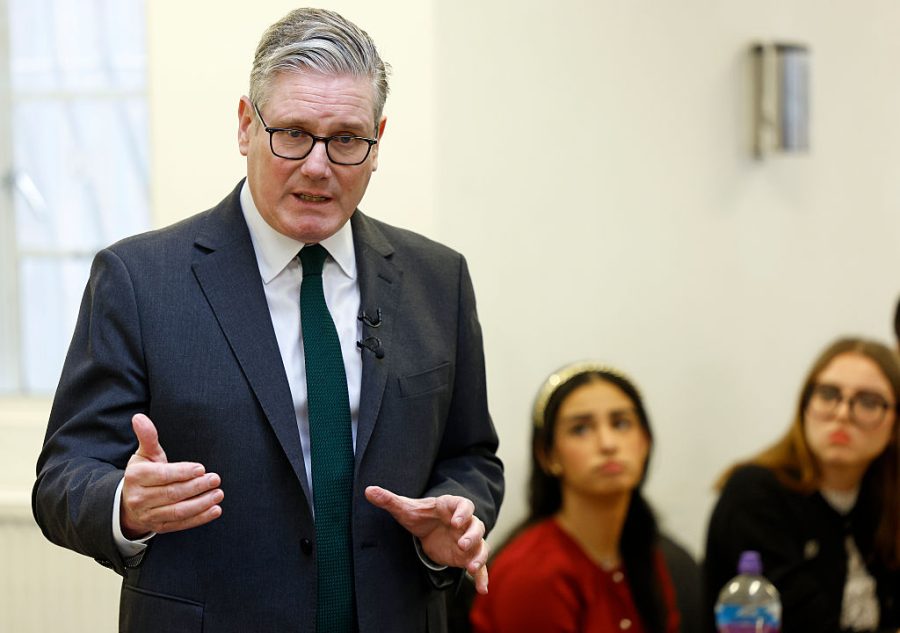
Sir Keir Starmer wants everyone to know how sorry, really sorry, he is for giving Lord Mandelson the job of Ambassador to the United States. On a visit to Belfast yesterday, the Prime Minister issued his latest and perhaps most abject mea culpa so far. It came just hours after the publication of embarrassing government documents detailing the process (or more accurately, the lack of one) that existed when it came to appointing the now disgraced peer to the plum diplomatic role in Washington. Sir Keir told reporters:
The release of the information shows what was known. That led to further questions being asked…But that doesn’t take away from the fact that it was me that made a mistake, and it’s me that makes the apology to the victims of Epstein, and I do that.
The Prime Minister still doesn’t get it. All the belated apologies in the world will not make the questions go away – questions not just about his poor judgement but also about his relationship with the truth. The latter presents a new and serious danger to Starmer as he tries to cling on to his job.
This scandal has a long way to go
Did Starmer mislead MPs over the Mandelson appointment? Starmer repeatedly told MPs that ‘full due process’ had been followed in giving Mandelson the Washington role. Sir Keir told the Commons three times that the correct procedure had been used when he faced questions about Mandelson’s appointment last year. Starmer repeated the claim of following the rules when challenged about the appointment during PMQs by Kemi Badenoch, the Conservative leader, and Sir Ed Davey, the leader of the Liberal Democrats.
Well, the problem now for the Prime Minister is that the official documents about what happened behind the scenes appear to tell a somewhat different story. Jonathan Powell, the national security adviser, raised concerns about the reputational risk of Mandelson’s appointment, commenting that it had been ‘weirdly rushed’. The Times reports that Powell was even more explicit in private. ‘His view was that Peter is always a disaster and we always end up firing him,’ one senior official told the newspaper.
Indeed, Mandelson’s chequered career as a minister is also detailed in the official due diligence documents (he was sacked twice by Tony Blair). Sir Philip Barton, the former permanent secretary at the Foreign Office, also raised ‘reservations’ about the peer, but he too was apparently ignored. In fact, such was the rush to appoint Mandelson that the peer was even given access to classified briefings by the Foreign Office before he had been vetted and given the all-clear by the security services. This must raise questions about Starmer’s insistence in the Commons that full due process was followed.
There is more that should cause concern. A Cabinet Office document from December 2024 notes a series of reports detailing Mandelson’s extensive (and publicly available) links with Epstein. It detailed how Mandelson continued his friendship with Epstein long after the financier had been convicted of child offences in 2008. It highlighted an internal JP Morgan report that Mandelson retained a ‘particularly close relationship’ with Epstein after his conviction. The Prime Minister was also made aware of reports that the peer had stayed at Epstein’s mansion in New York while he was in jail on charges of soliciting a minor for prostitution in 2009 and that he continued to have connections with the paedophile until at least 2014.
Everywhere, in black and white, the warning signs were flashing. Yet the Prime Minister chose to press on regardless. No wonder ministers were less than keen for the background to Mandelson’s appointment to become public, even going so far as to cite reasons of national security. It took pressure from the Tories (backed by furious Labour MPs) to force through a Commons motion and vote ensuring full disclosure.
This scandal has a long way to go: more official documents are due to be released in due course. One suspects that Starmer, in acting the way he did, may have done so assuming that the official advice he received would always remain private. The Prime Minister comes across as a leader who was in a hurry to appoint his preferred candidate to the Washington job – so much so that he was apparently oblivious to the warnings of those who might know better.
Did the Prime Minister, when reading the warnings about Mandelson’s past, simply not care, or did he think he knew better? It makes his endless apologies, in particular those to Epstein’s victims, appear more than a little hollow and self-serving. Sir Keir obviously thinks that saying sorry repeatedly about all things Mandelson might just help keep him in Downing Street. His judgement in this regard might yet turn out to be yet another mistake.


Comments