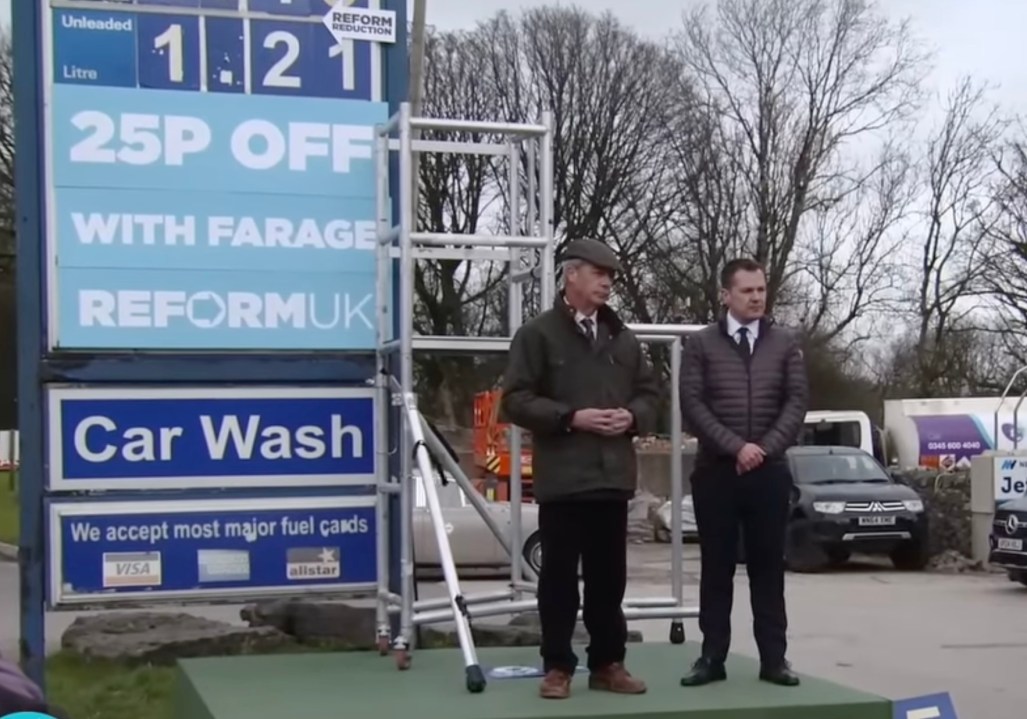

Tuesday was a good day to drive in Derbyshire. While the rest of the country was asking itself whether events in the Gulf were about to mean queues at the pumps, drivers on the A515 near Buxton found a petrol station with new, bright blue signs offering unleaded at £1.21 a litre. No one has seen that price in a long time. And if you wanted to thank the management you could, because standing between the pumps were Nigel Farage and Robert Jenrick.
Reform was only in the petrol business for the day. They decked out the station as ‘Reform Refuel’ to launch a campaign against the government’s planned 5p rise in fuel duty, which is scheduled to take effect between September and March. The cost of the fuel cut came from party funds, and was publicly attributed to Farage. The signs are now down and the prices are back up; but a thing that is with us to stay is the growing link between populism and transport.
Shortly after the general election I published a paper noting that all four of the constituencies that had gone Reform for the first time shared one unusual feature – each one had a story of a ‘missing road’ that meant travel in the area was particularly miserable. Next year, Reform won the Runcorn by-election promising to bring down tolls on the nearby Mersey Gateway bridge. In February, they teased the launch of their Senedd manifesto by promising to abolish Wales’ controversial 20mph speed limits. For a party without an official transport policy, they spend a lot of time talking about transport.
A fight over fuel duty was a natural next step. The government’s plan to increase the rate would have been politically risky at the best of times. With the cost of living so salient, it is bold to up the price displayed on thousands of illuminated boards across the country; even more so given that those costs fall heaviest on poor families. For the bottom tenth of the income scale (where only 40 per cent have access to a car), 5p on fuel duty has far more impact than a penny on income tax.
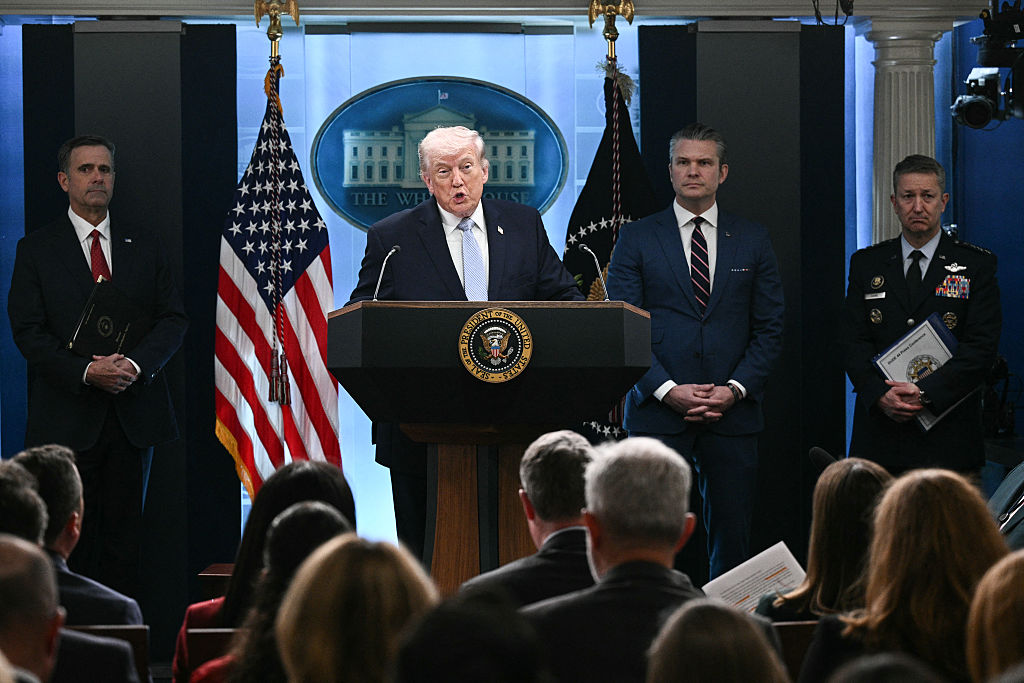
No chancellor has had the courage to raise fuel duty since the days of Gordon Brown, even to keep pace with inflation. And, it seems, this will continue to be true. The day after Reform’s petrol station takeover Keir Starmer let it be known that the government was reviewing the fuel duty rise in light of events in the Middle East. That caution is justified – in 2018 the French government tried upping the rate and in response three hundred thousand protesters donned gilets jaunes and began barricading the roads. The final death toll was 11.
But the wider question – what do transport and populism mean for each other – remains to be answered. In my own years working at the Department for Transport, I was struck by two facts. First, the public use transport more than any other part of the state. You might go for a year without using the NHS; but you could not leave your house without using a road or a pavement. Second, the way the system was run seemed to pay the least attention to what its users actually thought. Comfort, convenience or cost seemed tangential (or even unhelpful in the case of car travel), whereas the mechanics of running the network were paramount.
There are good reasons for this, but they are written in the language of technocrats. The gap between officialdom and the public is wide here – more than wide enough for a canny politician to exploit. The 2023 Uxbridge by-election proved that opposing worthy but unpopular policies could have a powerful impact at the ballot box. Reform is spoiled for choice with down the pub grumbles that it can work with: fuel prices, 15-minute cities and low traffic neighbourhoods to name three. This has a double benefit – not only does it chime with many voters’ concerns, but it also triggers the kinds of arguments populists thrive on.
That said, grumbling is a better plan for opposition than government. After the local elections, Reform promised to abolish low traffic neighbourhoods in all ten of its new councils. Then, after checking with their officials, they discovered they did not have any.
Populism in transport does not need to mean opposing everything. The best proof of this has been Andy Burnham’s tenure in Manchester. His Bee Network and £2 bus fare cap are a big departure from how transport has historically worked, but have made a bright yellow impact on the lives of Mancunians. As a result, his public support among locals is sincere and high. Transport takes an hour of every day and £4,500 a year from the typical household budget, and all of this is potentially raw material for a better political offer.
Conventional politics does not see an opportunity here; and that may be its loss. If Reform and other populists can find a way of reimagining transport for the benefit of the people, they really might be going places.


Comments