
Situation report
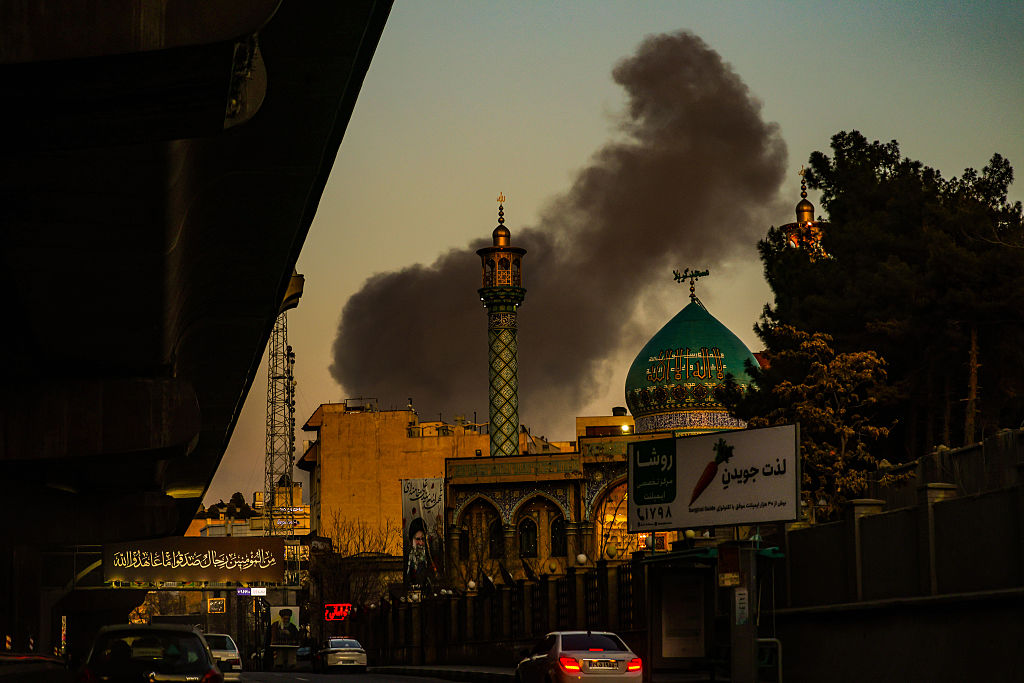
The war in the Middle East shows no sign of slowing. Instead, there were heavy air strikes inside Iran and missile barrages across the region over the last 24 hours, with indications that the United States is preparing for a longer and potentially wider conflict.
Israeli fighter jets carried out a major new wave of attacks on Iranian military infrastructure overnight, striking targets in Tehran and central Iran. According to Israeli military statements, more than 80 Israeli Air Force aircraft took part in the operation, guided by intelligence that identified key Revolutionary Guard facilities.
The United States is actively expanding its military presence in the Middle East
Earlier in the day, 50 Israeli aircraft also struck a vast underground bunker beneath the regime’s leadership compound in central Tehran, a command complex spanning several city blocks with numerous entrances and meeting rooms used by senior Iranian officials. The facility was designed to serve as an emergency wartime command centre for Iran’s Supreme Leader. The bunker was hit with around 100 munitions, according to the IDF spokesperson.
They also struck the Imam Hossein University, the main military university of the Islamic Revolutionary Guard Corps (IRGC), which Israel said was being used to assemble officers and military assets during the campaign. Other targets included missile storage sites containing underground bunkers and launch infrastructure, as well as additional launch locations across western and central Iran in an effort to reduce the scale of Iranian missile fire against Israel.
The strikes are part of a rapidly expanding military campaign. US Central Command said American forces have already hit more than 3,000 targets during the first week of the operation, known as Operation Epic Fury, and signalled that the pace of attacks will continue.

Iran has responded with missile and drone attacks across the region. Early Saturday morning, ballistic missiles launched from Iran were reported heading toward northern Israel, triggering rocket alerts in the western Galilee. Earlier barrages set off widespread warning sirens across central Israel, with dozens of alerts issued at once. Israeli emergency services said no direct casualties were reported, though one woman was injured while running to a shelter.
Elsewhere in the region, Iranian strikes appear to have targeted US and allied military assets. Satellite images circulated online suggesting damage to an American THAAD air defence system deployed in Jordan following Iranian attacks. Iranian channels also claimed that satellite imagery showed damage at the Ali Al Salem air base in Kuwait, although those reports remain unverified.
Saudi Arabia said it intercepted multiple Iranian drones and a ballistic missile aimed at strategic energy and military sites. According to the Saudi defence ministry, four drones heading toward the Shaybah oil field in the southeast of the kingdom were shot down, along with six additional drones and a ballistic missile aimed at Prince Sultan Air Base near Riyadh.
Lebanon continued to be a major front in the war as Israeli aircraft launched repeated strikes on Hezbollah positions in Beirut’s Dahiyeh district, a key stronghold of the group. Israeli officials said at least ten high-rise buildings used for Hezbollah military infrastructure were hit in one of the latest raids, part of 26 waves of strikes in the area since the campaign began.
Meanwhile, security agencies in Azerbaijan announced they had foiled an alleged Iranian plot to carry out terrorist attacks in the capital, Baku. Authorities said suspects linked to the IRGC had planned attacks against several targets including the Israeli embassy, an Ashkenazi synagogue and the Baku-Ceyhan oil pipeline. Several suspects were arrested and explosive devices seized.
In London, four men, one Iranian national and three dual British-Iranian citizens, were arrested on suspicion of spying on behalf of Iran and targeting Jewish communities in the UK.
The United States is actively expanding its military presence in the Middle East. Reports indicate the Pentagon is preparing to deploy a third aircraft carrier, the USS George H. W. Bush, to the region.
Behind the scenes, President Donald Trump has discussed the possibility of sending a limited number of US ground troops into Iran to secure strategic sites such as nuclear facilities and key infrastructure after the fighting. Officials familiar with the discussions say the idea centres on a small, specialised deployment rather than a full-scale invasion, and no decision has yet been made.
Washington is also accelerating the industrial side of the war. Trump said after meeting the heads of major US defence companies that manufacturers including BAE Systems, Boeing, Honeywell Aerospace, L3Harris Missile Solutions, Lockheed Martin, Northrop Grumman and Raytheon have agreed to quadruple production of advanced weapons systems, with new factories already being planned across several states, he said.
Even as the fighting intensifies, some regional governments are attempting to prevent the conflict from spiralling further. According to European officials, Saudi Arabia has opened urgent back-channel talks with Iran in an effort to contain the war and prevent further escalation.
With missile exchanges continuing, air strikes expanding and military deployments growing across the region, the conflict continues. The US and Israel are confident in their efforts to dominate Iranian airspace, and insist their supplies of weapons are not at risk. The campaign is, they say, going according to plan, and the intention seems nothing less than the reshaping the balance of power across the Middle East for decades to come,




Comments